From Oscar nominations, to BAFTA wins, and leading roles in blockbusters and prestige dramas, Kristin Scott Thomas has spent four decades at the top of her game, and now she’s returning to tread the boards of the West End in Anton Chekhov’s The Cherry Orchard.
There’s a particular kind of intelligence you find in Kirstin Scott Thomas’ performances on stage and screen. It’s a quality that comes across as a refusal to overstate emotion or highlight the obvious, but a focus on what’s actually happening beneath the surface. She doesn’t perform feeling so much as reveal it, layer by layer, letting you see precisely how her character has arrived at each decision and moment.
Scott Thomas has been in the industry for over 40 years, and has built up a reputation for both subtlety and precision over that time. The technique earned her a BAFTA for starring as Fiona in Four Weddings and a Funeral in 1994, an Academy Award nomination for playing Katharine Clifton in The English Patient in 1996. She’s put together a remarkable résumé full of film and TV roles, including Gosford Park, Darkest Hour, Slow Horses on Apple TV+, and The BBC’s Fleabag, which earned her a Primetime Emmy nomination.
But in recent years, something has shifted for Scott Thomas, and she’s now returned to the West End stage with a renewed intensity in Chekhov’s The Cherry Orchard, playing at the Harold Pinter Theatre until 9 January 2027.
The escape route she didn’t take
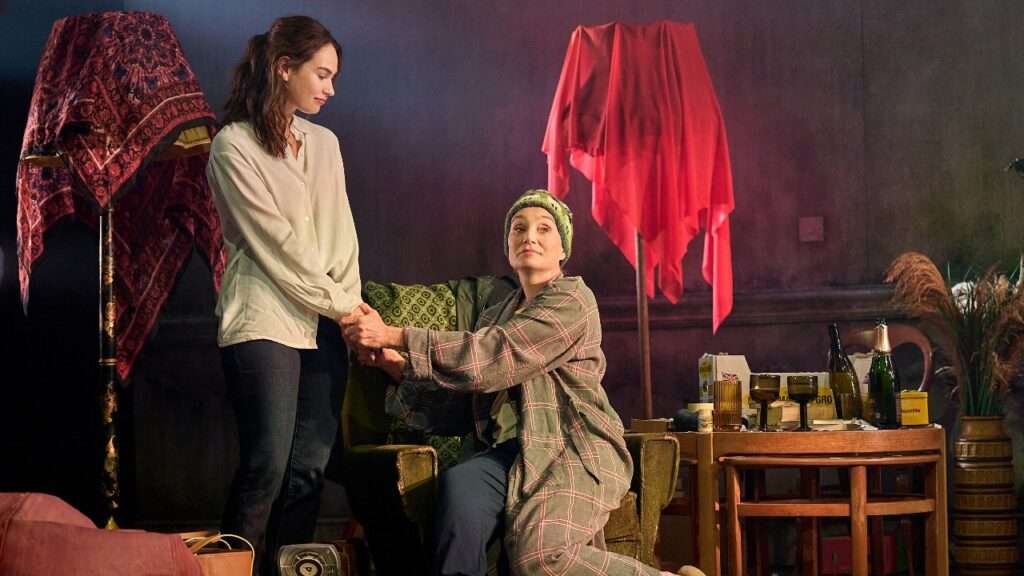
It’s plain to see that Scott Thomas isn’t about to ebb away into supporting roles and guest spots as many actresses in their 50s and 60s tend to do, whether it’s because they’re led that way by the industry or opt for that path themselves.
But she has refused that route – not by fighting it directly, but by walking toward something else entirely. She returned to the theatre for a reconfiguration of her career, which has already seen her take on plays such as Lyonesse at the Harold Pinter Theatre in 2023, and now The Cherry Orchard, which is at very same theatre.
The result of her focus on theatre roles means she is away from bigger paycheques and broader reach, and towards roles that demand increasingly more of her.
Lyubov Ranevskaya: a woman in freefall
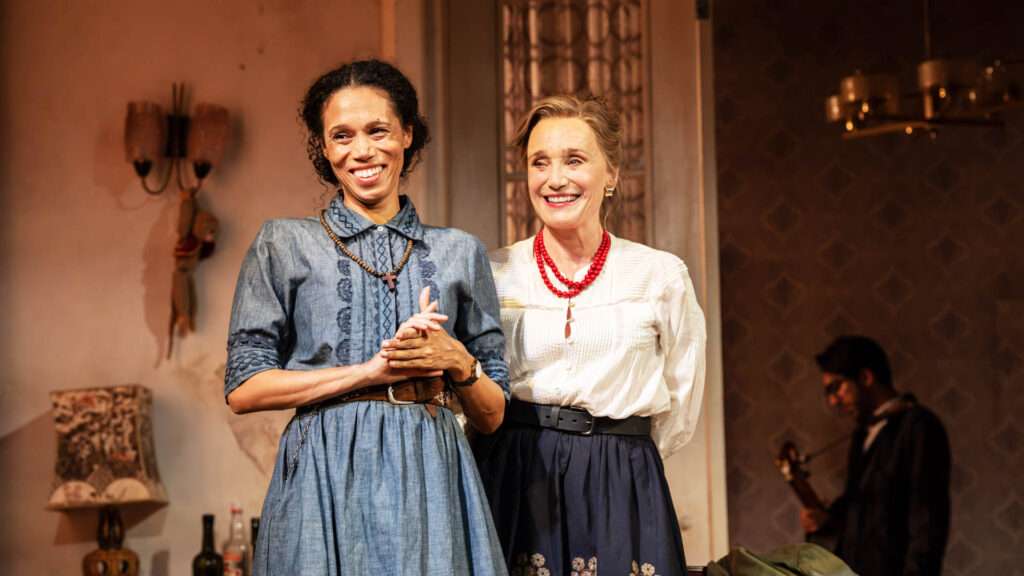
Her current role in The Cherry Orchard is Lyubov Ranevskaya – the returning estate owner in the play, which has been adapted by Conor McPherson and directed by Ian Rickson.
It’s a role written in small gestures and the fluctuation between practicality and delusion, which give the character capacity for both generosity and self-deception. Lyubov is also a woman watching her world change and being unable, or unwilling, to change with it.
Scott Thomas’ interpretation of the role reflects the worldly wisdom that tends latch itself onto someone in their 60s. She brings an understanding of loss that feels earned rather than performed. It’s not the melodramatic kind of loss theatregoers will see her deliver, but more the quiet, accumulating kind that happens when you turn around and discover the life you were living has already slipped away.
Critics have picked up on the authenticity in her performance too. The Telegraph called her “luminous in grief,” and The Guardian noted her “devastating plainness of speech.” Rather than being descriptions of an emotional spectacle on stage, these comments come across as descriptions of an actor who has decided the only acting worth doing at this point is the kind that requires genuine exposure.
She’s certainly not an actor who dominates a frame by force of her personality either. And that means that now she’s at an age when many actors are accepting reduced roles, she’s doing the opposite, and has become more visible and vocal.
Authenticity in her life and roles
Looking at the trajectory of Scott Thomas’ career from Four Weddings and a Funeral to now, it appears that she’s built it on one principle: she has never played herself and never coasted on her charisma, and has therefore come across as authentic both on and off the stage (and screen).
But that choice and consistency have consequences – and not always positive ones. Her work has been perceived as too controlled to the point of opacity for some theatregoers, with some critics finding her careful distance from emotion frustrating on occasion.
Scott Thomas is also someone who stands up firmly for what she believes in. She accused male theatre critics of failing to understand plays written by women and about women, citing her monologue on menstruation in Phoebe Waller-Bridge’s Fleabag, and shared that the speech had “ripped through the internet”, reflecting the appetite for female stories told on their own terms.
And when a male theatre critic described a female character’s lament about her vagina as unrealistic in Lyonesse, she said: “We need women to write that, Voicing their experience. Men are beginning to see the light.”
She’s also chimed in on the ever ongoing debate of what is and isn’t appropriate at the theatre. Scott Thomas shared that she has to “really control” herself to avoid challenging disruptive audience members, adding that she “can’t stand” poor theatre etiquette.
She highlighted the worst theatregoer behaviour she’s ever witnessed too – someone eating a ready meal while sat in the front row. She said:“People say, ‘Why do you prefer theatre? For me it is telling a story to live, breathing, coughing, eating people and trying to drag them along with you. Which I find incredibly thrilling.”
What’s next
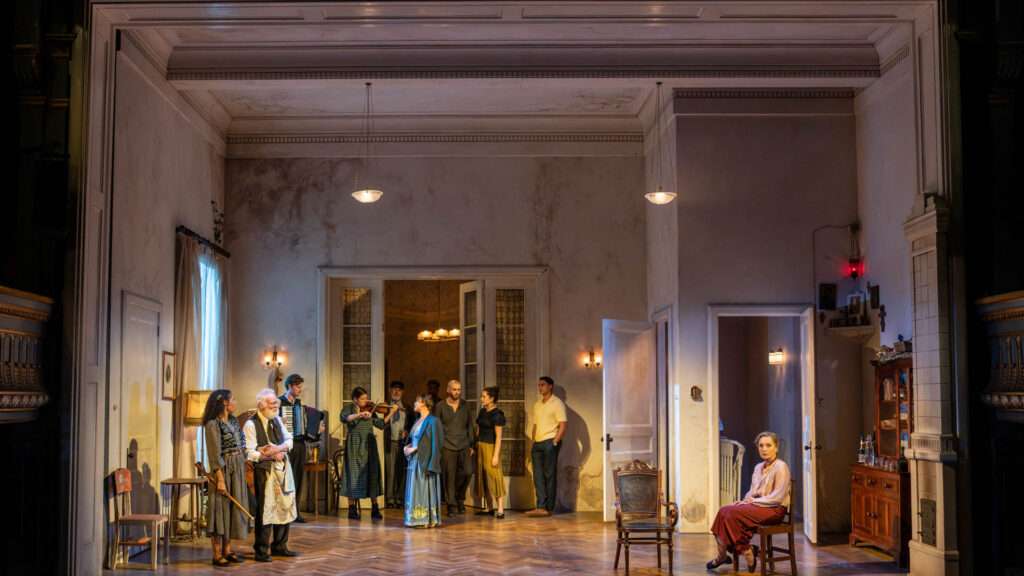
The Cherry Orchard is playing at the Harold Pinter Theatre in London until 9 January 2027. It also stars Stephen Mangan as Lopakhin – the self-made businessman whose ambitions for the estate drive the drama – and is a tender, funny and profoundly moving production adapted by Conor McPherson (Jerusalem) and directed by Ian Rickson (The Weir, Girl From the North Country).
For Scott Thomas, her role in the play gives a sense that she’s crystallising something in her thinking about what acting means to her at this point in her life. And it seems the answer is demanding roles.
She’s refused the guest-spot trajectory, and instead chose difficulty – and it chose her back. West End audiences are getting to enjoy her work, not because she has nowhere else to go, but because this is where she’s decided she needs to be.
In an industry that tends to render women invisible after a certain age, it’s a beautiful boldness to witness.
Harold Pinter Theatre, London

Related News
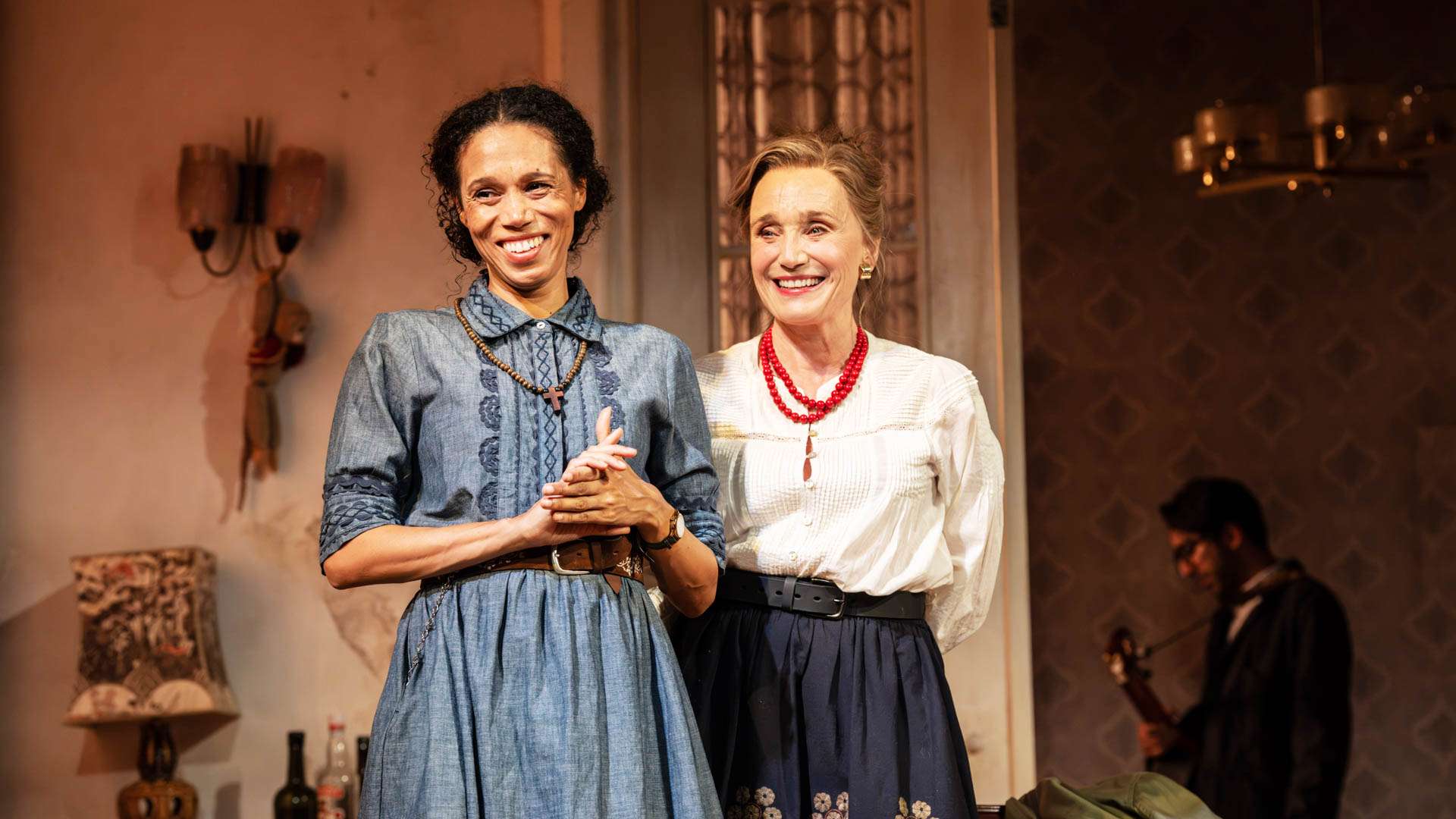
The Cherry Orchard Reviews: critics praise Kristin Scott Thomas, but split on Stephen Mangan
See first look photos of Kristin Scott Thomas in Chekhov’s The Cherry Orchard
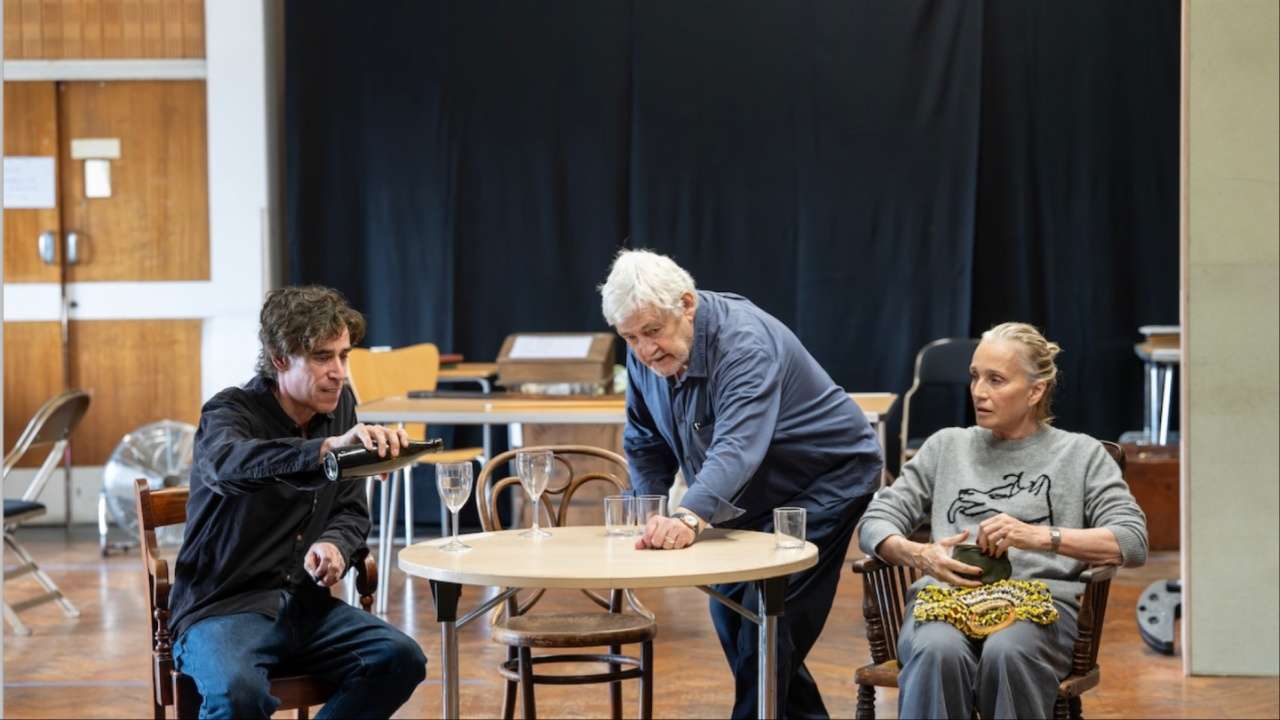
First look: Rehearsal photos for The Cherry Orchard starring Kristin Scott Thomas and Stephen Mangan

Chris Pine-led Ivanov, due to play the Bridge Theatre in Summer 2027, pauses ticket sales
Latest News
Everything you need to know about The Traitors: Acts of Betrayal in London
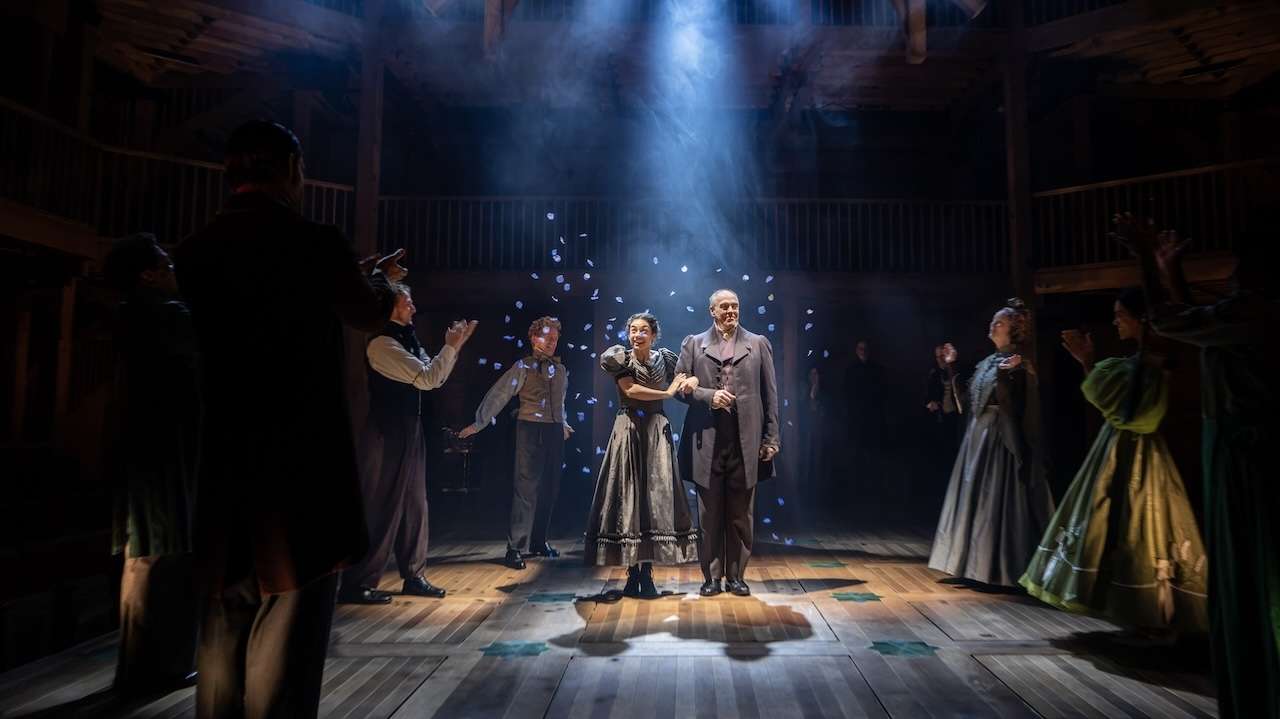
Nina Raine’s sweeping new adaptation of Middlemarch arrives at the RSC: See brand-new images from the production
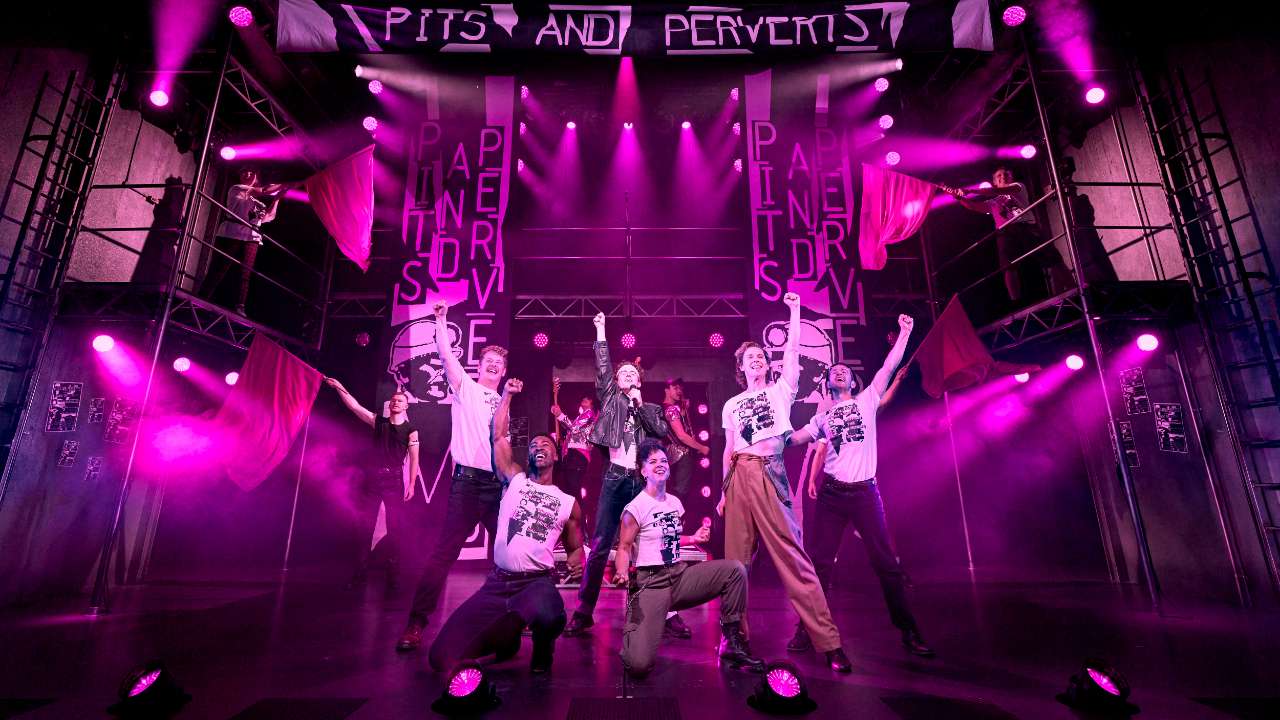
What to expect from Pride the Musical ahead of highly anticipated transfer to the Bridge Theatre