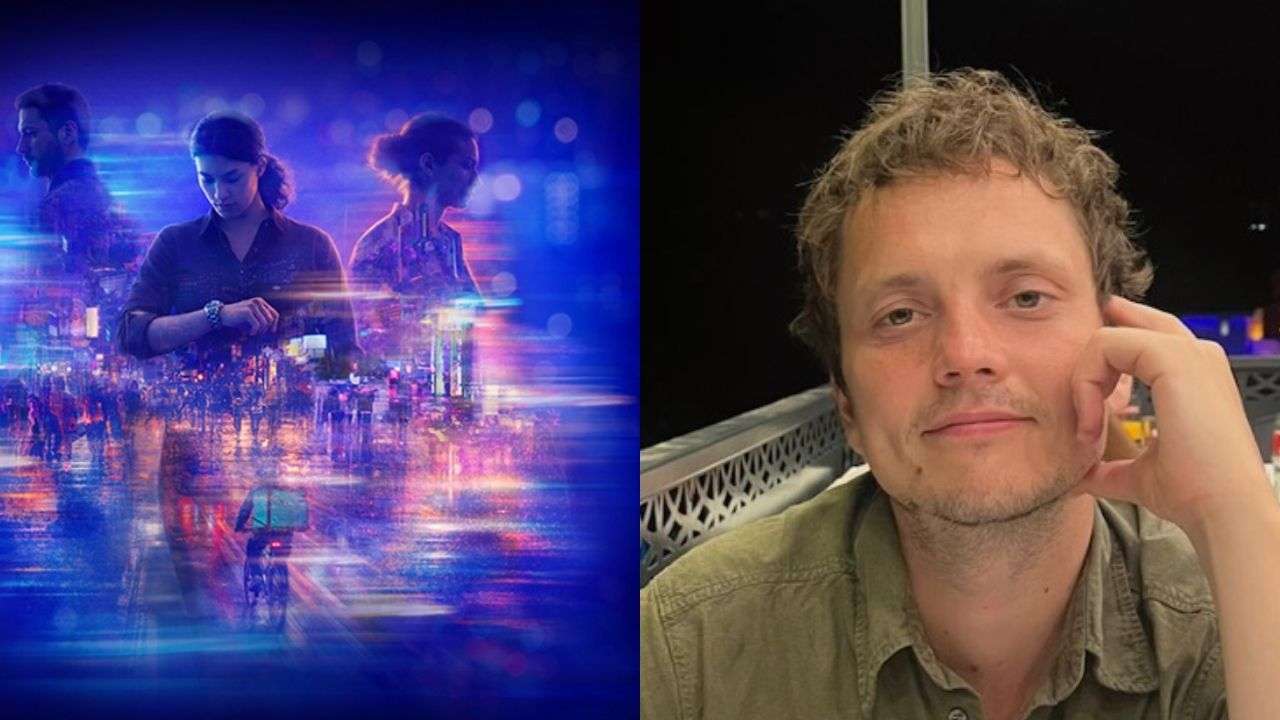

Ahead of the world premiere of his new play at Southwark Playhouse Borough, playwright Max Wilkinson talks about the late-night accident that sparked it, the people the gig economy renders invisible, and why theatre was the only way to tell this story.
It began with an image. Around six years ago, riding a night bus home down the Old Kent Road, Max Wilkinson saw the aftermath of an accident at the Bricklayer’s Arms junction. A delivery driver had been hit by a truck.
“The bike was still lying there, glass scattered all over the place, but the body had gone,” he recalls. “This is the first image of Night City.” That moment, one in which a worker was suddenly and violently visible, then gone, sits at the heart of his new play, which receives its world premiere at Southwark Playhouse Borough this autumn.
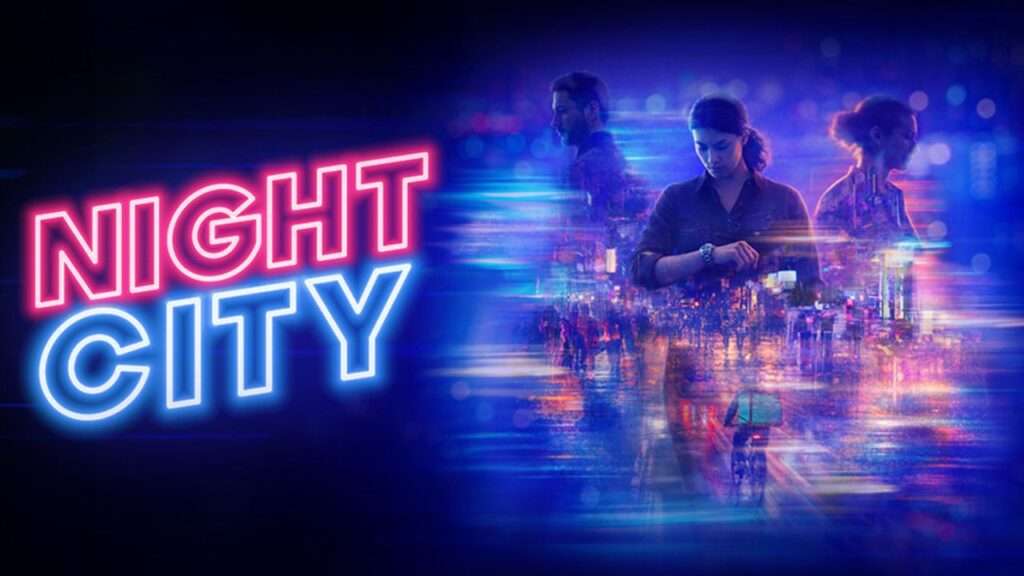
Directed by Ebenezer Bamgboye and told through three intersecting stories, Night City is an epic, darkly funny portrait of London’s gig economy and the people who keep it running unseen.
Writing from experience

For Wilkinson, the subject is anything but abstract. “I’ve always been interested in work,” he says. “We never got much pocket money so me and my brothers always had to find our own employment.”
His own CV reads like a tour of insecure labour: his first job, aged nine, was stacking cans in the local corner shop, followed by selling sweets and Pokémon cards out of his bag at school, then stints in Superdrug, pubs, as a tree surgeon’s assistant, a stagehand and a painter-decorator.
“I was never particularly good at any of these jobs,” he admits, “but it just about paid the rent and, more importantly, allowed me to spy on lots of different people. I’m very, very nosey.“
That instinct for observation fed directly into the play’s characters. The idealistic waitress Riva “a book nerd who thinks her job at a chain coffee shop and moving to London will turn into some sort of Midnight in Paris scenario” (it does not), draws on his own twenties, cycling between night jobs and writing furiously in between.
For Tamara, the play’s chatty carer, he spoke at length to an aunt who worked for a grim private care company for around £9 an hour, and to a cousin who is a nurse. Friends who rode for Deliveroo and Uber, and their friends in turn, filled in the rest, alongside the handful of books and the many news reports on Uber’s long court battles over pay and workers’ rights.
The invisible workforce
What struck Wilkinson most, talking to people still doing these jobs, was the strange anonymity the work imposes.
“The gig economy is this sort of nebulous, unquantifiable thing that functions all around us but is invisible,” he says. “We interact with deliveries, cabs, food and even health workers constantly, but they’re quite faceless.“
It’s an invisibility he once found useful as a worker himself: “it meant I could sort of spy on people with greater ease,” but which takes on a darker quality when it becomes a permanent condition.
“You meet a lot of different people with a lot of different personalities and stories, but they’re ignored,” he says. “There was a guy riding for Deliveroo who was working towards his PhD.“
Many gig workers, he notes, come from entirely different backgrounds and careers abroad, taking on this kind of work with its “lacklustre approach to background checks” while they wait for visas.
“What this gig world does is flatten people, turn them into accounts and ratings and headshots, if that. That’s what I find interesting. A kind of ghost world.“
Why it had to be theatre
Given the real-world urgency of the subject, why a play rather than a documentary or a piece of journalism? For Wilkinson, the answer is about what theatre can do that other forms can’t.
“I love to experiment with theatre and try to push boundaries,” he says. Night City is written “more like a novel or a film,” breaking free of what he calls the classic structure of “characters trapped in a room“: three actors alone play dozens of different characters, conjuring the sprawl of the whole city.
Crucially, he resists the idea that this is an “issues play.” “It’s not so much about investigative journalism or didacticism,” he says. “It’s still ultimately, mainly, about people and the city and empathy and joy. Only with theatre can you conjure that collective pain and joy and the micro-stories that a city like London constantly throws up.” That ambition of scale, which weaves movement, a live soundtrack and three intersecting narratives in the manner of writers like Joyce and Jean Rhys was there from the start. “I wish theatre, as a medium, generally took way more risks when it comes to form. And I’m just lucky I’ve met the collaborators on this show who think in the same way.“
A shared vision
Chief among those collaborators is director Ebenezer Bamgboye, whose acclaimed production of The Lonely Londoners convinced Wilkinson he’d found the right partner. “I knew he’d be the ideal director for the play, and we immediately clicked,” he says. “He’s someone who likes to take the standard, exhausted format of people trapped in rooms debating an issue and take them out of the room – being bold with theatricality.” Bamgboye offered notes as the script developed, but the process was, Wilkinson says, remarkably smooth: “Our vision for the play was always very aligned.“
A responsibility to real lives
Dramatising real people’s experiences brings its own responsibilities, something Wilkinson is keenly aware of. Because the material comes from his own life or those of close friends and family, he feels “a fair bit of freedom“: his characters are “normally an amalgamation of different things.“
But that freedom comes with care. “If they’re nasty characters, or have nasty elements, you have to try and find the root of those qualities,” he says. “Similarly with good qualities, you have to paint them accurately and not exploit or manipulate them. You’re trying to make full-blooded characters, not cardboard cut-outs.“
As for what audiences take away, Wilkinson is clear that he isn’t handing them a polemic. “During it, I want them to have a great time. There’s lots of comedy and music in there, a tapestry of characters I hope they’ll enjoy and resonate with.” And afterwards? “Not to take away some message, but perhaps to think a bit more on this invisible industry — one that is now such a large part of our lives, and ever growing.”
Night City plays at Southwark Playhouse Borough from 9 September to 3 October 2026.
Related News
New writing lighting up the London stage this year: 7 plays to have on your radar
The Jonathan Larson Project casting confirmed for London [Updated]

New gig-economy drama Night City to premiere in London directed by Ebenezer Bamgboye

Redcliffe musical London cast announced to join Jordan Luke Gage
Latest News

Everything you need to know about The Traitors: Acts of Betrayal in London
Nina Raine’s sweeping new adaptation of Middlemarch arrives at the RSC: See brand-new images from the production
What to expect from Pride the Musical ahead of highly anticipated transfer to the Bridge Theatre