
2026 has been quite the year for new work arriving on the London stage. So far, we’ve seen critically acclaimed runs of Inter Alia, John Proctor is the Villain and Jaja’s African Hair Braiding. Take a closer look at some of the new work currently playing in the West End and what’s coming up next.
Every year, the West End sees scores of revivals of great works coming to the stage. There’s also a good deal of new work that is just as vibrant, challenging and engaging. Earlier this year, Inter Alia played the West End in a sold-out and critically acclaimed run starring Rosamund Pike. John Proctor is the Villain arrived at the Royal Court to critical acclaim and is set to transfer to the West End next year.
New work coming to the stage is an exciting opportunity to explore new topics and platform new voices. Take a closer look at some of the new work playing in London this season and what’s coming up next.
New Writing on the London Stage

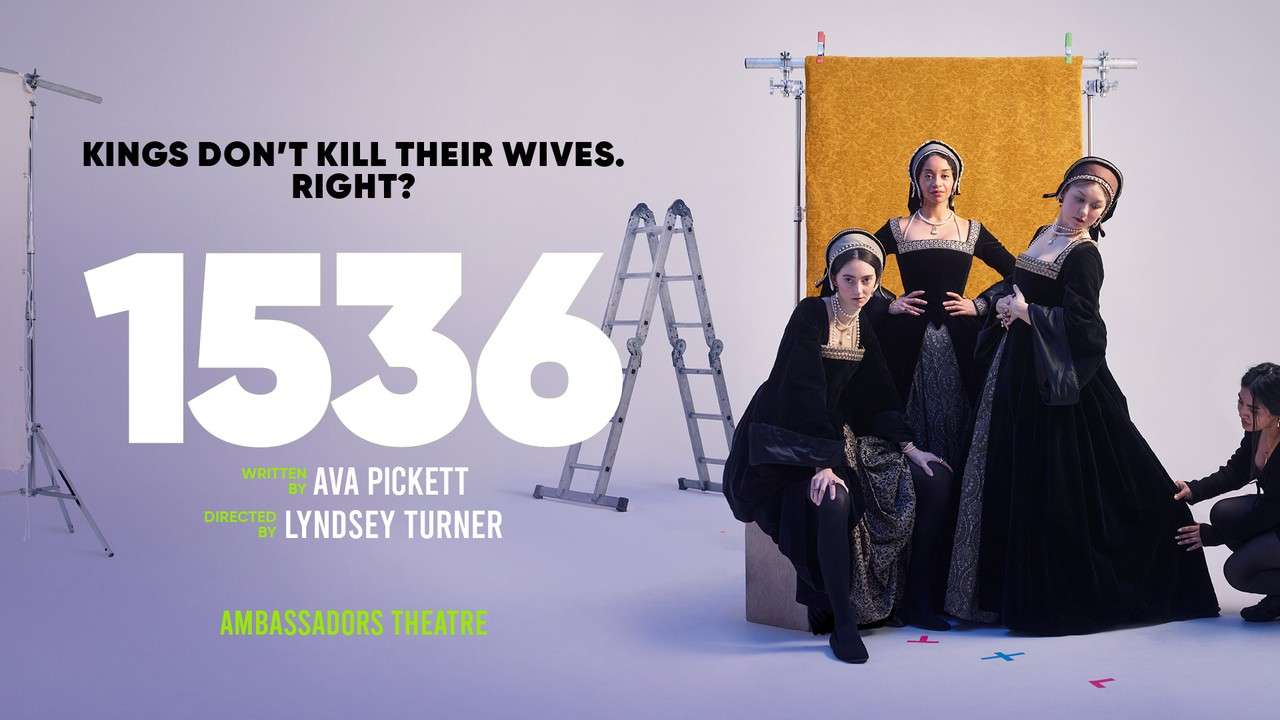
1536 by Ava Pickett
The breakaway hit this season has no doubt been Ava Pickett’s new play 1536. The play premiered at the Almeida last year before transferring to the Ambassadors Theatre, where it’s currently playing a sold-out run.
It has been praised repeatedly by critics for its biting, funny dialogue, as well as the nuanced and truthful depiction of female friendship.
1536 follows three friends in a village in Essex who frequently meet to gossip. The latest news out of the palace is that the King has had his wife arrested. What starts as idle chat from a faraway place, quickly turns into a very real reflection of their own lives. It’s a fascinating take on making history feel modern and showcases how little society has changed when it comes to women.
Pickett, who won the 2024 Susan Smith Blackburn Prize for 1536, has already announced her sophomore piece of theatre: Bloodsport: After Helen of Troy, premiering at Stratford East this autumn.
Ambassadors Theatre, London
John Proctor is the Villain by Kimberly Belflower
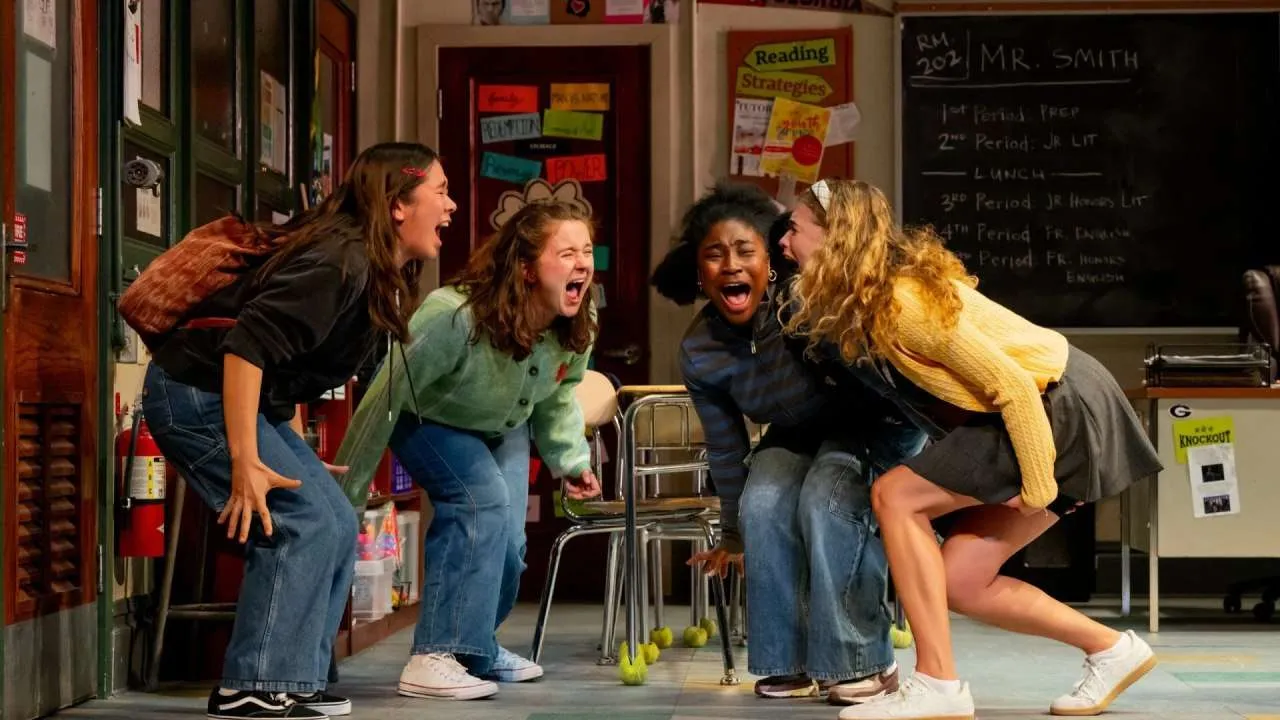
This Broadway transfer has taken the UK by storm this year, premiering earlier this year at the Royal Court Theatre, following a smash hit sold-out run in New York. Likewise, the response to the play has been so acclaimed that a West End transfer has already been confirmed for early 2027.
Called ‘blazingly intelligent’ by The Financial Times, John Proctor is the Villain is a reimagining of The Crucible, following a group of 11th-grader girls in a rural Georgia high school as they study the classic play.
Belflower’s clever device of using The Crucible to examine and dismantle the perspective of both the students and the audience is particularly poignant. It’s a play most people are familiar with and allows for a unique exploration of wider themes like hypocrisy and resistance and the #MeToo movement.
Wyndham's Theatre, London


Table 17 by Douglas Lyons
The Lucille Lortell award-winning Table 17 will premiere at the Kiln Theatre later this year, following a vibrant reception in New York and Los Angeles last year. The playwright has commented that he drew inspiration from the ‘luscious portrayals of Black love’ he grew up with in rom coms like Brown Sugar and Love & Basketball.
The intimate show looks at two exes who are finally hashing things out after seven years. Lyons’ play makes a conscious choice to lean into Black love, showing the universality of the messiness and unpredictability we all experience when it comes to love. The play won Two Lucille Lortel Awards, An Outer Critics Circle Award, and was notably chosen as a New York Times Critic’s Pick.
Playwright Douglas Lyons is also the author of Chicken & Biscuits, a family drama that starred Norm Lewis and Michael Urie. The play earned him a GLAAD Media Award nomination.
Kiln Theatre, London


Some Woman by Helen Edmundson
Premiering at the National Theatre this year is Some Woman, a new work from playwright Helen Edmundson, her first original play in eleven years.
Particularly buzzworthy is star Anne-Marie Duff, who will star in the play as Julie Robson, who is used to being overlooked at work, at home, everywhere in between. When a public encounter suddenly puts the public eye on her, Julie must grapple with making a stand.
Edmundson’s original written work tends to centre women navigating power, morality, and social constraint, as evidenced not just by Some Woman but also Queen Anne, which premiered at the National Theatre in 2015. This new work brings those conversations into the present day.
National Theatre - Dorfman Theatre, London


Night City by Max Wilkinson
In what playwright Max Wilkinson calls an ‘issue play,’ Night City follows a driver, a care worker and a waitress who are all pushed to the edge as they try to survive a city that never sleeps. Exploring the highs and lows of the gig economy and its effect on us, this new work is set to premiere at Southwark Playhouse Borough in September.
Given Wilkinson’s past work has touched on similar explorations of the effects of capitalism on the self: his hit play Rainer (2021) follows a lowly delivery driver navigating the gig economy, while Union (2023) follows a property developer whose life suddenly unravels.
His work gives a voice to the people who, despite being essential to keeping a city running, are virtually invisible and ignored. Night City promises to showcase his flair for showing how everyday people struggle to navigate the absurd nature of the world.
Southwark Playhouse Borough, London


The Afronauts by Ryan Calais Cameron
Premiering at the Royal Court this Autumn comes a new work from acclaimed playwright Ryan Calais Cameron, best known for his play For Black Boys Who Have Considered Suicide When the Hue Gets Too Heavy.
Upcoming work The Afronauts is a new genre for the playwright as his first foray into sci-fi/Afrofuturism. The play tells the story of a Zambian schoolteacher who gathered a group of misfits and trained them to beat America to the moon in 1964.
Switching up genres is something Cameron has done a lot in his career. For coloured boys… is known for its lyrical, non-linear storytelling where another work, Retrograde, is a straight historical retelling.
Cameron describes the play as ‘a love letter to the dreamers history forgot. It’s about what happens when imagination becomes a form of resistance, and how the fight for freedom isn’t just political, it’s cosmic.’ Given the trajectory of his most known work, both Cameron and his new work should be on everyone’s radar.
Royal Court Theatre, London


Electra/Persona by Benedict Andrews
Another offering from the National Theatre is Electra/Persona by playwright and director Benedict Andrews. This new play pulls from two very unique sources: 2500-year-old Greek tragedy Electra by Sophocles and 1960s art-house film Persona by Ingrid Bergman.
What makes this new play interesting is the marriage and intersection of these two works. By blending the two, Andrews presents an exploration of grief and identity that feels universal in its scope.
Andrews is no stranger to adapting and reworking texts: past work includes adaptations of The Maids, Three Sisters, The Seagull and The War of the Roses. Electra/Persona blends two distinct stories in opposing mediums into one play that offers a compelling psychological exploration rather than a singular narrative. Interestingly, Andrews is also directing this adaptation, meaning that the final product will be entirely his own vision.
National Theatre - Lyttelton Theatre, London

Related What's On guides

Five shows we’re most excited about seeing right now and why you don’t want to miss them

12 West End shows we can’t wait to see in 2027, from Billy Elliot to Tarantino’s debut

12 must-see shows coming to the West End this Autumn

New season, new shows: 12 hot shows to see in the West End this summer
Latest News

Everything you need to know about The Traitors: Acts of Betrayal in London
Nina Raine’s sweeping new adaptation of Middlemarch arrives at the RSC: See brand-new images from the production
What to expect from Pride the Musical ahead of highly anticipated transfer to the Bridge Theatre