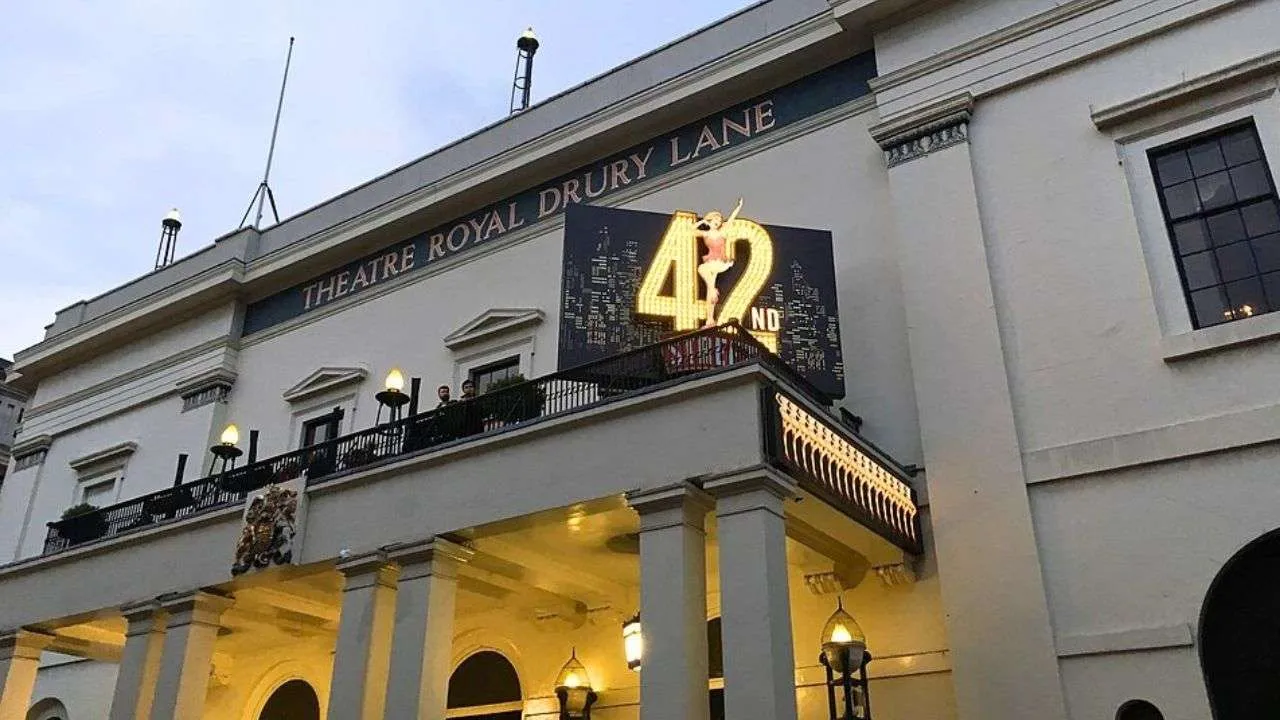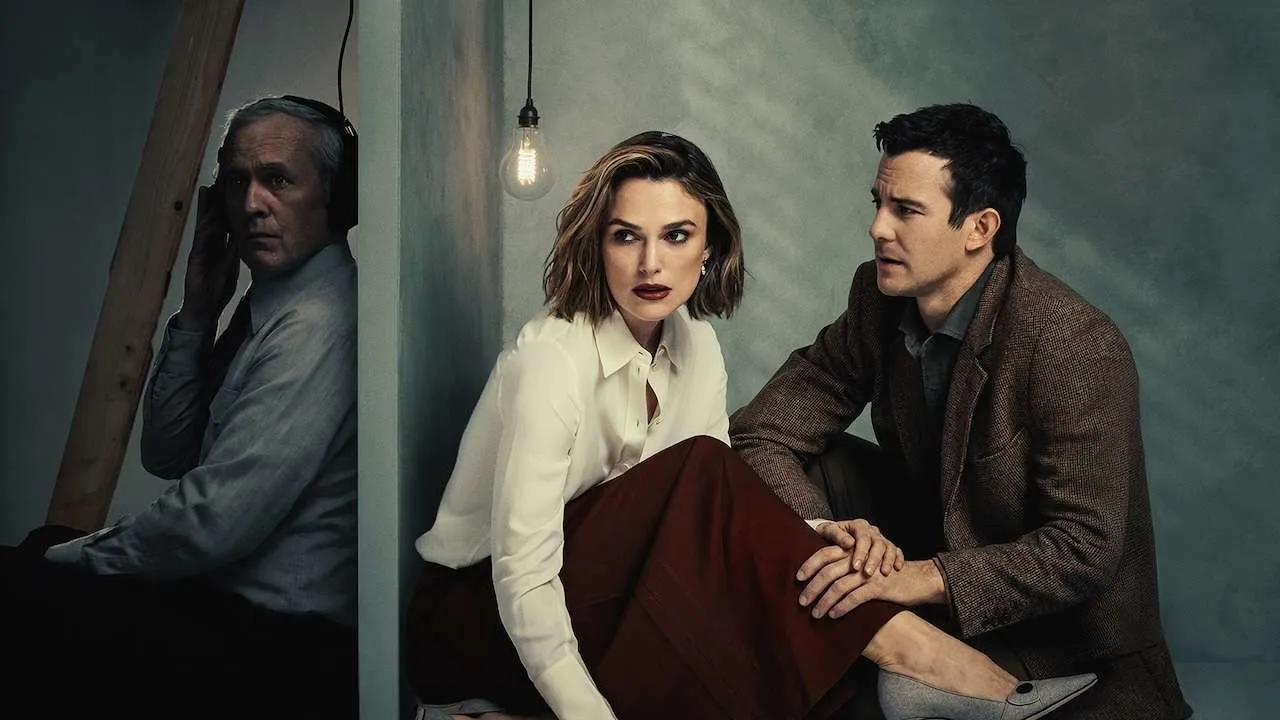

Based on the Oscar-winning 2006 film from Florian Henckel von Donnersmarck, The Lives of Others sees the Adelphi transported to 1984 East Germany with Kiera Knightley, Luke Thompson and Stephen Dillane leading the cast. Critics are divided on Robert Icke’s stage adaptation, praising Dillane and the staging but splitting on whether it matches the film’s emotional power.
Playing at the Adelphi Theatre until 9 January 2027, The Lives of Others sees Robert Icke tackle Cold War Germany in the world premiere stage adaptation of Florian Henckel von Donnersmarck’s Oscar-winning 2006 film. Keira Knightley, in her first London stage appearance in 15 years, plays the actress Christa-Maria Sieland, alongside Stephen Dillane as the Stasi agent Gerd Wiesler and Luke Thompson as the playwright Georg Dreyman.
Critics had a mixed response to the production, with some praising it on all fronts while others questioned whether the stage adaptation captures the film’s emotional force. Likewise, critics were fairly unanimous in their praise for Dillane’s take on Stasi watchman Wiesler, but divided on whether the other stars hit the mark.
The verdict: Critics are largely divided on the production. While most enjoyed the staging, and Dillane’s performance in particular, Icke’s direction, the star actors and the emotional impact of the stage adaptation drew differing opinions. divided.
Critics’ comparison
| Publication | Rating | The Key Takeaway |
| The Standard | ★★★★★ | A magnificent ensemble piece, with a striking Knightley and outstanding Dillane. |
| WhatsOnStage | ★★★★★ | Gripping and fluently staged, a deeply moving message about art and empathy. |
| The Independent | ★★★★ | Ingenious staging and a spiritual Dillane, but the final scene over-explains. |
| West End Theatre | ★★★★ | Standout design and a fascinating Dillane, but the pacing sags in spots. |
| The Times | ★★★ | Packed with bravura flourishes and in-jokes, but fails to fully engage |
| The Guardian | ★★★ | Plenty of suspenseful stagecraft, but the film’s subtlety turns to melodrama on stage. |
| The Stage | ★★★ | Slick, tautly paced and gorgeously designed, but cold and clinical, with comic relief that punctures the tension. |
The reviews: what they loved about The Lives of Others
- Stephen Dillane’s Gerd Wiesler: Dillane’s performance as the Stasi agent was praised across the board. The Standard’s Nick Curtis calls him ‘outstanding,’ noting that ‘it’s impossible to take your eyes off’ of the actor as he moves around the stage. WhatsOnStage’s Sarah Crompton praises the way he lets ‘each moment of disillusion register while seeming utterly still and contained’. The Stage’s Dave Fargnoli notes that he ‘communicates an impressive degree of nuance through body language and expression’ and The Independent’s Alice Saville says Dillane gives the ‘act of listening an almost spiritual dimension.’
- Hildegard Bechtler’s revolving set: The design draws praise for all critics, with the board. Fargnoli calling the revolving set ‘gorgeous’, and praising how ‘curtains and sliding screens close in or peel away to frame scenes in different aspect ratios.’ The Guardian’s Arifa Akbar says the production excels ‘in raising suspense through stagecraft, especially the thuds of sound, lighting and whirl of movement,’ while Saville calls the staging ‘ingenious’ in how it turns ‘grimy state machinery into heartstopping visual poetry.’
- The supporting cast: Several members of the company were also praised by critics. Curtis calls Andrew Woodall’ turn as malign government minister Hempf ‘chilling’ and Paul Higgins ‘excellent,’ while noting that ‘there is sterling supporting work from Calum Finlay, Irfan Shamji and Nick Holder’ as well. Crompton also calls Higgins ‘superb, constantly moving and weaselly.’ Davis calls Woodall menacingly brutish. Saville offers praise for Nick Holder as he ‘fills [his] scene with righteous fire and desperate frankness’ as the blacklisted director Jerska.
- Icke’s direction: Curtis approves of the way Icke ‘stunningly and elegantly opens up the closed worlds of the observer and the observed’ while Fargnoli calls his staging ‘typically slick and tautly paced.’ Akbar praises Icke’s decision ‘to centralise the drama so that much of it is enacted from Dreyman’s apartment’ though it did lead to some plot inconsistencies in her opinion.
The reviews: where critics divided on The Lives of Others
- How much emotional force it has: The main point on which critics are divided is on the emotional impact of the play. The Guardian’s Arifa Akbar says that the ‘maelstrom of emotion’ is ‘conveyed by inference and suggestion in the film but takes on the feverish nature of a melodrama on stage.’ The Times’ Clive Davis feels ‘you are often left admiring the bravura flourishes rather than being drawn into the story itself’ and in particular notes that ‘Icke also indulges in a few too many theatre in-jokes.’ The Standard’s Nick Curtis disagrees, saying that ‘even the metatheatricality here – the visible stagehands hauling the set around, the message that even Stasi officers are playing a role – is entirely earned.’ WhatsOnStage’s Sarah Crompton calls it an ‘immense achievement not least because it is nigh-on perfect in execution’ and The Independent’s Alice Saville calls it ‘heartstopping visual poetry’ though she feels the ‘over-explained final scene’ dissipates the tension.
- Knightley and Thompson: Critics offer differing opinions on leads Kiera Knightley and Luke Thompson. Curtis notes a particular scene which Knightley ‘performs with wrenching conviction’ while praising Thompson for ‘heroically fleshing out a role somewhat lacking in colour.’ Crompton calls Knightley ‘fragile, febrile and utterly convincing’ while Fargnoli finds her performance ‘committed – if never entirely convincing.’ Saville feels that Thompson ‘brings a sweet-faced hopefulness to the central role,’ but Akbar finds Thompson ‘puppyish’ while Davis feels he lacks the ‘the gravitas of Sebastian Koch, who played the role on screen.’
The back story
The Lives of Others is a psychological surveillance thriller set in East Berlin in 1984, at the height of the Cold War. Gerd Wiesler is a senior agent of the Stasi, the East German secret police, tasked with spying on the city’s residents. When he begins listening in on the playwright Georg Dreyman and his girlfriend, the actress Christa-Maria Sieland, he becomes disillusioned with the corrupt system he serves and secretly starts to protect the couple, even hiding evidence of Dreyman’s dissent against the state.
The story began as the 2006 German film written and directed by Florian Henckel von Donnersmarck, with Ulrich Mühe, Martina Gedeck and Sebastian Koch in the lead roles. It won the Academy Award for Best Foreign Language Film (now Best International Feature Film) and the BAFTA for Best Film Not in the English Language. Icke wrote the stage version in collaboration with von Donnersmarck, and the world premiere is produced by Sonia Friedman Productions and Winkler & Smallberg. It reunites Icke with Friedman following Oedipus, Manhunt, Hamlet, The Doctor, Oresteia and 1984.
The cast includes:
- Christa-Maria Sieland: Keira Knightley
- Gerd Wiesler: Stephen Dillane
- Georg Dreyman: Luke Thompson
The wider company features Jamie Ankrah, Jake Benson, Matt Ray Brown, Lucy Doyle, Calum Finlay, Josh Gordon, Paul Higgins, Leda Hodgson, Nick Holder, Sibylla Meienberg, Irfan Shamji, Richard Sutton and Andrew Woodall.
Robert Icke adapts and directs, and is the Olivier Award-winning director of Oresteia, Hamlet and 1984. Hildegard Bechtler designs the production, with lighting by Jon Clark and sound by Giles Thomas. Max Richter composes the original music, and casting is by Julia Horan.
Where to see The Lives of Others
- Venue: Adelphi Theatre, 409-412 Strand, London WC2R 0NS, until 9 January 2027
- Age: 14+
- Runtime: 2 hours 9 (without interval)
- Full details on The Lives of Others
What are the critics saying about The Lives of Others?
"Keira Knightley's return to the stage is revolutionary."
"You could almost call it a gesamtkunstwerk - a “total artwork” - so vital are design, sound and music to Icke’s vision."
"Knightley, Thompson and Higgins are excellent, and there is sterling supporting work from Calum Finlay, Irfan Shamji and Nick Holder."
"It’s impossible to take your eyes off Dillane, with his grey demeanour, exhausted flyaway hair and small, fussy gestures."
"Even the metatheatricality here – the visible stagehands hauling the set around, the message that even Stasi officers are playing a role – is entirely earned."
"Icke stunningly and elegantly opens up the closed worlds of the observer and the observed depicted in the film. The rich texture and the command of ominous mood here is emblematic of his skill."
"Icke, best known for his radical Shakespeares and startlingly reworked classics, here brilliantly re-examines the recent past at a time when we’re arguably more surveilled, monitored, and eavesdropped-upon than ever."
"A deeply moving and utterly spellbinding evening of theatre."
"At two hours long, it has the pace and suspense of a thriller but wrapped in its heart is an examination of the purpose of art – and the reflective nature of stories to destroy or enhance lives."
"It’s wonderfully, fluently, staged on Hildegard Bechtler’s revolving set, which contrasts the beige utilitarian plainness of Wiesler’s dank flat, with the elegance of Dreyman’s where the plain walls are enlivened by fine modern paintings."
"Giles Thomas’s soundscape adds crackle and distortion to the conversations listened to; when Wiesler takes his headphones off, Dreyman and his friends are suddenly silenced."
"Icke’s direction superbly charts the way that Wiesler becomes increasingly entwined with his subjects’ lives, moving – in the intricate, constantly shifting choreography of the scenes – from the sidelines, to sit between the friends on the sofa, or walk around them as he snoops."
"Icke also constantly emphasises the show’s theatricality: characters vanish into the exposed wings; when the scene changes as the set unfolds like a series of boxes, revealing different vistas, streets, cafes, and offices evocatively lit by Jon Clark, stagehands appear, doing their work, pushing the scene into view. Some sections appear on film."
"Icke has transmuted a film about heroic resistance to authority and the moments that people crack or rebel into a play about the power of art and the need for the kind of understanding it provokes."
"Dillane, always excellent, has never been better than he is as Wiesler, letting each moment of disillusion register while seeming utterly still and contained."
"As Dreyman, Thompson is equally still, equally powerful, catching the character’s essential decency, gradually eroded and transformed into opposition by the situation he finds himself in."
"Knightley [...] is fragile, febrile and utterly convincing as the tortured actor who knows with absolute certainty that “an artist cannot survive the world you’ve made.”"
"The whole production is a triumph because it embodies its own theme. Art matters, empathy counts. A society that forgets compassion for the lives of others is not worth having. And it shows that by being a deeply moving and utterly spellbinding evening of theatre."
"Luke Thompson brings a sweet-faced hopefulness to the central role of celebrated playwright Georg Dreyman."
"It's a time-worn West End trope to cast a real-life Hollywood star as a 'famous actress' in a play, but putting Keira Knightley in this role works on a deeper level. She's got a brooding sulkiness that suits this conflicted, enigmatic performer."
"Dillane gives this act of listening an almost spiritual dimension, sinking to the floor in reverence, and keeping her secrets from his colleagues as though they're confessions heard in church."
"But what the original film's writer and director Florian Henckel von Donnersmarck illustrates here is that compliance to this contorted system of government is only possible for people who are willing to twist themselves into ugly shapes."
"Icke's staging here creates a series of beautifully-designed prisons; spaces that trap, stifle and ultimately destroy the people who live in them. Sliding screens move at breakneck speed to shrink the audience's view of the stage into a tiny, cinematic close-up."
"Designer Hildegard Bechtler creates a midcentury apartment whose covetable modernist comforts can vanish in an instant, replaced by desolate institutional punishment."
"It feels strange that Icke lets all this carefully built-up tension and menace dissipate in an over-explained final scene."
"From the get-go, this is a very meta production about observation."
"Dillane’s Gerd Wiesler is a rigid man who understands protocols and people perhaps less so. Still, as he skulks in the shadows and bears witness to the lives of these two people, his subtle transformation into their secret ally was fascinating to watch."
"What sings the most in this production for me is Hildegard Bechtler’s design. The set alone really made the whole thing come alive."
"The couple’s apartment was a highlight: a series of rooms with semi-opaque walls brought their world to life as it rotated at varying speeds. Those same walls had another purpose: they became the witness to Wiesler’s surveillance, with video feeds being projected across them in several moments during the play while in other moments, it felt like the audience too was the one spying."
"At 2 hours without an interval, there were spots where it could do with a little tightening, especially in the beginning."
"It took me a little while to really get into it and become invested, and some of the characters’ motivations were a little lost on me."
"Overall, though, it was an enjoyable night at the theatre. Icke has struck again.”
"Packed with bravura flourishes and in-jokes, but fails to fully engage."
"As the adaptor and director, he imposes his aesthetic on every aspect of the evening — as he did in his recent update of Oedipus — but in the end you are often left admiring the bravura flourishes rather than being drawn into the story itself."
"The elegantly dressed Knightley is perfectly fine in the role of the star actress Christa-Maria Sieland."
"Luke Thompson is likeable enough as Georg Dreyman, the playwright who falls foul of the authorities, but he has little of the gravitas of Sebastian Koch, who played the role on screen."
"Stephen Dillane is convincing as the Stasi operative Gerd Wiesler. We see him walking among his unknowing victims, headphones clamped over his ears."
"Andrew Woodall makes a menacingly brutish party boss, while the scenes of interrogations, deploying Tal Yarden’s video projections, drip with menace."
"Hildegard Bechtler’s revolving set, with its gauze walls, allows us fleeting glimpses of different parts of Dreyman’s apartment, yet the constant movement does tend to overshadow the actors at times."
"Max Richter is credited for the original music, but it’s the splash of Vivaldi and Berlin-era Bowie that catches the ear."
"[This] adaptation of the Oscar-winning film has plenty of suspenseful stagecraft but struggles to match its subtlety"
"This production is helmed by theatre wunderkind Robert Icke, whose work is marked by the utmost integrity and who has a record of making fast-moving, suspense-filled work of canonical material."
"Icke chooses a difficult story to adapt and direct here."
"Luke Thompson plays writer George Dreyman, and seems too puppyish in the role. Knightley is his girlfriend, Christa-Maria Sieland, a stage actor and the object of jealous lust for venal government minister Hempf (Andrew Woodall), who seeks to destroy Dreyman so he can claim her. She gives a committed performance, but the character feels overheated and underwritten."
"Dillane’s Wiesler sits listening to these secrets after their apartment has been bugged. He also weaves physically between them, and it is a theatrical way of showing the intimacy and intrusion building in his surveillance. But where the film was able to deliver Wiesler’s interiority through lingering closeups and looks, there are fewer ways of opening up his inner world when the story relies on the same mode of suggestion to convey his disenchantment with a system he has believed in, but which he now realises is corrupt or exploited by Grubitz and Hempf."
"Icke makes a good decision to centralise the drama so that much of it is enacted from Dreyman’s apartment, but would Hempf really assault Christa-Maria in a place he has instructed the Stasi to monitor?"
"A penultimate scene features a TV interview with Dreyman, who explains the entire story, twist and all, to his interviewer, and to us. It is a coda we shouldn’t need."
"Where the production excels is in raising suspense through stagecraft, especially the thuds of sound, lighting and whirl of movement. The face of the stage sometimes becomes a camera shutter, expanding and contracting threateningly. Hildegard Bechtler’s set design transforms from interrogation room to the couple’s revolving home with diaphanous screens that leave all secret activity exposed. These elements become bigger and come faster, bringing their own exciting momentum."
"Slickly staged but emotionally subdued."
"This largely faithful stage version, adapted and directed by Robert Icke, is an absorbing, if coldly clinical retelling."
"Icke’s production never quite equals the film’s oppressive atmosphere, puncturing the tension too often with out-of-place comic relief and a frustrating tendency to gloss over the emotional impact of certain key events."
"The story remains absolutely gripping, and Icke’s staging is typically slick and tautly paced. Tightly focused scenes bleed together fluidly, sometimes vanishing in a haze of cigarette smoke, sometimes swept away by teams of Stasi operatives conducting searches."
"Stephen Dillane plays Wiesler as a blank space in a grey uniform. Softly spoken and self-effacing, he reveals little about his motivations, usually responding to questions with monosyllabic mumbles. But Dillane communicates an impressive degree of nuance through body language and expression, passing through phases of panic, grief, and acceptance as the story unfolds."
"Unknowingly living under his constant scrutiny, Keira Knightley gives a committed – if never entirely convincing – performance as Sieland. Her interpretation of the character is raw and overtly driven by desperation, willing to do anything to protect her career but paradoxically insecure about her talent."
"Thompson invests the paranoid playwright with the right balance of naive optimism and moral courage, holding to his well-meaning socialist beliefs despite his growing understanding of the cruelty the Soviet state inflicts upon its people."
"The production boasts a gorgeous set designed by Hildegard Bechtler, which places a smart, era-appropriate apartment on a large revolve, rotating to allow us glimpses into each room through open doors and semi-transparent walls. Curtains and sliding screens close in or peel away to frame scenes in different aspect ratios, directing our gaze about the space while lightning-quick set changes occur just out of sight."
"Though the deliberate, thematically appropriate distancing effect keeps us from ever truly connecting with the characters, the piece remains a compelling study of paranoia and the fragility of human connection."
Adelphi Theatre, London

Related News
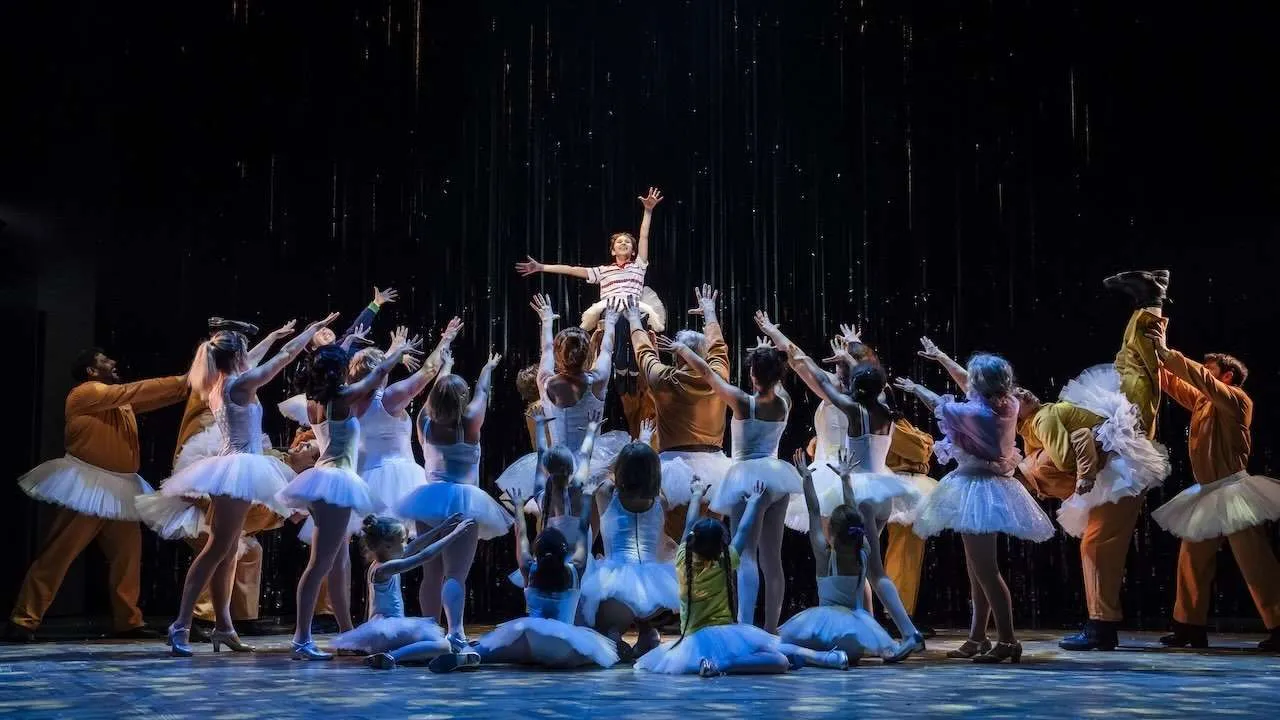
See newly released images from Billy Elliot the Musical, as UK and Ireland tour commences
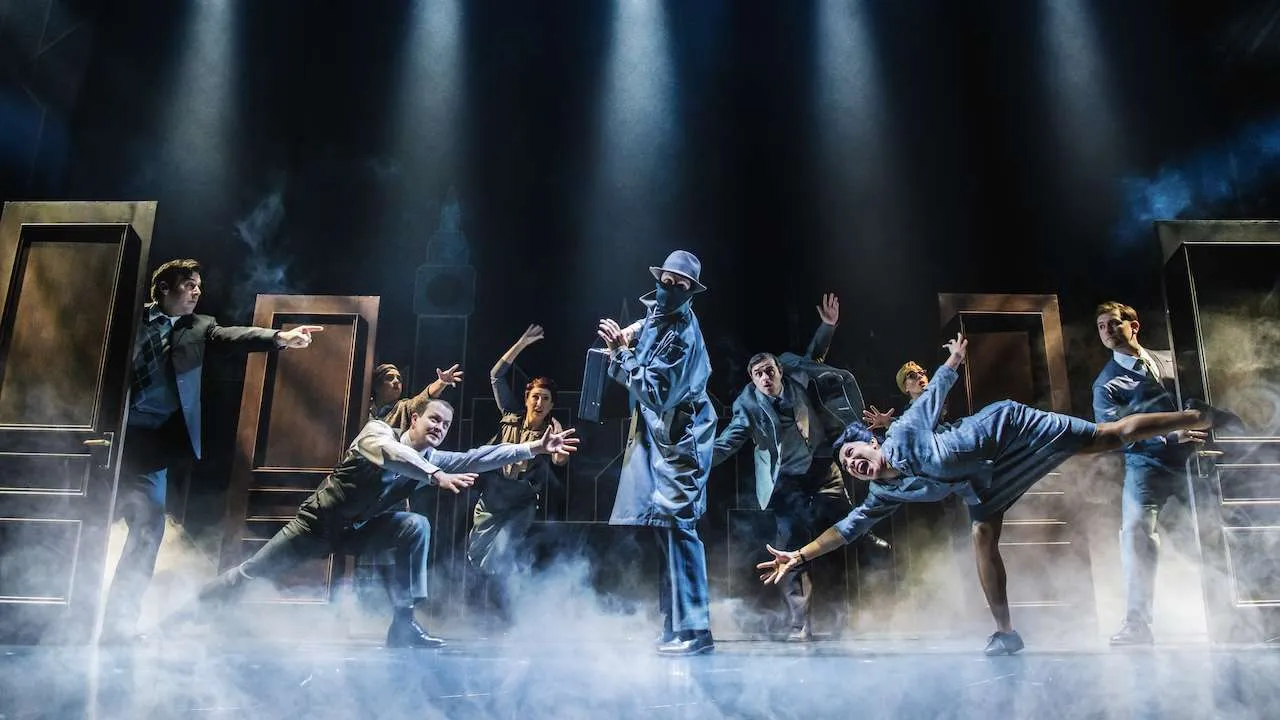
The Comedy About Spies announces first ever UK Tour from June 2027

Everything you need to know about The Lives of Others in London

Ian Charleson biopic Elsinore starring Andrew Scott is coming to cinemas in January 2027 following great critical acclaim
Latest News

A jaunt through the history of panto: how a flexible theatre form transformed Britain’s Christmas theatre scene

Everything you need to know about West Side Story at the National Theatre
10 reasons we can’t wait for West Side Story