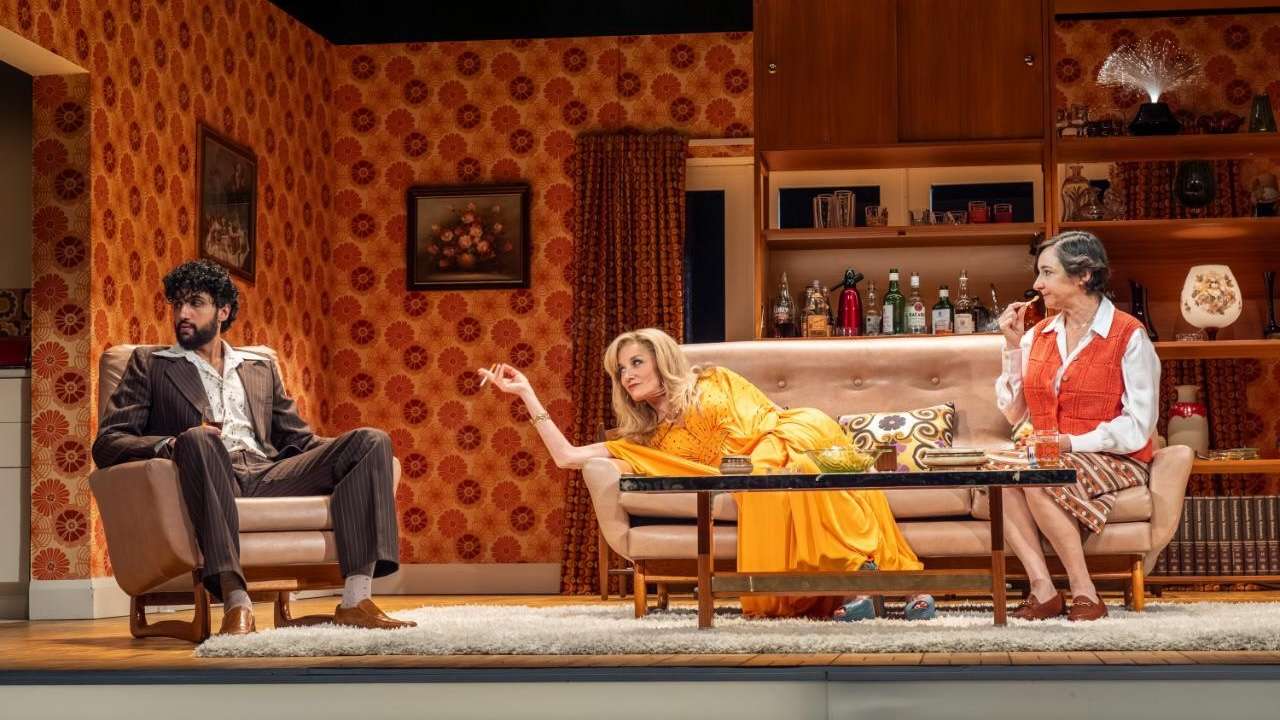

Mike Leigh’s classic 1977 play is back in the West End and it’s a hit. Critics agree this production brings Mike Leigh’s biting satire to life with aplomb. Tamzin Outhwaite sparkles at its centre like a 70s disco ball in this drama about a cocktail party that spirals out of control.
Abigail’s Party, Mike Leigh’s landmark play about class and societal niceties has been reimagined for a new decade. Originally staged in 2024 at Stratford East, this new interpretation has been touring the country before it arrived in the West End. Critics agree it’s a stellar production, just as funny and biting through a 2026 lens as it was in 1977 when the play premiered at Hampstead Theatre.
Critics had plenty of praise to bestow onto he production, but it was Tamzin Outhwaite who shined above all. Critics called her take on the horrible Beverly ‘gloriously embodied,’ and the production as a whole steps out of the shadows of the 1977 version most audiences will recognise.
The verdict: Mike Leigh’s classic satire is a hit yet again. Critics agree Tamzin Outhwaite takes top prize in a play that is just as punchy as ever, if not more so.
Critics’ comparison
| Publication | Rating | The Key Takeaway |
| The Times | ★★★★ | A deftly crafted revival of a classic |
| The Stage | ★★★★ | Watching Outhwaite is anything but boring |
| Financial Times | ★★★★ | Tamzin Outhwaite is ferocious in a resonant production |
| The Standard | ★★★★ | A deeply enjoyable dinner party from hell |
| BroadwayWorld | ★★★★ | A vibrant and perfectly-pitched production |
| The Telegraph | ★★★★ | This is a party you won’t want to miss. |
| The Independent | ★★★ | Favours a consistent tone of brash silliness over psychological intensity. |
| The Guardian | ★★★ | Outhwaite’s performance is a triumph in this eternally resonant suburban drama |
The reviews: what they loved about Abigail’s Party
- Tamzin Outhwaite: critics praised her performance across the board, with the The Times commenting that she successfully ‘steps out of the shadow of Alison Steadman’ and the Financial Times calling her performance ‘flinty, ferocious and quite fabulous.’
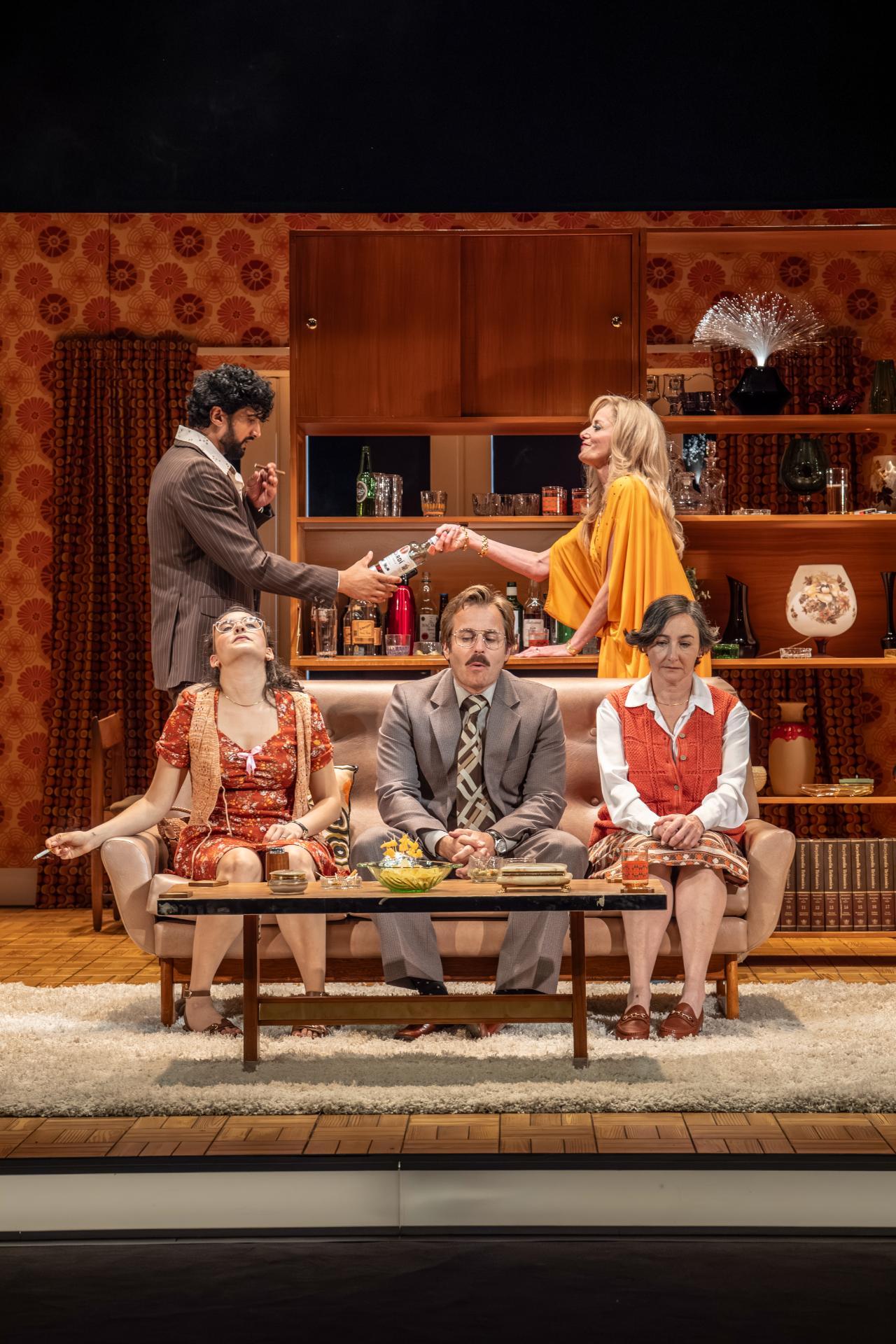
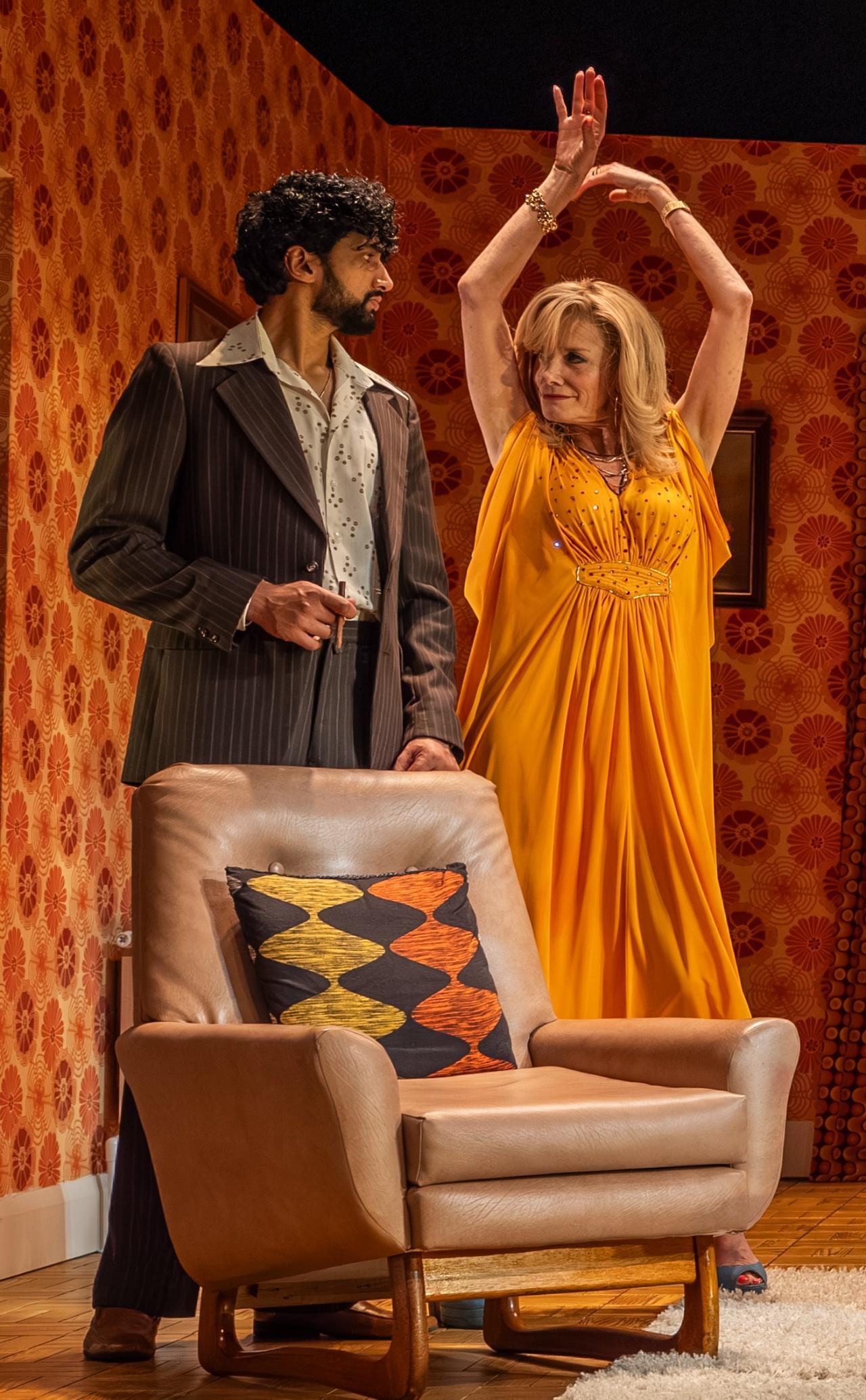
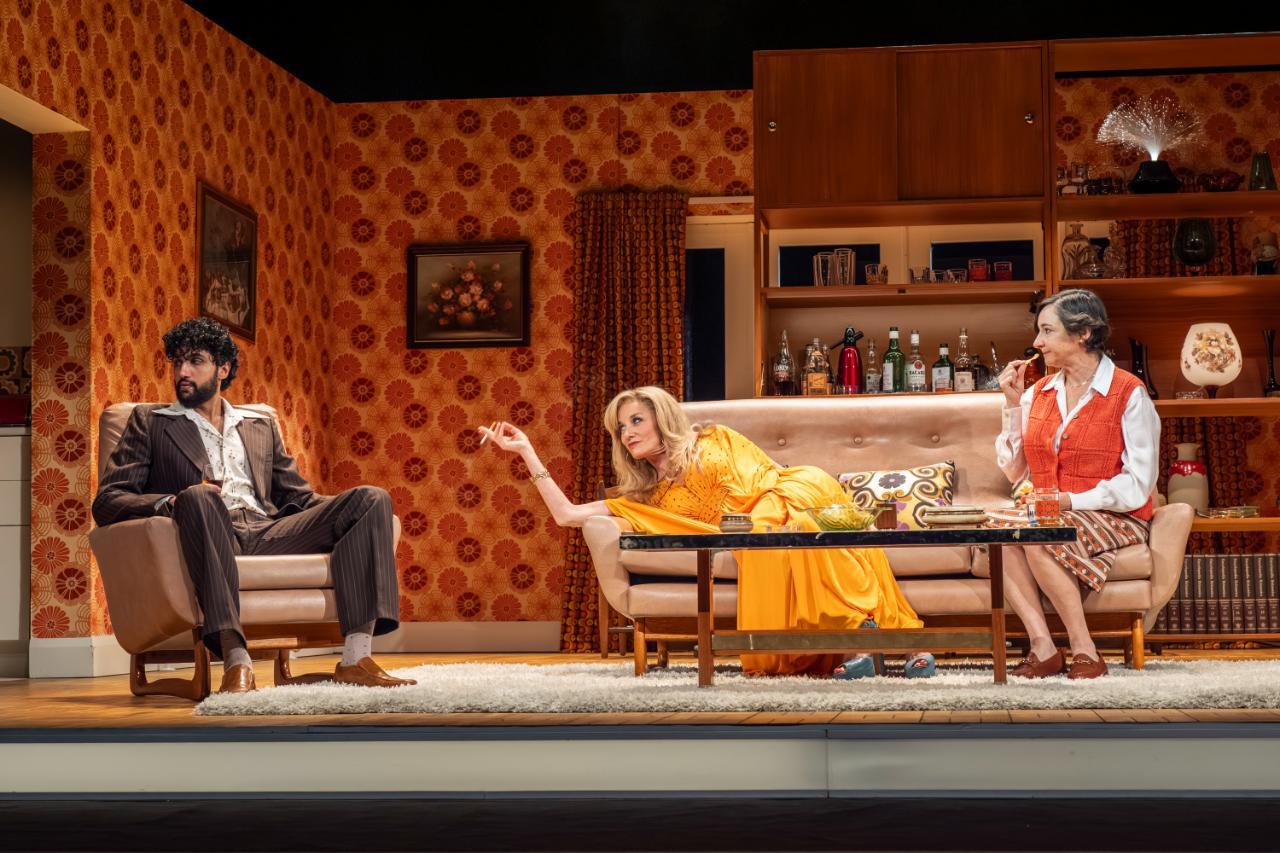
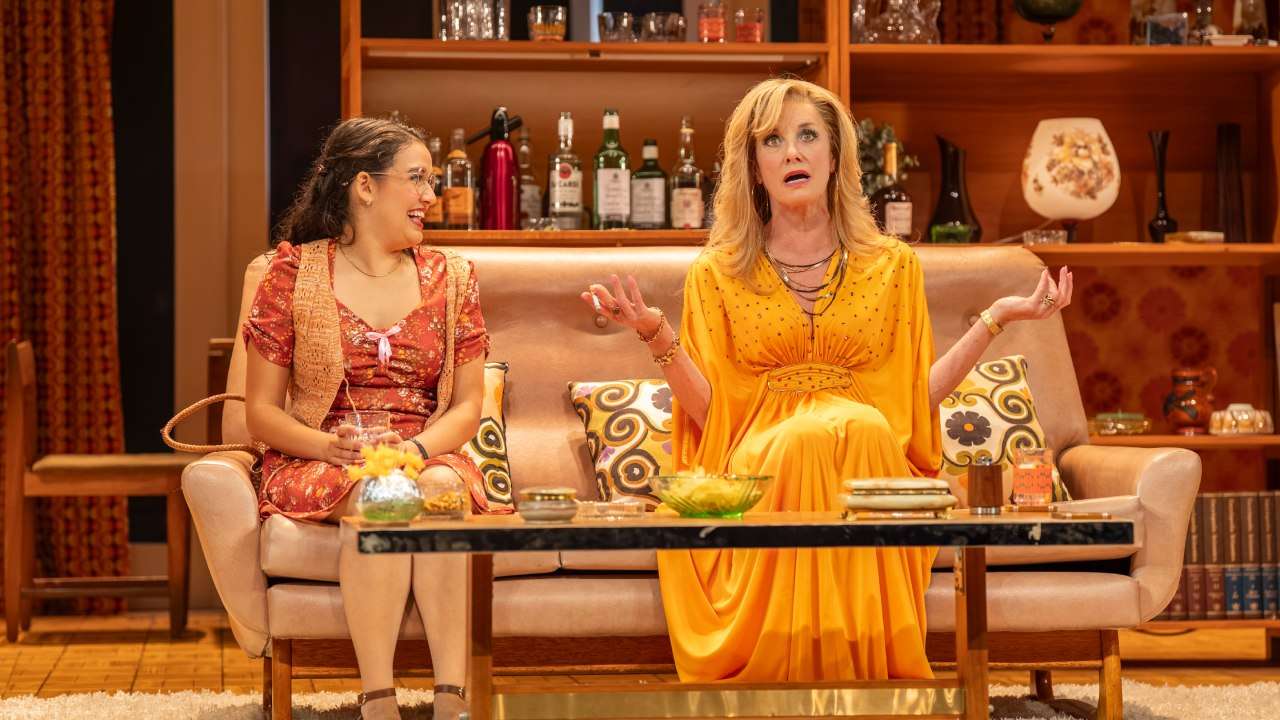
- The set design: The set is something straight out of a time capsule with plenty of vibrant colours, patterns and instantly familiar set pieces. Critics agreed Peter McKintosh’s set design was pitch perfect. The Times even likened it to ‘a Martin Parr photograph.’
- The cast overall: Each critic found something to praise in the cast. The Times commented that Bishop ‘strikes just the right aggrieved tone,’ while The Standard observed Colin playing Sue with “wincing delicacy.’ Malik also put on enjoyable performances, with The FT praised Malik. for turning ‘minimal movement and monosyllabic responses into a masterclass of grievous subtext.’
The reviews: what fell flat for Abigail’s Party
- Making Angela and Tony South Asian: While reviewers had no qualms with the choice, and praised the actors who played Tony and Angela, they all picked up on the shift in impact when the characters are from a different background, leading to some uneasy and pointed moments. The Stage and Standard both agreed that the change added value by really calling attention to the casual racism. The Times, on the other hand, expressed a slight reservation at the change, wondering whether the change served to deepens the satire or add an uncomfortable racial undercurrent.
- It doesn’t stick the landing: while it’s an enjoyable production, some critics felt that the ending wasn’t earned. The Independent felt that by the end, there was ‘nothing to leave a lasting chill in your bones,’ since the production leaned more into the brash and silly rather than homing in on the inner turmoil of the characters. The Guardian too felt that ‘tonal shift from comedy to tragedy’ was abrupt and meant the play’s dark ending doesn’t land in the way it wants to.
The back story
Set in suburban Essex in the 1970s, the play follows Beverly and her husband Laurence, who host a drinks party for their new neighbours Angela and Tony, along with Susan, a more reserved, middle-class divorcée from next door.
Susan’s fifteen-year-old daughter Abigail is having her own, much louder party at home at the same time, its distant occurrence looms over the evening. As the drinks flow, cringe-inducing small talk gives way to flirtation, class tension, and marital strain, building toward a dark and startling climax.
Abigail’s Party originally premiered in 1977, and was an instant success. Mike Leigh famously developed the play through months of improvisation with the actors to build characters and scenarios. A version of the play was recorded for the BBC, leading the play to become firmly embedded in British popular culture.
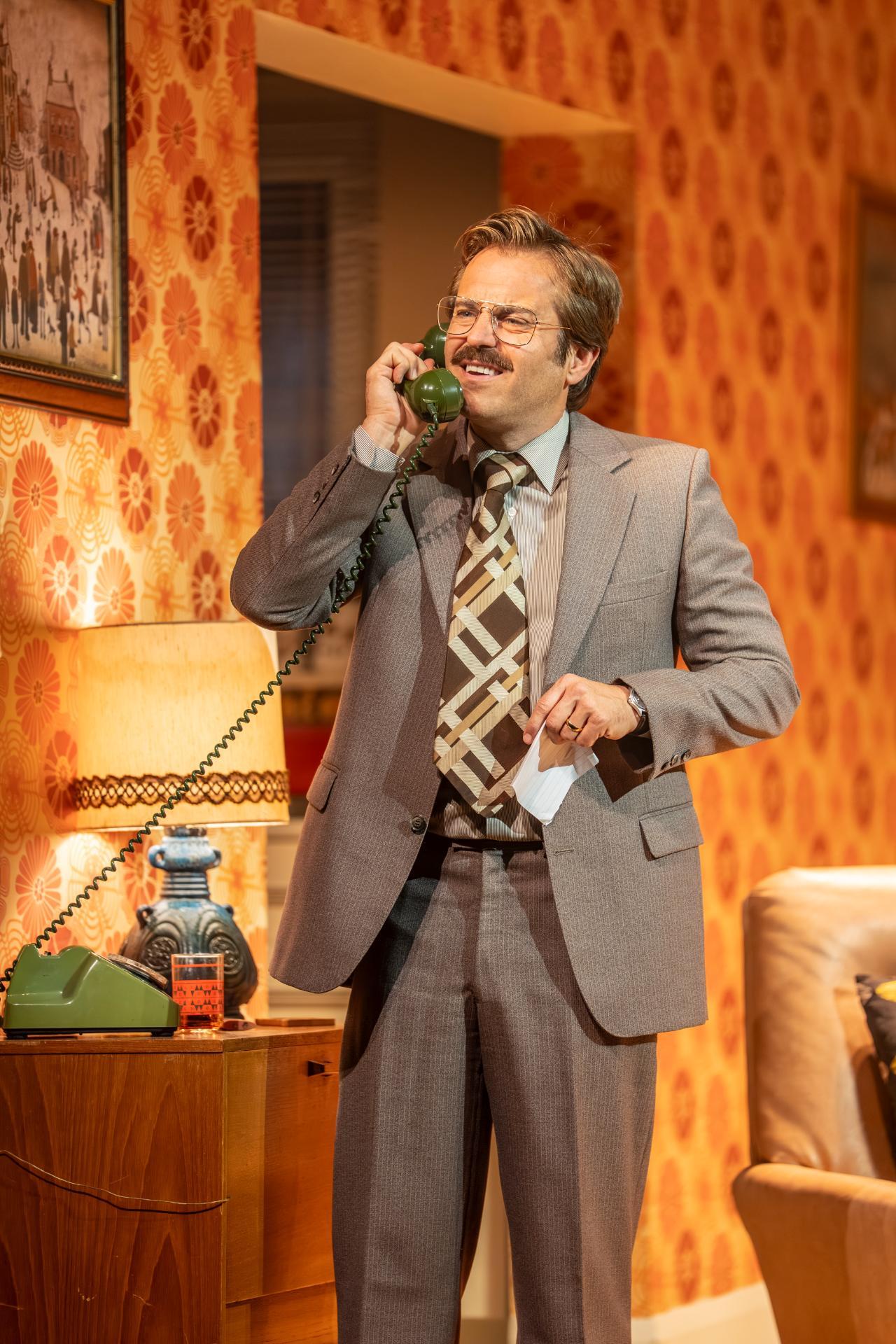
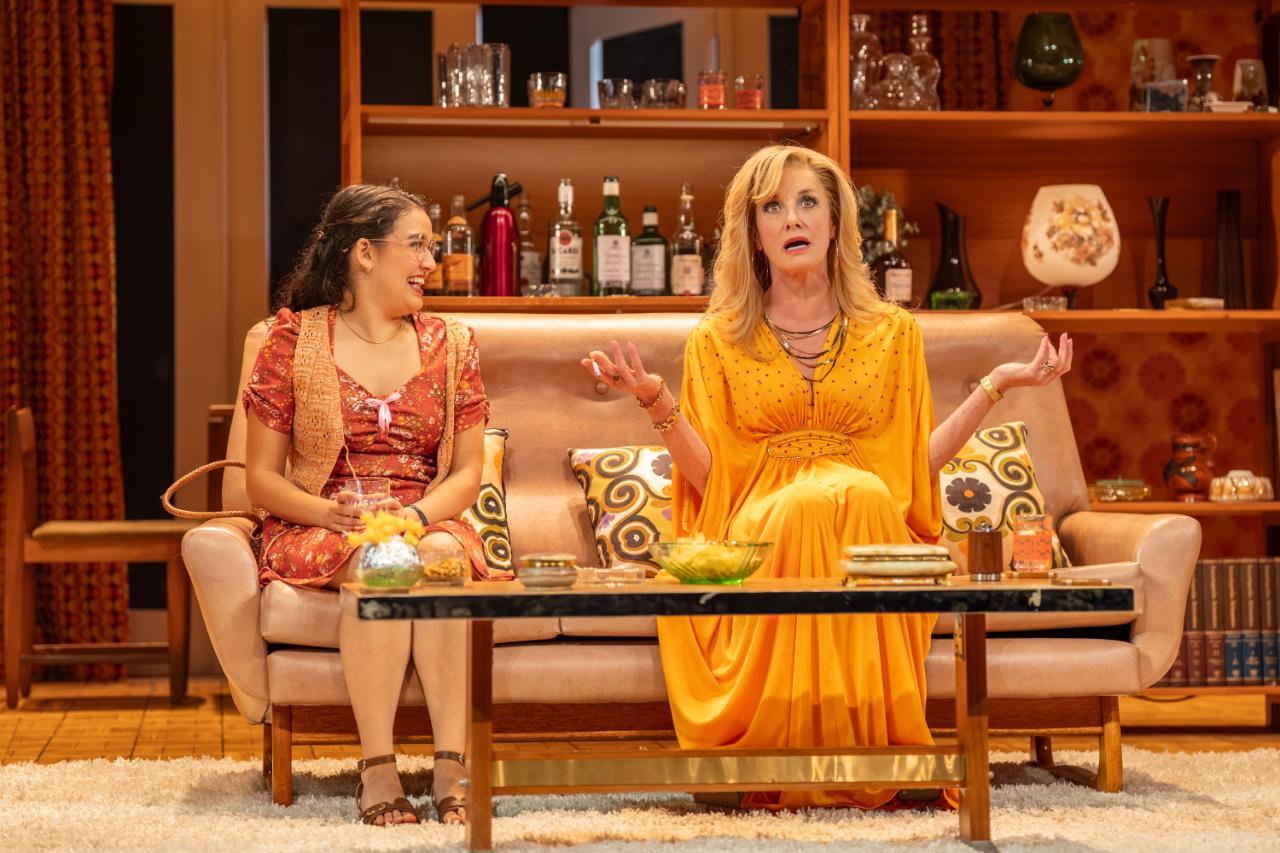
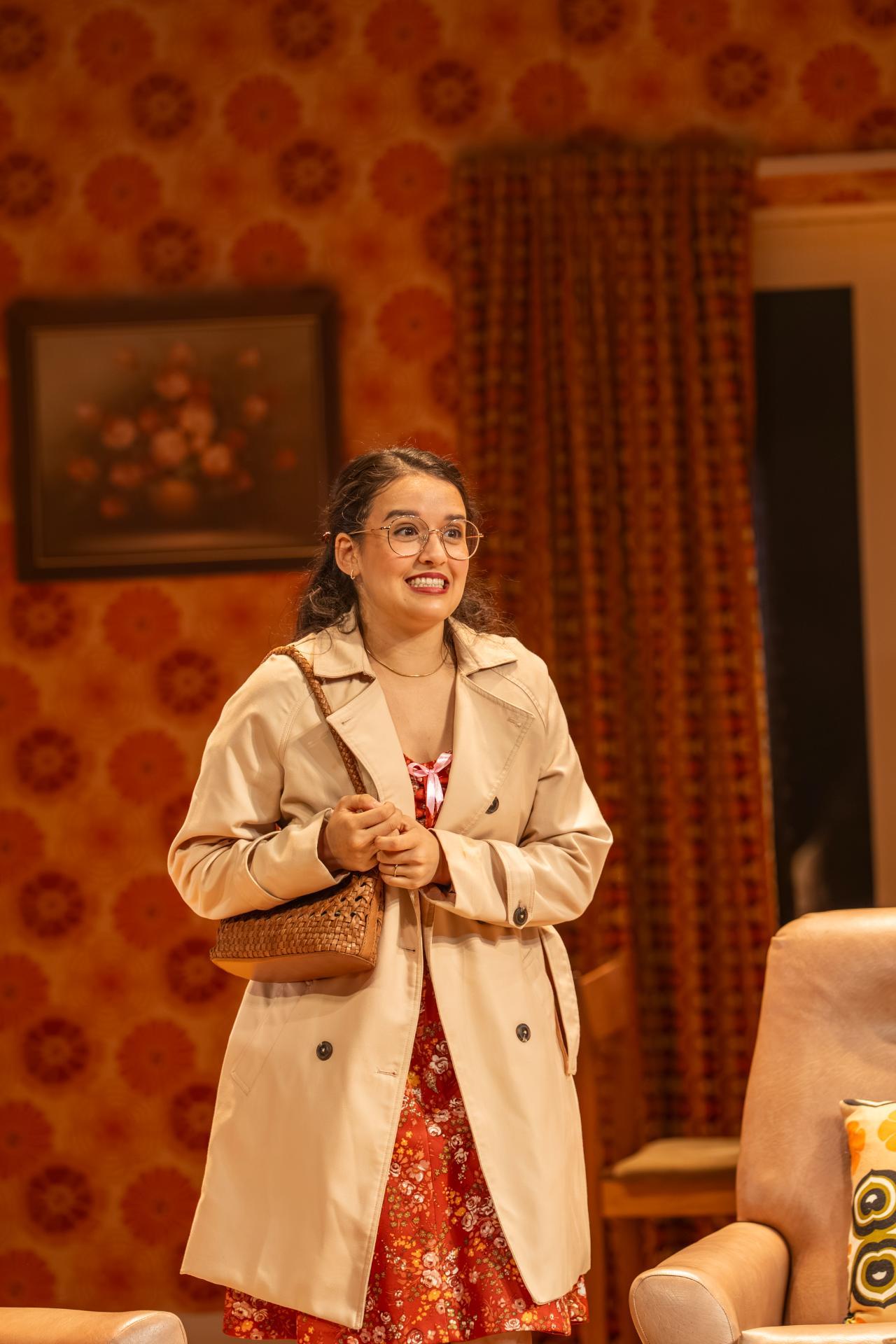
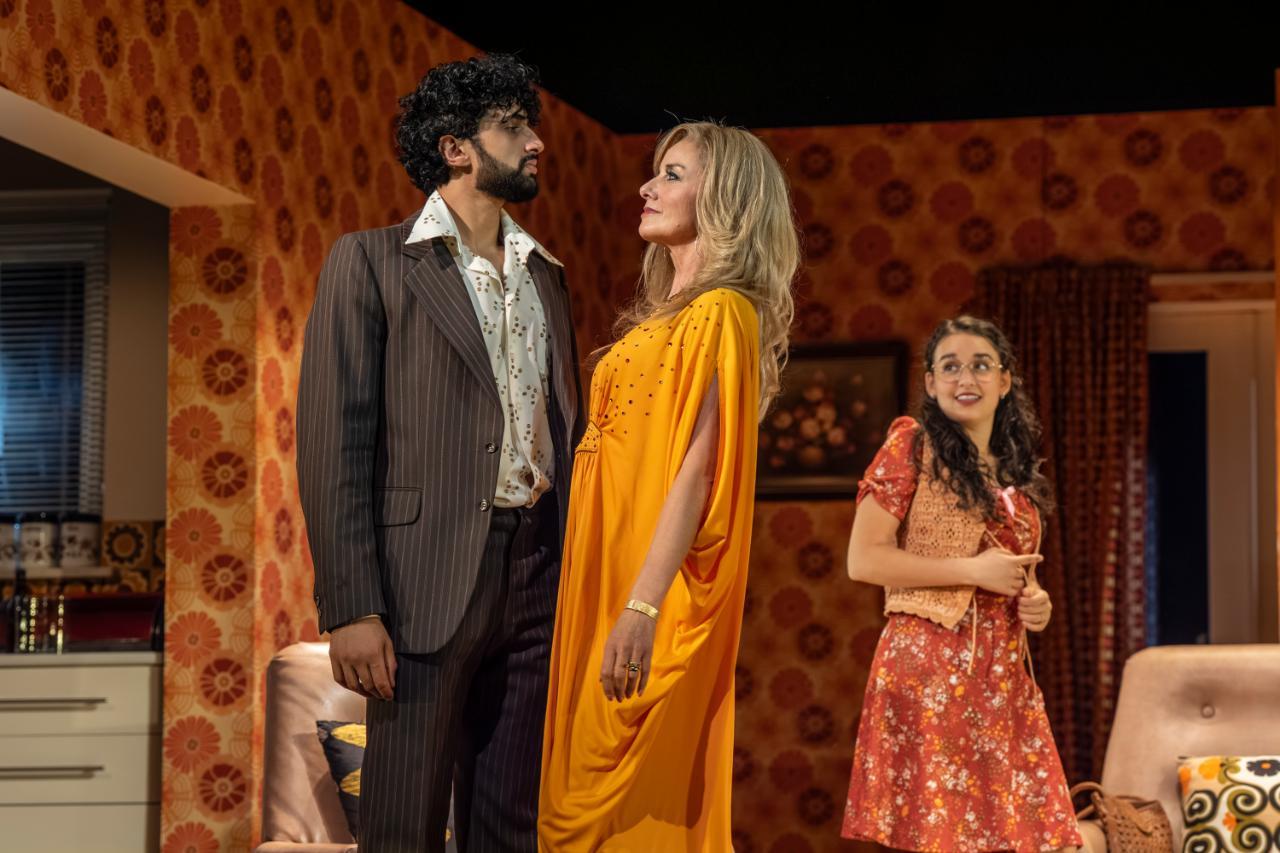
The cast includes:
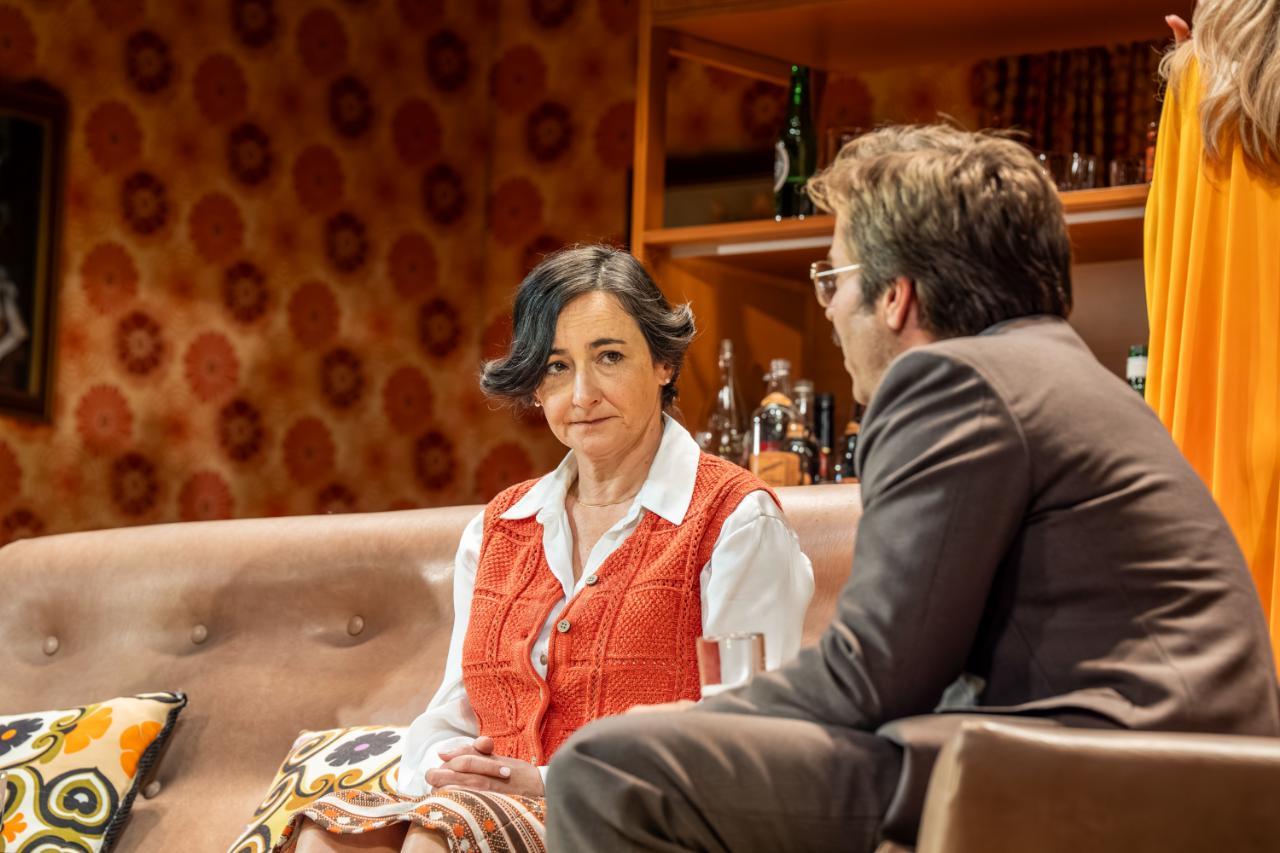
- Beverley: Tamzin Outhwaite (EastEnders)
- Laurence: Kevin Bishop (The Kevin Bishop Show)
- Tony: Omar Malik (Hollyoaks)
- Angela: Lauren Patel (Everybody’s Talking About Jamie)
- Sue: Pandora Colin (Chernobyl)
The creative team includes director Nadia Fall (Artistic Director of the Young Vic), with set and costume design by Peter McKintosh. The creative team also included lighting designer Howard Harrison and sound designer Alexandra Faye Braithwaite.
Where to see Abigail’s Party
- Venue: Harold Pinter Theatre, until 19 September
- Age: 12+
- Runtime: 2 hours (including interval)
- Full details on Abigail’s Party
What are the critics saying about Abigail's Party?
A skilful revival of the suburban classic at the Harold Pinter Theatre makes Mike Leigh’s dialogue sound freshly minted.“
"Abigail’s Party is a study in how we construct façades.”
“Tamzin Outhwaite’s bored, vampish wife steps out of the shadow of Alison Steadman, who gave us an unforgettable Bev half a century ago.”
“Kevin Bishop strikes just the right aggrieved tone.”
“If I have a slight reservation about this revival, it’s in the decision to turn husband-and-wife guests Tony and Angela into an Asian couple. Omar Malik and Lauren Patel are on fine form but the racial undercurrent seems to provide Laurence with another reason to cast dirty looks at the big guy with the disco collar.”
“The set designer Peter McKintosh festoons the stage with period bric-a-brac; we could be looking at a Martin Parr photograph.”
“This is Outhwaite’s show."
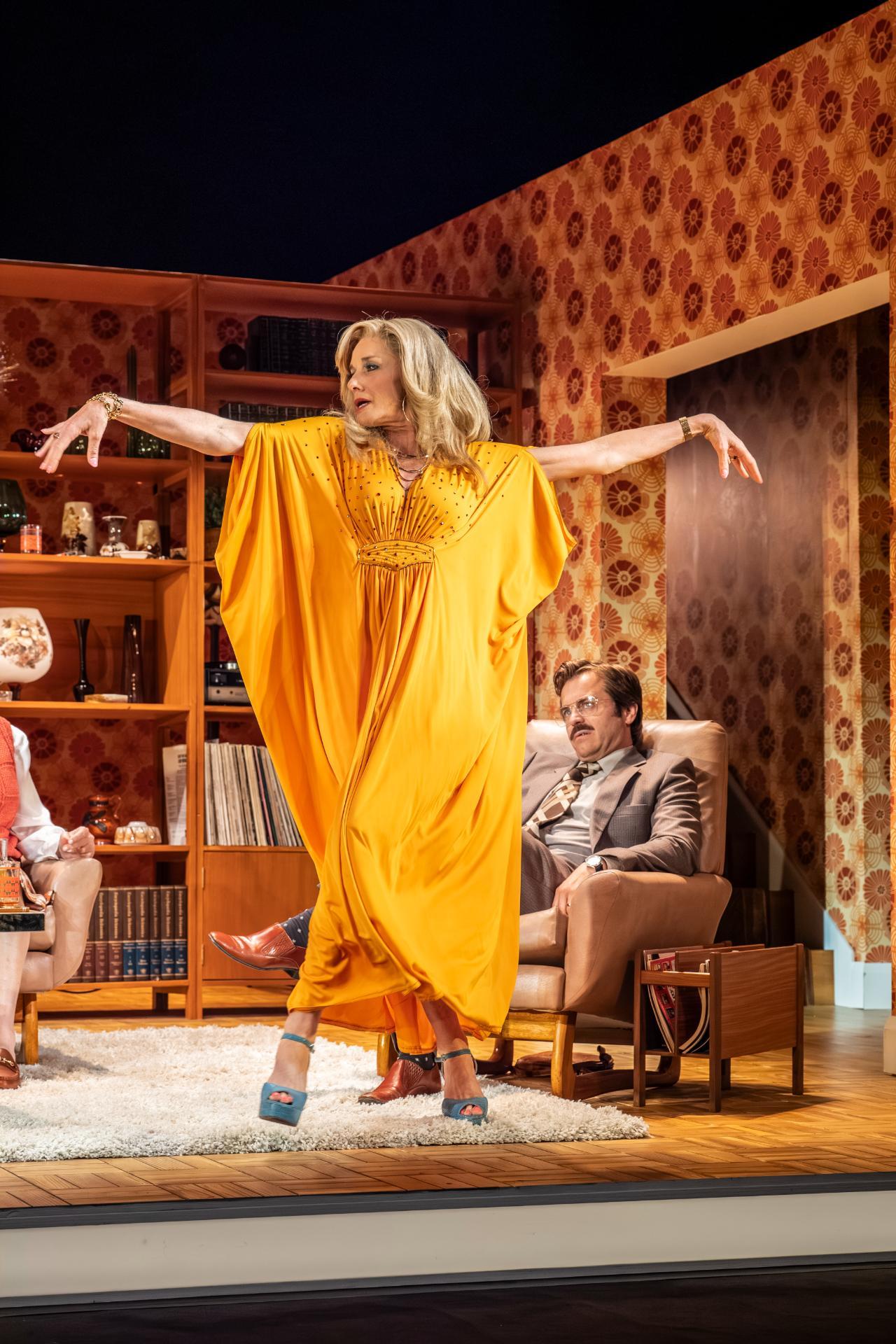
“As for Beverly, she is gloriously embodied here by Tamzin Outhwaite, who gives her a brand of glossy chain-store glamour, wit and a streak of venomous spite.”
“a pitch-perfect 1970s set by Peter McKintosh – vomitous wallpaper, dark brown veneer cabinets”
“Trapped by her aggressive hospitality are newcomers to the Essex street, Tony (Omar Malik) and Angela (Lauren Patel), here a South Asian couple, which excruciatingly highlights the casual racism in remarks about “the area going down” or Beverly’s Pakistani driving instructor.”
“It is inevitably stagey – the heightened quality of Leigh’s work gives the play an air of contrivance that in its way is as dated as the decor – but Outhwaite seizes and stomps her way through it with glittering conviction. And it’s still horribly entertaining.”
“Tamzin Outhwaite is ferocious in a resonant production of the 1977 landmark drama.”
“Nadia Fall’s astringent staging retains the period setting, rolling the whole thing out on Peter McKintosh’s gloriously strident set and lacing it with 1970s music, but it also drives home the current resonances.”
“Omar Malik’s Tony and Lauren Patel’s Angela are of British Asian heritage, which makes Laurence’s remarks about the changes in the area feel particularly loaded, and the smug prejudices and casual hostilities that pepper the conversation find new echoes in today’s rancorously divided society.”
"It’s delivered with nimble physical precision by Fall’s cast. Malik turns minimal movement and monosyllabic responses into a masterclass of grievous subtext, and Patel’s Ange bubbles and writhes with nervous insecurity. Pandora Colin’s Sue and Kevin Bishop’s Laurence both gradually retreat into stillness — her into a kind of condensed misery, him into seething animosity."
“Outhwaite gives a monstrous, physically precise tour de force.”
“Peter McKintosh’s set and costume design looks cool rather than naff.”
“Nadia Fall directs with a fine sense of comic timing, and nods to the play’s iconic status with expressionistic curtain-raisers for the first and second acts.”
“In Nadia Fall’s energetic production, first seen at Stratford East in 2024, the casting of these two as Asian adds a frisson to the casually racist chat about “coloured chaps” and even about curly hair.”
"Outhwaite’s every gesture, every wag of her sandalled ankle, reeks of self-satisfaction and command. It is, to be sure, a mannered performance among other mannered performances: Tony’s monosyllabic, almost Buster-Keaton-ish absence of expression; Ange’s endless prattling."
“There has to be good reason for staging a much-revived play and Leigh's text is surely reason enough.”
“This cast is to be highly commended for delivering much of the show as if it were freshly written.”
“Nadia Fall directs with a fine sense of comic timing, and nods to the play’s iconic status with expressionistic curtain-raisers for the first and second acts.”
“Outhwaite oozes with passive agression and overt flirtation; it's a full-throated and brilliantly realised performance.”
“Kevin Bishop is excellent as the increasingly tense Laurence, particularly as he desperately tries to assert his own tastes and artistic preferences.”
“Fall's decision to cast a South Asian couple as Angela and Tony works well, bringing new sharpness to Laurence's snarky comments about the changing quality of people within the local community.”
“Fall's deft direction maximises the comedy, but also the agonising and almost unbearable sadness lurking below. Abigail's Party is the ultimate drinks party from hell, but this vibrant and perfectly-pitched production means you just can't take your eyes off it.”
“Abigail’s Party turns 50 next year, yet Mike Leigh’s popular satire of the aspiring lower-middle classes still has the power to make us cringe and laugh in equal measure.”
“Tamzin Outhwaite proves herself Steadman’s equal in Nadia Fall’s vigorous revival.”
“The five-strong cast masterfully wrings every line for maximum comic effect.”
“Fall’s decision to cast two Asian actors in these roles adds a new edge to certain lines, including Laurence’s snobby comments about the neighbourhood going downhill.”
“Fall’s production wisely eschews updates – the play holds up strikingly well without them – and designer Peter McIntosh leans into the period setting.”
“Delicious and nauseating at once, Mike Leigh’s 1979 play Abigail’s Party preserves a whole decade’s worth of lower-middle-class social signifiers and makes them shimmer like a tinned fruit cocktail in a glass.”
“As well as reimagining Beverly, Fall’s production (which originally premiered at Theatre Royal Stratford East last year) gently reframes the story’s cultural context.”
“There’s a new ugliness to Laurence’s low dog whistles about the neighbourhood becoming more “cosmopolitan” here, in a production where Tony and Angela are played by South Asian actors – they’re a vulnerable pair of outsiders, desperate to obey the rules of this new environment.”
“Fall’s production, though, favours a consistent tone of brash silliness over psychological intensity. The exaggerated performances and lurid setting feel toxic, right from the start.”
“Tamzin Outhwaite’s incredible achievement is that she banishes Steadman’s original portrayal of Bev as the definitive one.”
“Her performance, and Fall’s production as a whole, proves that this period comedy of manners is eternally resonant.”
“Fall adds an ingenious tweak in the suggestion that Tony and Ange are of “Pakistani” origin. This transforms its meanings in a subtle but deft way: the area, we hear, is being taken over by different kinds of people and you imagine this not only being a comment on working-class mobility but racial diversity here in the “white flight” heartland of Essex.”
“What does not work as well is the chemistry between Bev and Laurence, which lacks bite in the first act. Laurence is rather passive, and expressionless, the tension between them uncharged.”
“The middle-class Sue is key to Leigh’s satire. She is brilliantly portrayed as the socially-awkward, plummy ex-wife of an architect who tries to evade Laurence’s questions on the area and the class antagonisms underlying them.”
“The darkness of the ending does not land. It is partly because there are unanswered questions around their marriage but also because it has all been so enjoyably comical that this switch to tragedy leaves Bev speechless and at sea, for once.”
Related News
9 best shows to see in the West End in August 2026
Sinatra the Musical Reviews: standout performances but critics say script lacking depth
First look photos: EastEnders’ Tamzin Outhwaite in Abigail’s Party in the West End

Abigail’s Party to transfer into the West End starring Tamzin Outhwaite
Latest News
Everything you need to know about The Traitors: Acts of Betrayal in London
Nina Raine’s sweeping new adaptation of Middlemarch arrives at the RSC: See brand-new images from the production
What to expect from Pride the Musical ahead of highly anticipated transfer to the Bridge Theatre