
As Tom Stoppard’s masterpiece becomes the first of his plays to be staged at the newly renamed Tom Stoppard Theatre, Isis Hainsworth, Seamus Dillane, Holly Godliman and Angus Cooper talk comedy, tragedy and the moments that get them every single night.
Arcadia is, no doubt, Stoppard’s masterpiece. “It’s one of the most incredible plays ever written,” says Isis Hainsworth, who plays the young mathematical prodigy Thomasina. “I think so,” agrees Seamus Dillane, who plays her tutor Septimus Hodge, and from there more of the company piles in.
“It’s got incredible characters, incredible women, all sorts of funny men, ” Hainsworth begins. “Silly, stupid men,” offers Dillane, helpfully.
“That it’s really fun to watch,” Hainsworth continues. “Comedy, tragedy, heartbreak… ” “Knowledge,” adds Dillane. “Sex. Lots of things,” she finishes.
“It’s just amazing,” says Angus Cooper who plays Valentine Coverly. “And Tom Stoppard is a genius.” A beat. “Was.”
That small correction sits at the heart of this production. Following Stoppard’s death last November, the Duke of York’s Theatre has been renamed in his honour, and Carrie Cracknell’s acclaimed revival of Arcadia, transferring from the Old Vic, is the first of his plays to be staged there.
“It’s the first Stoppard in the Tom Stoppard Theatre,” says Holly Godliman, who plays Chloe Coverly. “Come on.” “Stoppard in the Stoppard,” agrees Cooper.
Buy tickets for Arcadia at the Tom Stoppard Theatre
Stoppard and the pursuit of knowledge
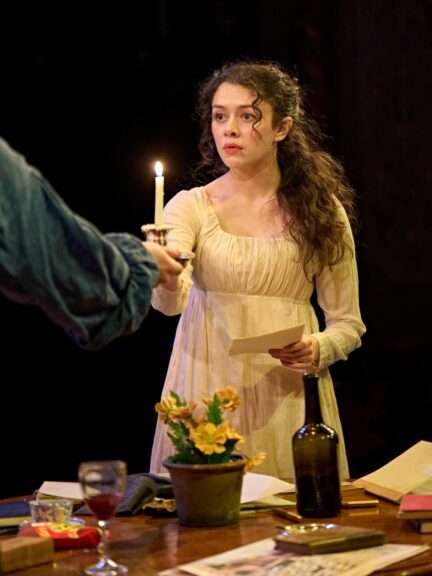
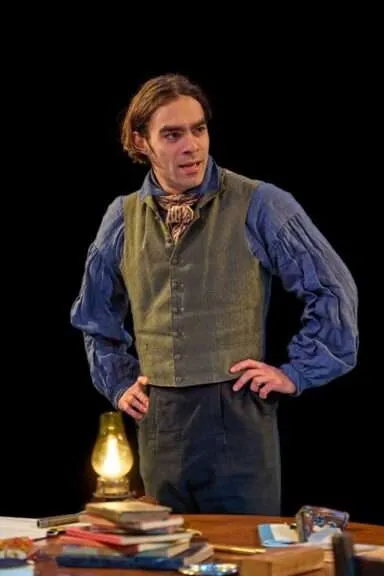
Asked what they’d most want people to know about Stoppard himself, Dillane lands on something revealing, and useful for anyone approaching the play for the first time.
“He himself was self-taught. He didn’t go to university,” he says. “I would like people to know that Tom Stoppard didn’t go to university, and that a lot of his knowledge came through self-investigation.”
It’s a fitting detail for a writer whose most famous play is consumed by the pursuit of knowledge, and, indeed, when the company are challenged to sum up Arcadia in a single word, that’s exactly where they land.
“Knowledge,” says Dillane. “That’s good,” agrees Hainsworth, before Cooper decides to improve on it: “Knowledge. Pursuit.” Godliman, counting, is unimpressed. “That’s four.” A second. “Three.”
Which is a very Arcadia sort of answer, and for Cooper, the pursuit is genuinely the point. His favourite moment in the show to play is in scene seven, sitting on stage being told by Hannah Jarvis that it’s all trivial: “that if the answer is in the back of a book, then why bother?”
“When you’re doing any play, and also this play, it feels like the world is caving in. The pressure is on, there’s a duty to get it right, a duty to be this and be that and to service the audience,” he says. “That’s not what it’s about. It’s about pursuit. It’s about the finding.”
Byron or Newton? A house divided

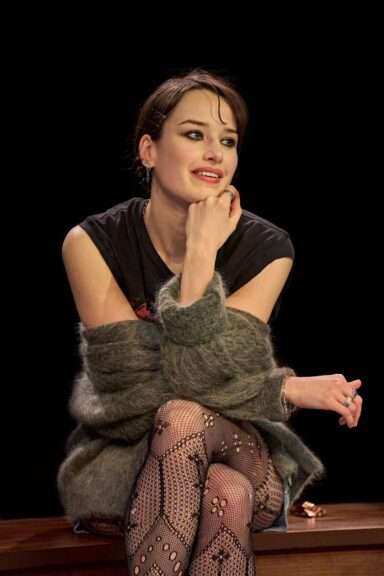
Arcadia sets Romantic passion against scientific reason, its two timelines circling the same questions from opposite ends. So it seemed only fair to make the company pick a side… and they split almost exactly down the middle.
Dillane goes straight for Byron. “Mad, bad and dangerous to know,” he says. “I mean, what more?” Hainsworth agrees he’s “so cool,” and promptly uses that as her reason to go the other way.
Godliman also lands on the Romantic side, though on grounds of self-preservation rather than passion: “I just don’t really understand a lot of science.”
That leaves Cooper flying the flag for reason, and even he wavers. “But we needed him,” he insists of Newton, to Godliman’s immediate agreement.
Then a caveat: “I also feel I’m answering that on behalf of Valentine, because Valentine would have said Newton.” A pause. “But actually, maybe Byron. Neither of them were great guys.”
A funny tragedy?
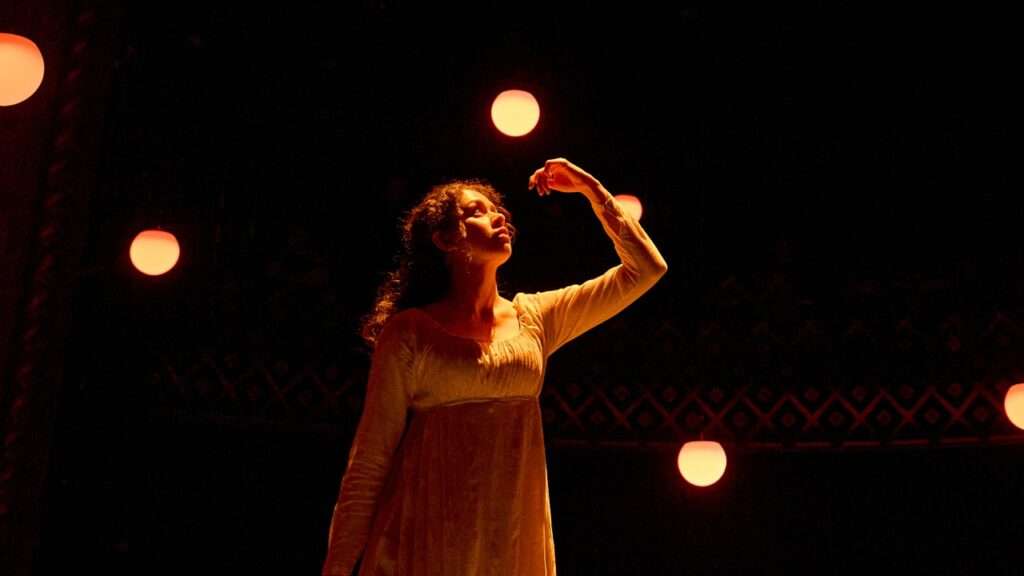
Ask whether Arcadia is a comedy or a tragedy and nobody will quite commit… which, given the play, is arguably the correct answer.
Godliman votes comedy, “if you just ignore the last scene.” Cooper attempts a compromise and lands somewhere delightful: “A comi-trag? Comi-tragedy, with a healthy dose of comedy.” Hainsworth settles on “a wee bit of both. There’s definitely fun.”
It’s Dillane who gets closest, working it out aloud as he goes. “There’s definitely fun. What’s the definition of a tragedy? If something bad happens at the end?” He decides: “It’s a funny tragedy.” Hainsworth likes it enough to repeat it straight back. “Funny tragedy.”
That tonal tightrope runs through every part in the play. Ask the four to describe their characters in a sentence and you get a neat map of it. Godliman goes first, and briskly: Chloe is “front-footed, wants to be mother of the house, likes looking after people. Full stop.” Cooper takes a more searching approach: “Valentine is searching for a sense of place and worth and validation,” prompting an admiring “oh, that’s way better” from Godliman, before he punctures it himself. “And he’s a massive nerd.”
Hainsworth’s Thomasina is “a young genius who is hungry for knowledge in all aspects of her life,” while Dillane’s Septimus is “an academic who tutors this young genius and is quite aware that she is more intelligent than he is.” He adds, after a moment: “And also he is a bit promiscuous.”
Warmth, wit and one very bold theory
Godliman gets the play’s most audacious idea: Chloe’s theory that sex is the reason history goes wrong, and has to make it land as both a joke and a genuine insight.
“Chloe is incredibly confident, so when she comes out with such a bold claim, that the theory of determinism does not work and it’s all due to sex, that is inherently quite a funny thing to say,” she says.
“And then for her to concisely explain herself in a very profound way, in a very short sentence, and then skip off stage, leaves you going: oh, I wasn’t expecting her of anyone to hit the nail on the head.”
Chloe is also the warmest presence in a house full of people intellectualising everything, something Godliman puts down to a mix of the writing and her own instincts.
“If you look at even her actions in the play, she’s constantly looking after people, trying to organise everything, trying to get everyone dressed for a party, almost playing mother,” she says. But she’s careful not to soften her entirely.
“She can be very cutting as well, so there’s got to be a bit of a mix. She’s not always warm. She can be pretty harsh to Hannah as well, and Gus.”
“You’re no stranger to a shut up,” notes Cooper.
“I have a few of them,” Godliman admits, with relish. “Shut up! Shut up!”
Cooper, meanwhile, is wary of playing Valentine as merely eccentric. Under Cracknell’s direction he’s worked to find “the very human side of Valentine — which is that he is a young man who is in love with a woman, and has a certain means of communication.”
The writing, he thinks, does most of the heavy lifting: “Mr Tom Stoppard makes him an incredibly human person.”
The heartbreak that sneaks up on you
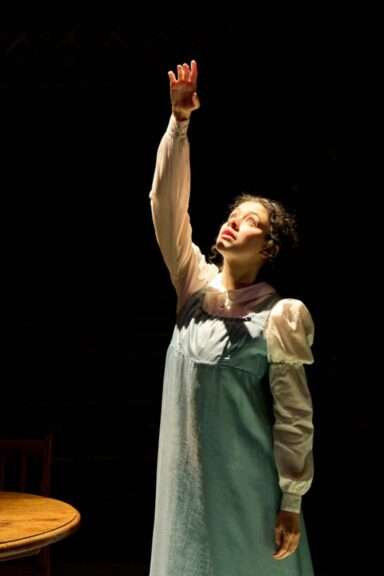
Thomasina’s fate gives Arcadia its devastating final act, but Hainsworth never plays towards it.
“I held onto this gorgeous, funny, lovely little creature the whole way through, and then suddenly there was the heartbreaking end that just hit me out of nowhere,” she says of first reading the play.
“So I try to hold onto that first feeling I had. And I have so much fun playing her that I don’t really foresee the tragedy at the end until the end happens.”
“It does sneak up,” says Dillane.
“It does,” she agrees. “I think it sneaks up on the audience — and on me, basically.”
For Godliman, the moment that gets her every night comes earlier, and from a different character entirely. “I don’t know why this is the bit that always gets me, but when Bernard says ‘I can expand my universe without you,’ and then goes into reciting Byron,” she says. “It moves me quite a lot. Brings a tear my eye.”
Carrying Arcadia into the West End
Hainsworth earned an Olivier nomination for her Thomasina at the Old Vic, and was determined not to let it change the performance she brought to the transfer.
“I really didn’t want it to change anything. I thought it was really important that it didn’t,” she says. “It’s one of the most amazing things that ever happened to me. But it was weirdly in my mind – the pressure of trying to keep whatever it was that people saw in me that got me that lovely thing.” In the end, she talked herself round.
“We created this lovely thing, and it’s still there. So forget about that weird pressure that you’re putting on yourself.”
For Dillane, who graduated from drama school in 2024 and went almost straight into one of the great parts in modern drama, the scale of it is still landing.
“I was surprised I got the bloody part,” he laughs. “It continues to surprise me. It continues to dawn on me. Stepping onto the Old Vic – and then you go to the West End. There are constantly moments of, oh God.”
Whatever the pressure, the pleasure is obvious. “It is one of the best modern-day plays ever written,” says Godliman.
“It’s incredibly funny. Really funny. I’m laughing every night… sometimes corpsing on stage, but you don’t know, I hide it. It’s funny, it’s moving, it’s intellectual, but it’s not intimidating. It leaves you wanting to know more and read more, and I rarely get that feeling. So I encourage everyone to come see it.”
“Agreed,” says Cooper. “It’s only 30 years old, and it is the never-ending play. There’s no end of wonder that you can hear and see in it.”
“So people should see it 100 times,” says Godliman.
“A hundred times,” Cooper agrees. “Come 100 times.”
Arcadia plays at the Tom Stoppard Theatre until 12 September 2026.

Related News

12 must-see shows coming to the West End this Autumn
La Vie Bohème is back: RENT begins rehearsals for long-awaited West End return

No day but today: full cast announced for West End revival of RENT as Bella Brown withdraws due to injury

Principal cast announced for Gaten Matarazzo-led revival of RENT in the West End
Latest News
Everything you need to know about The Traitors: Acts of Betrayal in London
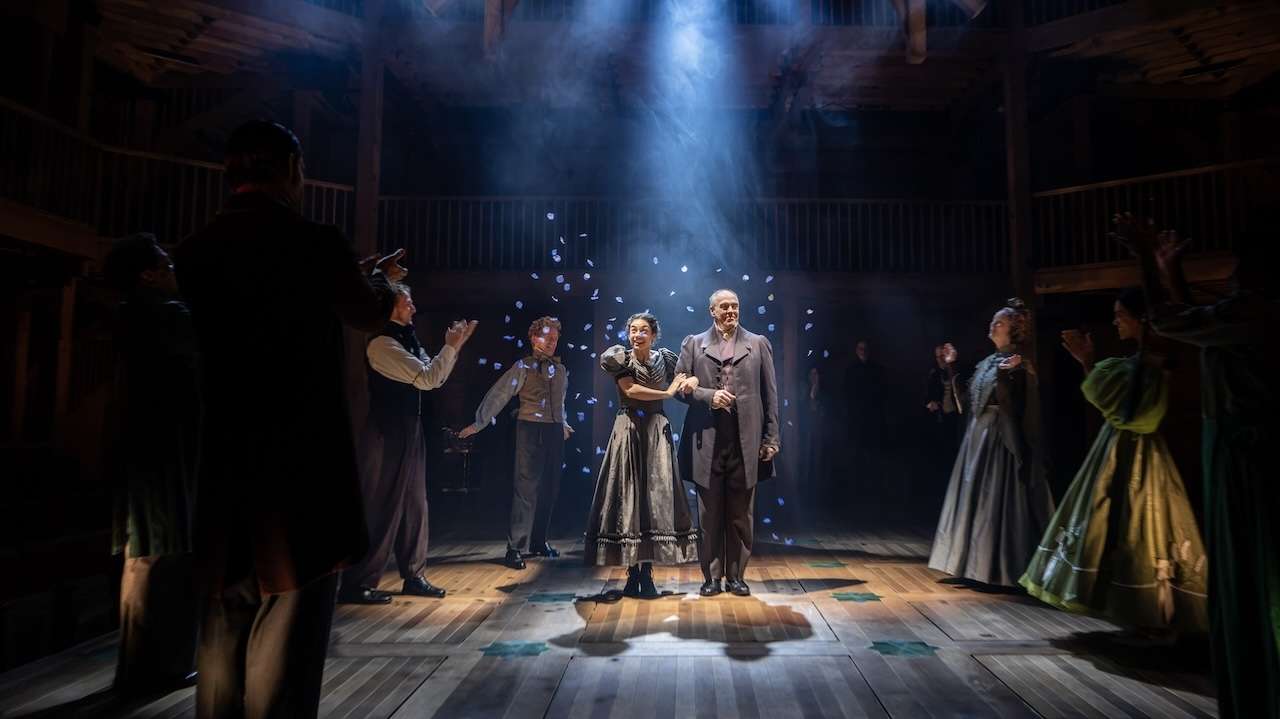
Nina Raine’s sweeping new adaptation of Middlemarch arrives at the RSC: See brand-new images from the production
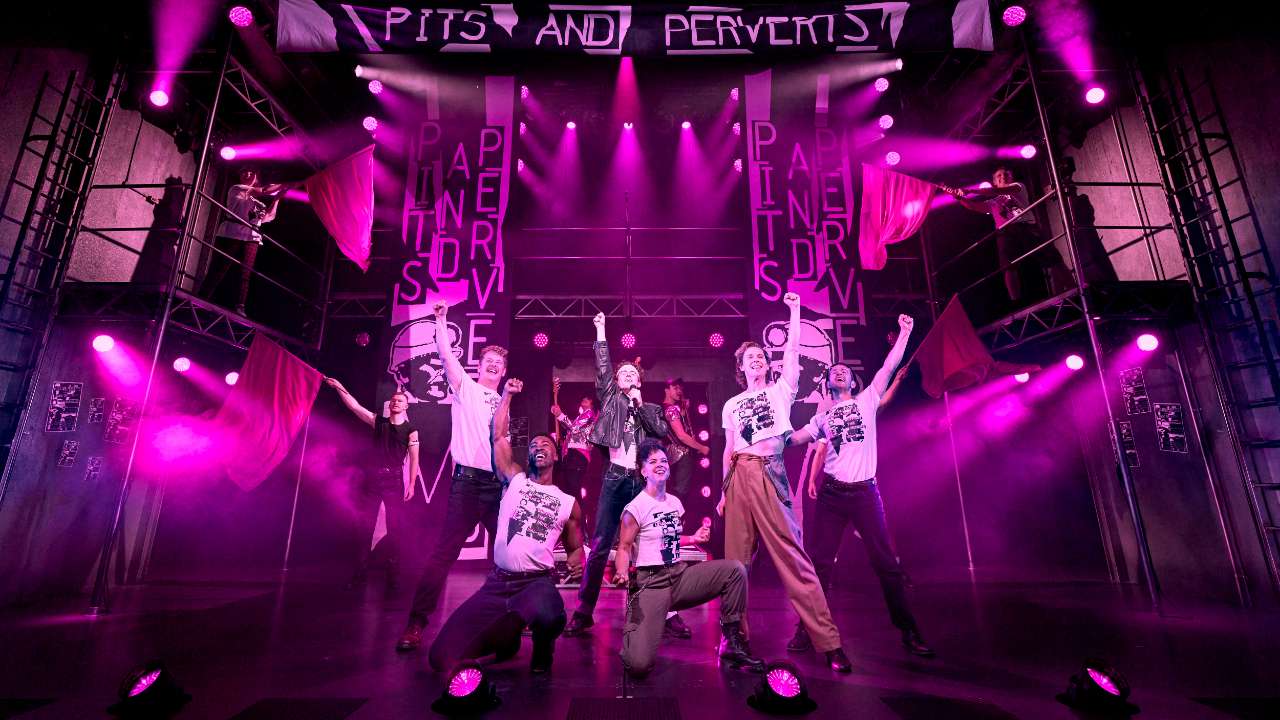
What to expect from Pride the Musical ahead of highly anticipated transfer to the Bridge Theatre