West Side Story is returning to the West End stage for the first time in several years in November 2027 – not as a straightforward revival, but a bold, major new production at the National Theatre’s Olivier Theatre.
The breathtaking new version of West Side Story will be directed by Marianne Elliott and Miranda Cromwell – the celebrated team behind Death of a Salesman – making it a fresh engagement with one of the greatest musicals ever written. Here’s what you need to know about the show, its history and why it’s essential viewing.
West Side Story holds a unique place in London’s theatrical landscape, and this revival is one of the most anticipated theatrical events of the season.
While the show has been performed countless times since its Broadway premiere in 1957, major new productions are rare, so this staging represents a significant moment for the musical and for the theatre industry more broadly.
If you’re considering booking tickets to West Side Story, or trying to decide whether it’s worth your time, here’s what you need to know about the show.
Find out more about West Side Story and how to get tickets here
Key dates and venue
- Theatre: Olivier Theatre, National Theatre, South Bank, London SE1 9PX
- Booking dates: 5 November 2027 – 12 February 2028
- Tickets: See full details here
What is West Side Story?
West Side Story is a beloved musical about a pair of young lovers: Tony and Maria, who are caught between two rival street gangs in a multiracial blue-collar town in 1950s Manhattan, New York City.
The gangs, known as the Sharks and the Jets, are fighting for terriority and are defined by ethnicity. Maria is the sister of Bernardo, who is the leader of the Puerto Rican Sharks. Tony, meanwhile, is a former Jet trying to leave gang life behind, and the Jets only has white members.
When Tony and Maria meet at a dance, it’s a moment of genuine human connection in a world built on division, and their love becomes both their salvation and their doom.
West Side Story is essentially a contemporary adaptation of Romeo and Juliet, but to only describe the show that way would miss what makes it extraordinary. It is a work of profound social observation and forbidden love wrapped in one of the greatest musical theatre scores ever written.
The musical presents a complex world where violence, despair and human connection are all real, alongside layered characters. The Sharks aren’t entirely portrayed as the villains or heroes, and neither are the Jets, both gangs are instead made up of young people trying to navigate near-impossible circumstances.
Audiences of West Side Story see characters caught between loyalty to their communities and the possibility of a different life. The show asks uncomfortable questions about belonging, prejudice and the cost of dreams – but doesn’t offer straightforward answers.
The history of West Side Story on stage


West Side Story premiered on Broadway in 1957, directed and choreographed by Jerome Robbins, with music by Leonard Bernstein and lyrics by Stephen Sondheim in what was his Broadway debut. The original Broadway cast included Chita Rivera as Anita, Larry Kert as Tony and Carol Lawrence as Maria.
The original production ran for nearly a decade across 732 performances, and won two Tony Awards, including Best Musical. It transferred to Her Majesty’s Theatre in London in 1958, and ran in the West End until 1961 with a total of 1,039 performances.
West Side Story has also toured across the UK and US over the years, and had productions in countries including Australia, Germany and Japan.
The piece ultimately proved musical theatre could tackle serious social themes with intellectual rigour without sacrificing emotional power.
West Side Story‘s screen history

West Side Story has never stopped reinventing itself.
The 1961 film adaptation became a cultural phenomenon, sweeping the Academy Awards and launching Rita Moreno (Hamilton) into history as the first Latina to win an Oscar for Best Supporting Actress – a milestone that wouldn’t be matched again until Ariana DeBose claimed the same award for the same part in the 2021 film version.
Between the two major films, an Egyptian adaptation came out in 1979, proving the story’s universal power to transcend geography and culture.
Steven Spielberg’s 2021 reimagining brought fresh energy to the material with a powerhouse cast including Ansel Elgort (Baby Driver) as Tony, then newcomer Rachel Zegler (Evita, The Last Five Years) as Maria, and Mike Faist (Newsies) as Riff.
It also earned critical acclaim and a place on the American Film Institute’s top ten films of the year. Yet something crucial happens in translation from screen to stage: the films streamline and simplify Sondheim’s sophisticated score, while the theatre version restores its full emotional complexity and musical ambition.
For audiences who know the films, the new stage production coming to the Olivier Theatre in 2027 isn’t a retread; it offers a different theatrical experience entirely.
West Side Story’s creators: Bernstein, Sondheim and Robbins

Stephen Sondheim, who wrote the lyrics for West Side Story at age 25, brought wit, precision and emotional depth to the text. Songs like “Somewhere,” “America” and “Tonight” are among the finest lyrics ever written for musical theatre.
Leonard Bernstein was one of the greatest composers of the 20th century, and his score for West Side Story demonstrates his ability to blend classical musical training with popular sensibilities, creating something that feels both intellectually sophisticated and immediately accessible.
Jerome Robbins’ original choreography, meanwhile, was revolutionary. The dance sequences aren’t decoration; they’re central to how the story is told, and the choreography of The Rumble scene remains one of the greatest moments in musical theatre.
The show’s creative team
The creative team for West Side Story at the Olivier Theatre includes:
- Directors: Marianne Elliott and Miranda Cromwell
- Book: Arthur Laurents
- Music: Leonard Bernstein
- Lyrics: Stephen Sondheim
- Choreography reproduced and adapted by: Julio Monge
- Set Designer: Miriam Buether
- Costume Designer: Nicky Gillibrand
- Music Director: Nicholas Skilbeck
- Fight Director: Sam Lyon-Behan
- Intimacy Director: Ingrid Mackinnon
Marianne Elliott and Miranda Cromwell are two of Britain’s most celebrated theatre directors. They worked together on the landmark revival of Arthur Miller’s Death of a Salesman at the National Theatre in 2019, which then transferred to the West End and Broadway, and won multiple Olivier and Tony Awards.
Elliot and Cromwell’s approach tends to be to engage intellectually with a text, while maintaining its emotional truth.
The duo brings rigour and artistry to their direction, and their involvement with West Side Story further signals that it will engage closely with Bernstein and Sondheim’s material with the same intellectual precision and emotional depth they brought to Death of a Salesman.
Who is in the cast?
Casting for the bold and breathtaking revival of West Side Story at the Olivier Theatre has not yet been revealed.
But the production will require singers capable of handling Bernstein’s demanding score, dancers skilled in Jerome Robbins’ choreography, and actors capable of bringing emotional truth to complex, often contradictory characters.
Why West Side Story matters

West Side Story has continually proved that musical theatre could tackle serious social themes of prejudice, violence and class conflict without becoming didactic or losing its theatrical magic, demonstrating that musicals have ambitions beyond entertainment.
The show arrived in 1957 when American society was grappling with questions of racial and ethnic identity, urban violence and social division.
Seven decades later, those questions remain urgent around the world, including the way systems of power and prejudice constrain individual choice, and West Side Story speaks on these challenges not through contemporary reference, but emotional truth.
The musical also changed what was possible in the form of musical theatre. It showcased that musicals can have a balance of being intellectually serious, formally innovative and commercially successful simultaneously. That achievement opened doors for everything that came after.
What to expect from the show
Elliott and Cromwell’s work is known for clarity and emotional precision, so you can expect a production focused on character, emotion and the formal power of musical language rather than spectacle.
The choreography is also likely to be central to the show, as it has been throughout its history. The Rumble sequence is one of the greatest dance moments in musical theatre, and experiencing it live is expected to be something special.
Will West Side Story be worth seeing?
Without question. This is one of the greatest musicals ever written, and Elliott and Cromwell’s involvement ensures this is a serious artistic engagement with the material, rather than just a commercial product.
If you’ve never experienced West Side Story on stage or screen before, this is the definitive introduction. If you do know the show well, however, Elliott and Cromwell’s new interpretation offers the opportunity to see material you know through a fresh lens.
Equally, if you’ve watched any of the films and want to understand what the stage version offers, live performance brings immediacy and presence that cinema, however beautiful, justcannot match.
This is one of the most popular and enduringly significant American musicals ever written, and a major new production by celebrated directors is a cultural, theatrical event worth witnessing.
Find out more about West Side Story and how to get tickets here
Plan your visit to West Side Story
- Theatre: National Theatre’s Olivier Theatre
- Booking dates: 5 November 2027 – 12 February 2028
- Running time: Approximately 2 hours 50 minutes (including interval)
- Age guidance: 12+
National Theatre - Olivier Theatre, London

Related News
10 reasons we can’t wait for West Side Story

Cloud 9 reviews: critics hail a “ferocious takedown” of Victorian imperialism, but one questions whether its content has aged well
Rupert Goold’s first Old Vic season announced, with Damian Lewis, Milly Alcock and more

How Matthew Warchus and Stephen Beresford reimagined PRIDE for a new audience
Latest News
A jaunt through the history of panto: how a flexible theatre form transformed Britain’s Christmas theatre scene
10 reasons we can’t wait for West Side Story
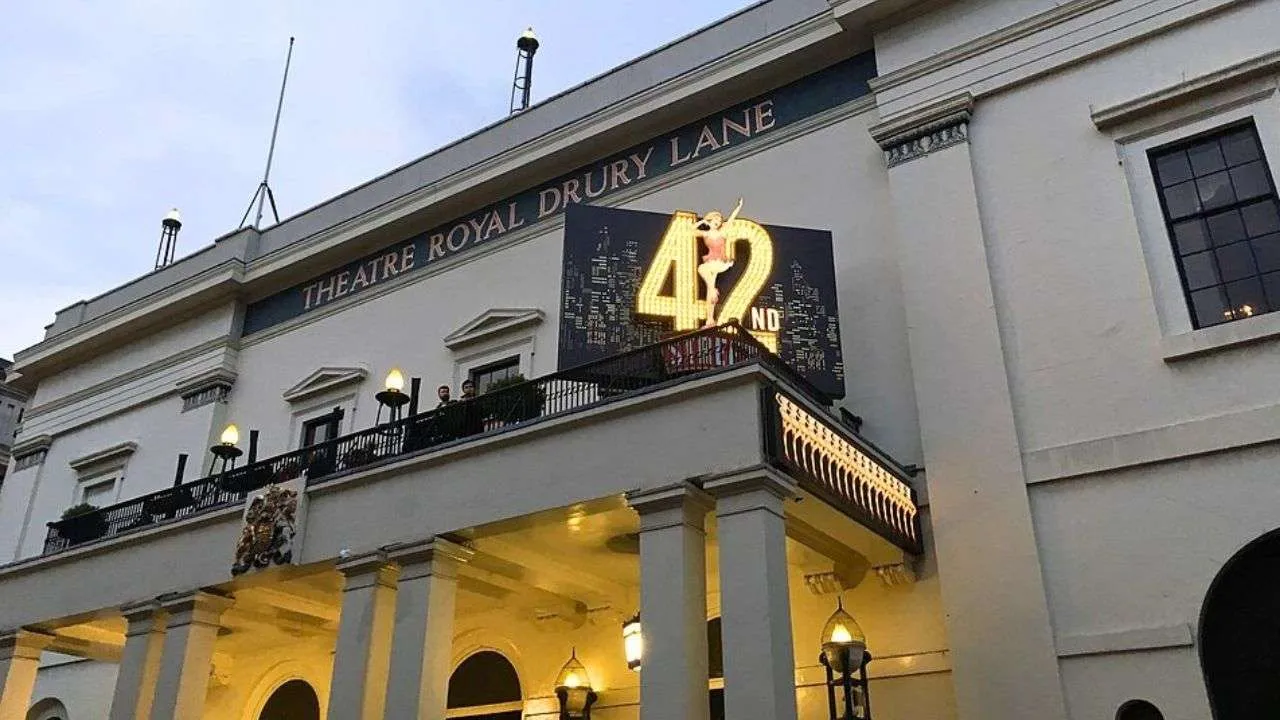
A brief history of Theatre Royal Drury Lane, the West End’s oldest theatre