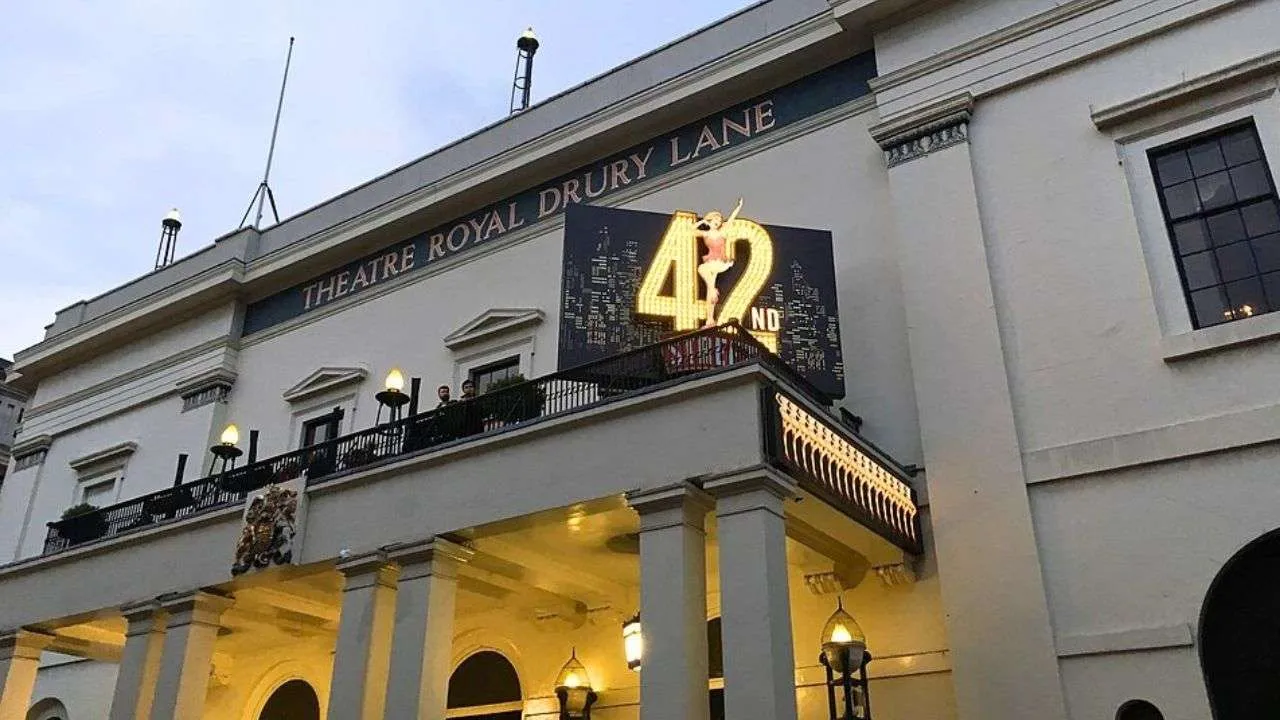

Theatre Royal Drury Lane has been at the heart of London’s theatre scene for more than 350 years. Not only is it the oldest theatre site in London, it also has a reputation for being one of the most haunted theatres in the West End. We’re diving into the history of the venue, from its key productions, ghost stories, and fascinating facts.
There has been a working theatre on the site of Theatre Royal Drury Lane ever since 1663, when its first iteration was opened under a Royal Charter from King Charles II. Over the course of the next three centuries, the theatre would stand fast at the beating heart of the West End, witnessing a changing city, burning down twice and eventually, seeing new ownership usher in a new era.
Here is a quick glance at some fascinating facts about the theatre:

The legendary Nell Gwynn
In its earliest days, the Drury Lane venue, then called Theatre Royal Bridges Street, was home to the King’s Company, formed under Thomas Killigrew, a courtier and playwright who had Charles II’s royal patent to run a theatre. The King’s Company was one of just two licensed acting companies in London. Nell Gwynn would join the company in around 1665, going on to have a legendary rise and making her one of the first professional actresses on the British stage.
The famous mistress of King Charles II used to sell oranges outside of the theatre, before becoming one it its biggest stars of the time, performing for nearly five years. She would retire for a period, but returned to the stage briefly sometime between 1677 and 1678.

The National Anthem
The whole country is familiar with the British National Anthem, but did you know the tune had one of its first public outings as a patriotic song at the Theatre Royal Drury Lane?
While the roots of the song date back even further, the version we sing today can be traced to around 1745. The version most closely related to the present version was first published around 1744, and it spread among those loyal to King George II during the Jacobite uprising of 1745. Just one week after the Battle of Prestonpans, during with the British were defeated, the song was performed on stage, with the music arranged by the theatre’s musical director, Thomas Arne.
Both London playhouses performed the song on successive nights and it would eventually become the National Anthem we know today, though at the time it didn’t have that standing.
Ghost stories galore
Given its long history, it’s no wonder that the theatre also has a reputation for being one of the most haunted theatres in the West End.
The most famous of these rumoured spirits? The Man in Grey, a mysterious figure in 18th-century dress, with a grey riding cloak, a powdered wig and a tricorn hat. According to legend, he wanders the Upper Circle, then disappears near the Royal Box.
According to the legend, while the theatre was undergoing renovations in 1848, skeletal remains were found in a secret room right by the spot where the Man in Grey’s apparition usually vanishes.
The good news is, unlike more sinister spirits, seeing the Man in Grey is thought to be a good omen. Apparently, whatever show is playing when he appears will go on to enjoy a successful run.

The Victorian Home of pantomime
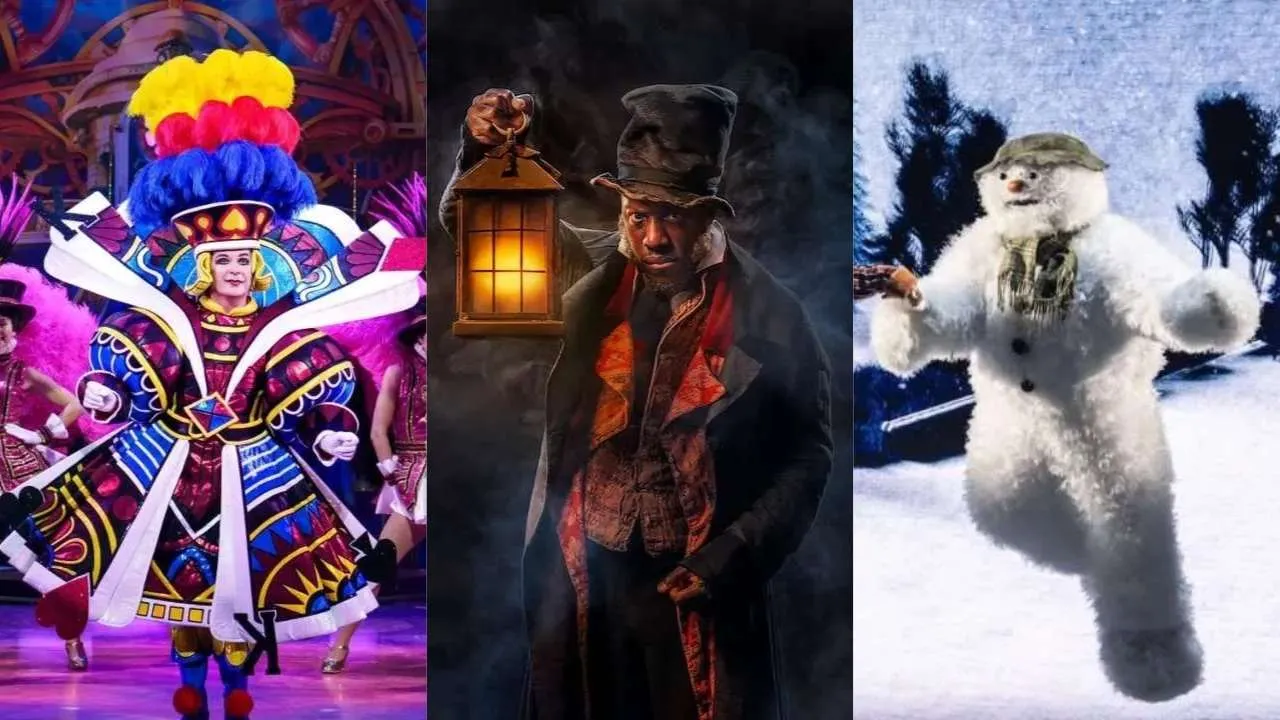
Drury Lane became known for its pantomime, thanks to the efforts of manager Augustus Harris, who ran the theatre from 1879 until 1896. He helped make the Christmas pantomime its main attraction, casting top musical hall performers. The most famous of these was comedian Dan Leno, who appeared in 15 pantos between 1888 and 1903.
Harris is often credited with starting the tradition of the star dame, but Leno made it famous, playing dames in Christmas panto with a parodied, comic exaggeration that has since become a model for the form. The Drury Lane pantos were also known for adding plenty of spectacle, like having Cinderella’s carriage pulled by real horses.
Rumour has it, Leno’s ghost still lingers backstage, appearing in dressing room mirrors.
My Fair Lady and Miss Saigon
By the 20th century, the concept of an open-ended run was becoming the trend, where shorter runs were the norm previously. Theatre Royal Drury Lane struck gold with My Fair Lady, starring Rex Harrison and Julie Andrews. The musical transferred from Broadway and became one of the biggest openings in history, selling out months in advance.
The production became the theatre’s longest running musical, playing 2,281 performances over five and a half years.
It would hold that crown until Miss Saigon arrived in 1989. Directed by Nicholas Hytner and starring Lea Salonga and Jonathan Pryce in the leading roles, the musical would surpass My Fair Lady as the venue’s longest running musical by almost five years. The production run until October 1999, with around 4,264 performances under its belt.

Enter Andrew Lloyd Webber
In 2000, the venue was acquired by Andrew Lloyd Webber. and his company, LW Theatres, has run it ever since. Under his ownership, the venue has seen significant refurbishment to help restore the Grade 1 Regency building to its former glory.
A major restoration project in 2019 brought back some of the buildings original features, and reshaped the auditorium for better sight lines and more legroom. The stage has also been adapted to allow more flexibility, allowing standard and in-the-round productions.
What’s coming next?
The venue has been home to numerous shows over the decades but it’s currently the home to critically acclaimed revival Jesus Christ Superstar, starring Sam Ryder.
Recent productions also include Lord of the Rings, Charlie and the Chocolate Factory and 42nd Street. Shrek the Musical, The Producers, Oliver!, and Jamie Lloyd’s The Tempest and Much Ado About Nothing with Tom Hiddleston and Hayley Atwell.
From April 2027, The Greatest Showman the Musical will open at the venue, following a sold-out Bristol trial in Spring 2026. This marks the third Disney production at the theatre, following Disney’s Frozen and Hercules. Many theatregoers have called the venue the ‘unofficial’ home of Disney in the West End.
Related News
The Phantom of the Opera welcomes new principals and extends following celebration of 40 years in the West End
Andrew Lloyd Webber’s Starlight Express: Live on Stage races into cinemas across the UK and Ireland on 26 November
See newly released production images from Love Never Dies in Concert at the London Palladium

Jesus Christ Superstar hosts star-studded Cancer Research UK Gala at Theatre Royal Drury Lane
Latest News
A jaunt through the history of panto: how a flexible theatre form transformed Britain’s Christmas theatre scene

Everything you need to know about West Side Story at the National Theatre
10 reasons we can’t wait for West Side Story