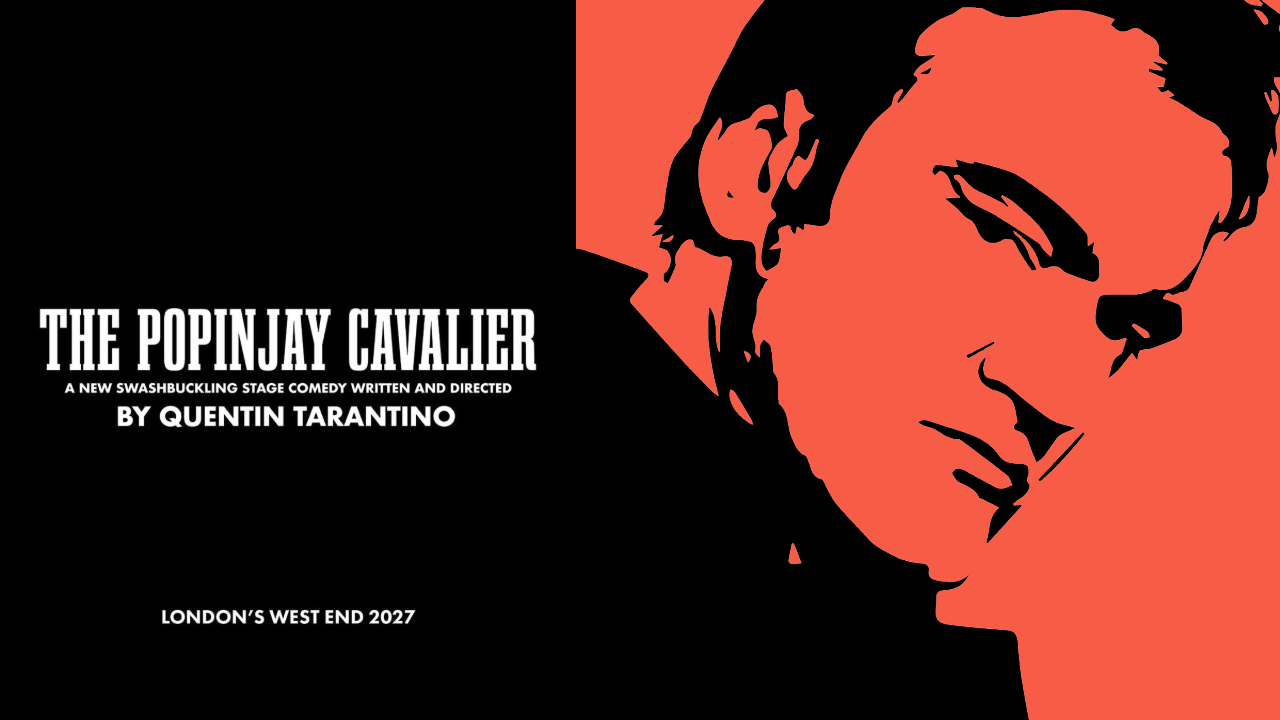

After five decades dominating cinema, Quentin Tarantino has written a stage play. The Popinjay Cavalier opens in March 2027, and raises a simple question: can the things that make Tarantino’s films unmistakable work on stage?
Quentin Tarantino has made his name as a filmmaker with a distinctive style that involves mundane but sharp dialogue with pop culture references, stylised and graphic violence, non-linear storytelling, and dark or satirical undertones. And now he’s bringing his signature writing and directing style to the stage with his debut playThe Popinjay Cavalier.
The American director and screenwriter has spent his career focused on keeping an audience in a room to watch people talk. Not talking about the plot, but talking through it by circling around it, revealing characters’ traits and pasts, and building tension through conversation before the violence or the twist arrives.
While the stage is an entirely different beast to film, there’s something almost obvious about why Tarantino might has chosen it has his next creative medium. Theatre is essentially people talking to each other in a room. No cuts. No edits. No close-ups. Just people saying words, and an audience watching.
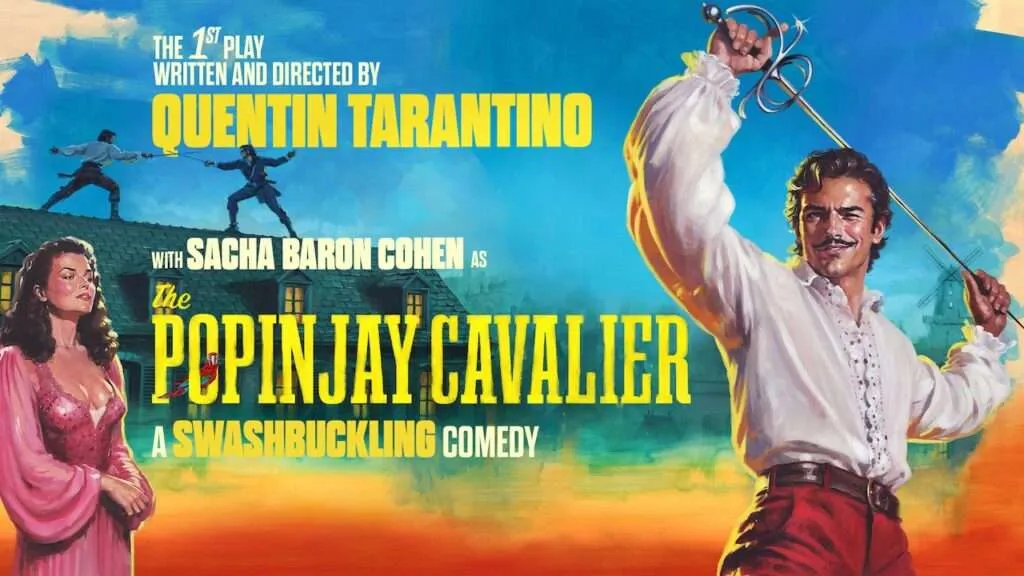
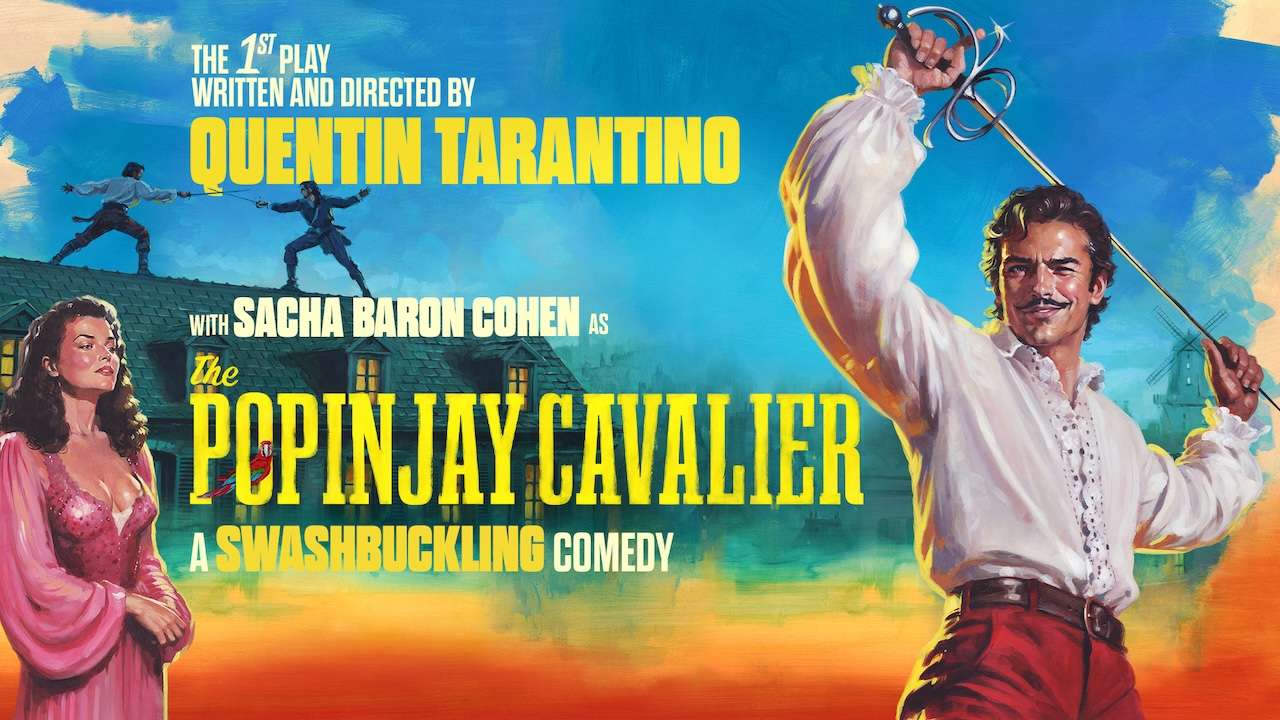
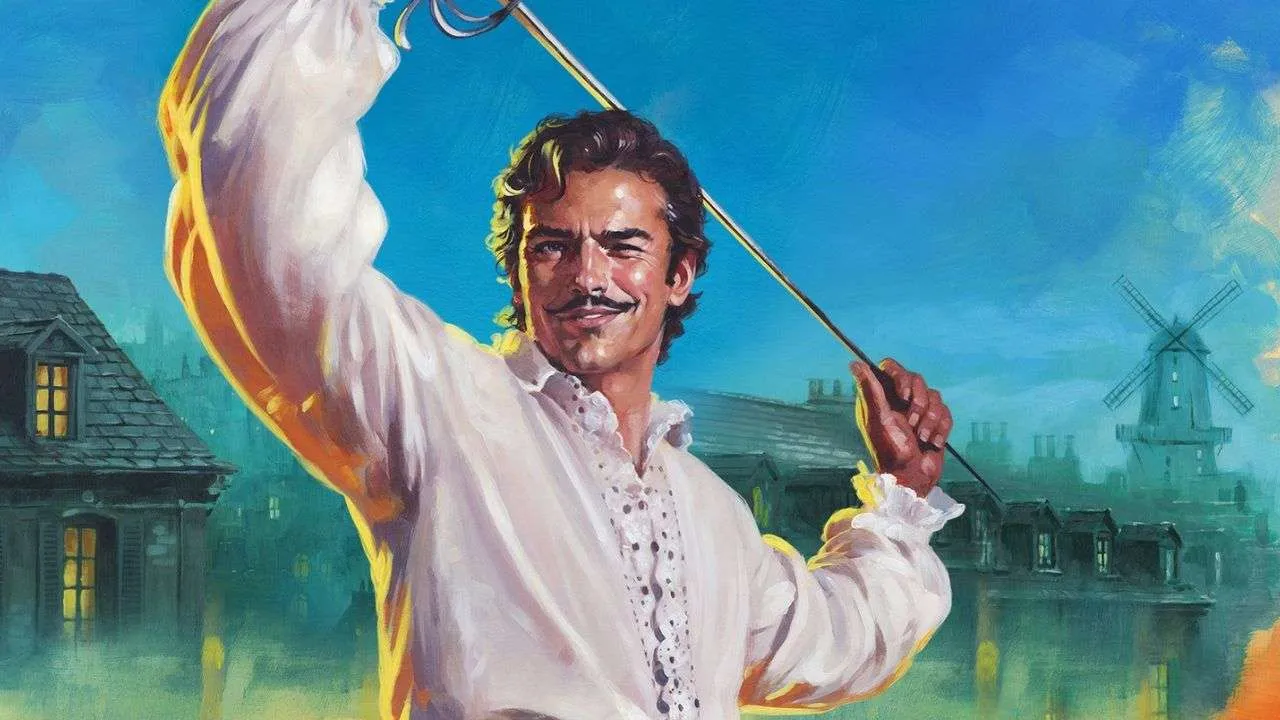
The Popinjay Cavalier, which starts previews in February and opens at the Phoenix Theatre on 18 March 2027, is Tarantino’s first foray into the world of theatre. It’s certainly a departure for Tarantino himself as well as his storytelling, as it’s a European swashbuckling comedy of deception and disguise set in the 1830s, but it also brings uncertainty about whether Tarantino’s techniques will work on stage when you strip away the tools of cinema.
What Makes Tarantino, Tarantino
Any assessment of how Tarantino’s work might translate from film to stage has to start with what he does on film. From Pulp Fiction, to Inglorious Basterds and Django Unchained, his work has several distinctive components – all of which highlight questions about how his style can be adapted for theatre.
Rapid, lengthy and witty dialogue
Tarantino’s characters talk in long, digressive, witty passages laden with pop culture references. Inglourious Basterds (2009), for instance, features a scene about tipping at a diner, which sits alongside a conversation about German film history, while Kill Bill (2003) sees characters discuss everything from the philosophy of names to the mechanics of revenge while driving across landscapes.
The dialogue in Tarantino’s movies reveals components of characters, builds tension, and stalls the narrative momentum to create anticipation, and those words arguably become even more central to the story in a theatre show. Without cinematography, music cues and editing to manage pacing, the dialogue becomes the key of the scene, so Tarantino’s gift for long conversational builds could work even better on stage than on screen because of the intimacy that only a live performance can offer.
Non-linear storytelling
The filmmaker’s use of non-linear storytelling is where the translation from film to stage may become trickier. Tarantino’s films jump between timelines, with events presented out of chronological order, and use of editing to create surprise and irony.
Pulp Fiction (1994) is the prime example of this. Its iconic opening scene shows the characters Jules and Vincent discussing fast food and philosophy, but it happens after the pair have already killed several people, before the story’s main turning point, and in the middle of the day (not the beginning).
This scrambled timeline subverts expectations, creates irony and keeps the story focused on its characters. And by opening with mundane dialogue, Tarantino establishes tone and character out of sequence, forcing the audience to recalibrate their understanding as events unfold.
Tarantino’s style, including in Pulp Fiction, relies on the conversations between characters, meaning the audience follows people rather than events. But it’s a cinema-specific tool. Theatre can imply jumps in time, but it can’t cut scenes the way film can. A stage play aiming to replicate Tarantino’s technique would have to do it through narrative structure and actor positioning, rather than editing.
The Popinjay Cavalier, however, is described as a farce, which suggests it may lean away from Tarantino’s use of non-linear storytelling. Farce is a style of comedy that relies on amusing and highly implausible plots, stereotyped characters, physical humour and misunderstandings. But its events tend to unfold in real time, with escalating confusion and coincidence, which gains momentum from the accumulation of absurdity rather than timeline shuffling.
Stylised violence
Tarantino’s violence is carefully orchestrated in his films, and occasionally even eroticised or rendered comic through its excess. It is composed, lit, filmed, sometimes slowed, and often to be set to music.
On stage, however, violence tends to be more immediate and unavoidable. Actors can’t perform shooting a gun in a theatre show in the same way as they would for a film, as violent scenes in the theatre tend to either lean towards heightened stylisation (such as slapstick choreography), or toward the truly unsettling, because the audience is watching it happen in real time.
A farce style play set in 1830s Europe, however, suggests that Tarantino has chosen the first path: violence as slapstick, not as cinema.
Visual composition to build tension
Tarantino’s films are packed with wide-angle shots, allowing the camera to sit back and watch scenes unfold. He builds anticipation through spatial relationships and positions characters relative to each other and the environment.
Movies allow their creators to choose where the audience looks through framing and editing, but on stage, the audience’s eye goes where it wants, which means stage directors have to compose scenes that work from every angle in the theatre, rather than just from a single position. So although anticipation can be built in theatre shows, it takes a very different set of skills compared to in film work to be able to pull it off.
Book tickets to The Popinjay Cavalier
What has Tarantino shared aboutThe Popinjay Cavalier?
“I’m keen with anticipation to give the West End a great night out[…] a sweeping celebration of theatre.,” Tarantino said when the production was announced earlier this year.
It’s a notably modest statement from someone who has spent his career demanding cinema on his own terms and in his own style. There’s also an implication that he understands the difference between what a moviegoer is after and what theatregoers want – entertainment but in a live setting.
In addition, his quote suggests something about the play itself: it’s designed to entertain, not to challenge or provoke in the way his films often do. The Popinjay Cavalier is a farce, not a philosophical interrogation, and it’s likely to be the kind of play where things go hilariously wrong rather than going dark. That’s a choice, and a significant one for a filmmaker whose career has often thrived on the unexpected tonal shift.
What producer Sonia Friedman thinks

Sonia Friedman Productions, the outfit behind Harry Potter and the Cursed Child and Paddington: The Musical, is producing the play alongside Sony Pictures Entertainment.
In a joint statement with Tom Rothman, chairman of Sony Pictures Entertainment’s Motion Picture Group, Friedman described watching Tarantino work in a rehearsal room: “To see Quentin in action in a rehearsal room is extraordinary. His delight in working with actors, fencers, acrobats, musicians and our creative team is infectious.”
That description is revealing. Tarantino is seemingly delighting in working with actors, including the physicality of performance. He’s excited about fencers and acrobats, which suggests he’s thinking physically about bodies moving through space.
It suggests he’s a filmmaker who is learning to think like a theatre director too, which means learning to work without the tools he’s relied on for decades. The infectious delight suggests he’s found something in that constraint.
Sacha Baron Cohen’s casting
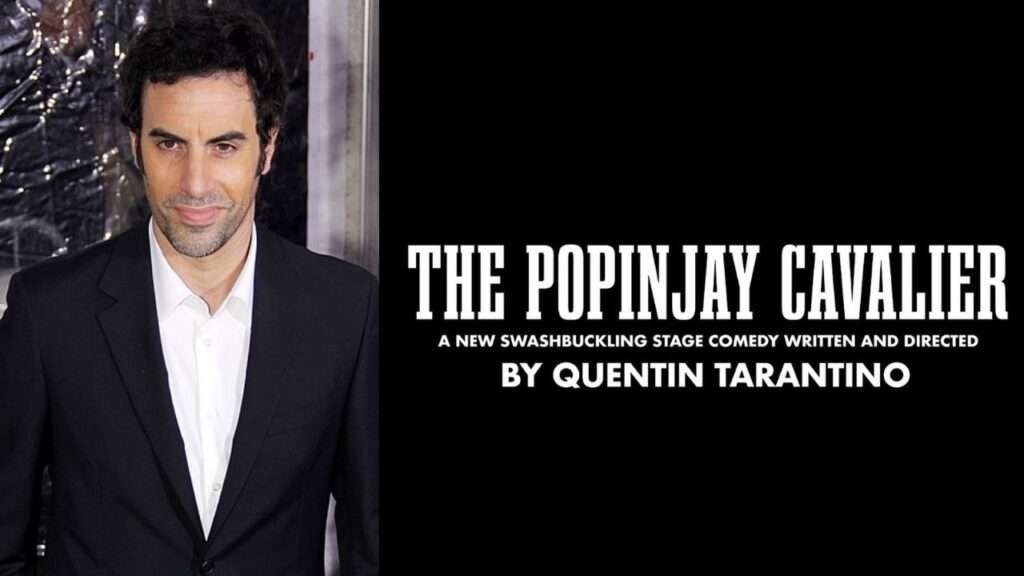
Friedman and Sony announcing Sacha Baron Cohen being cast in The Popinjay Cavalier is noteworthy too.
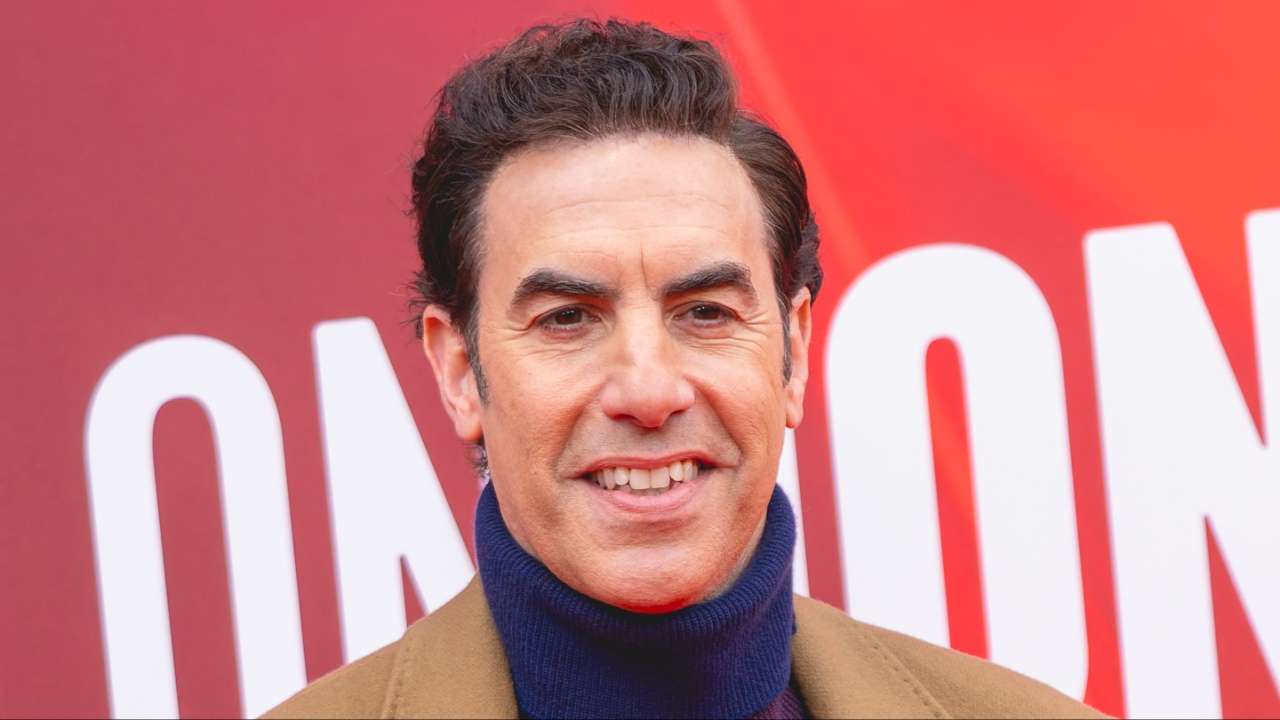
Baron Cohen, who is known for his self-created comic characters such as infamous spoof wannabe gangster Ali G, Kazakh reporter Borat, and Austrian fashionista Brüno, will play Rupert Sebastian Thomas Jr, the world’s greatest actor, in the production.
He is a performer who understands absurdity, physicality and improvisation, but isn’t known for his theatre work. Earlier in his career, however, he worked with Cambridge Footlights, including performances in Fiddler on the Roof, Cyrano de Bergerac and Footlights revues at the University of Cambridge.
Casting him suggests Tarantino and the creative team are thinking about an actor who can perform in the moment, not just deliver lines, and who understands the comedic timing that farce requires.
Book tickets to The Popinjay Cavalier
What translates to the stage, and what doesn’t
The most effective elements of film and theatre shows are those distinctive to Tarantino: the sharp and lengthy dialogue, the focus on character and conversation, and the patience with scenes and moments.
What could translate poorly is his cinematic composition, including time-jumping editing and close-up camera work. But as The Popinjay Cavalier is focused on farce over complexity, and set in a world of deception and disguise rather than violence and consequence, there’s a suggestion that Tarantino has understood this potential hurdle. He’s not trying to make his films on stage – he’s making a stage play.
Another question, however, is can Tarantino surrender the tools that made him standout and find something new in the constraints of theatre? Book tickets to The Popinjay Cavalier to find out for yourself from March 2026.
Phoenix Theatre, London
Related News

Why Sacha Baron Cohen has chosen The Popinjay Cavalier for his professional stage debut
Everything We Know About Quentin Tarantino’s The Popinjay Cavalier
Sacha Baron Cohen in The Popinjay Cavalier
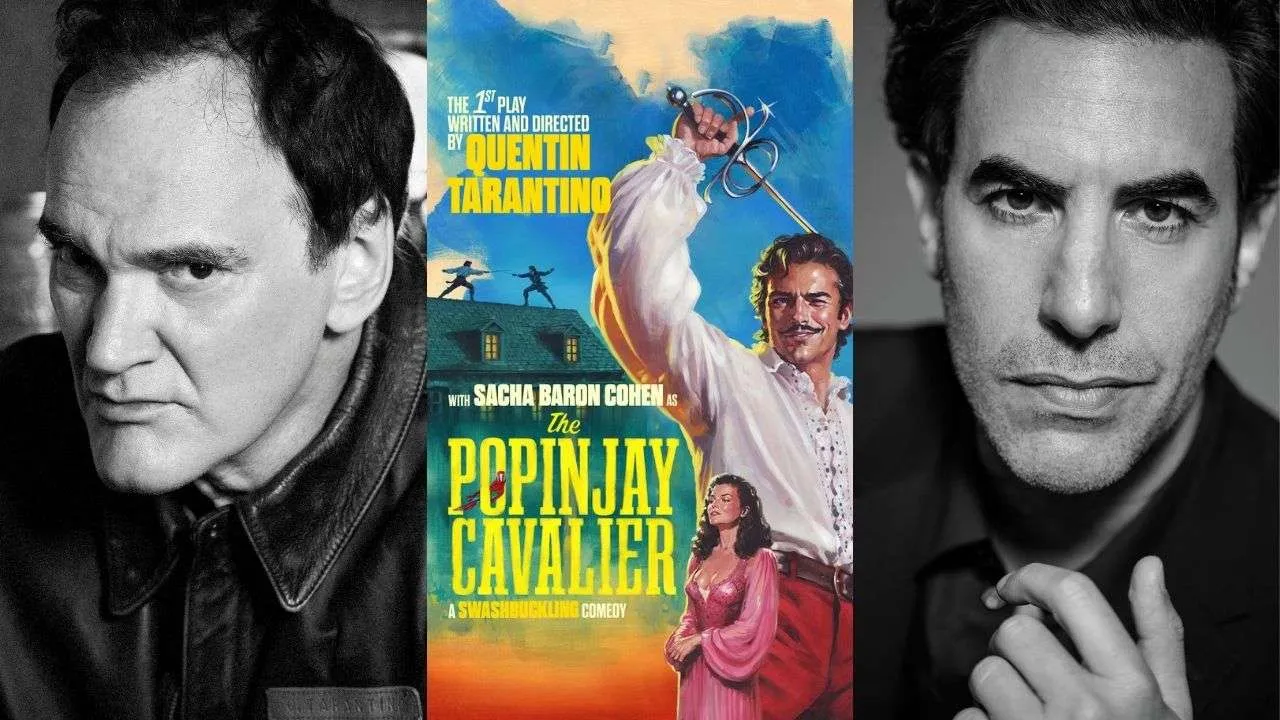
Sacha Baron Cohen is swashbuckling into the West End in Quentin Tarantino’s first-ever play, The Popinjay Cavalier, now on sale at the Phoenix Theatre
Latest News
A jaunt through the history of panto: how a flexible theatre form transformed Britain’s Christmas theatre scene
Everything you need to know about West Side Story at the National Theatre
10 reasons we can’t wait for West Side Story