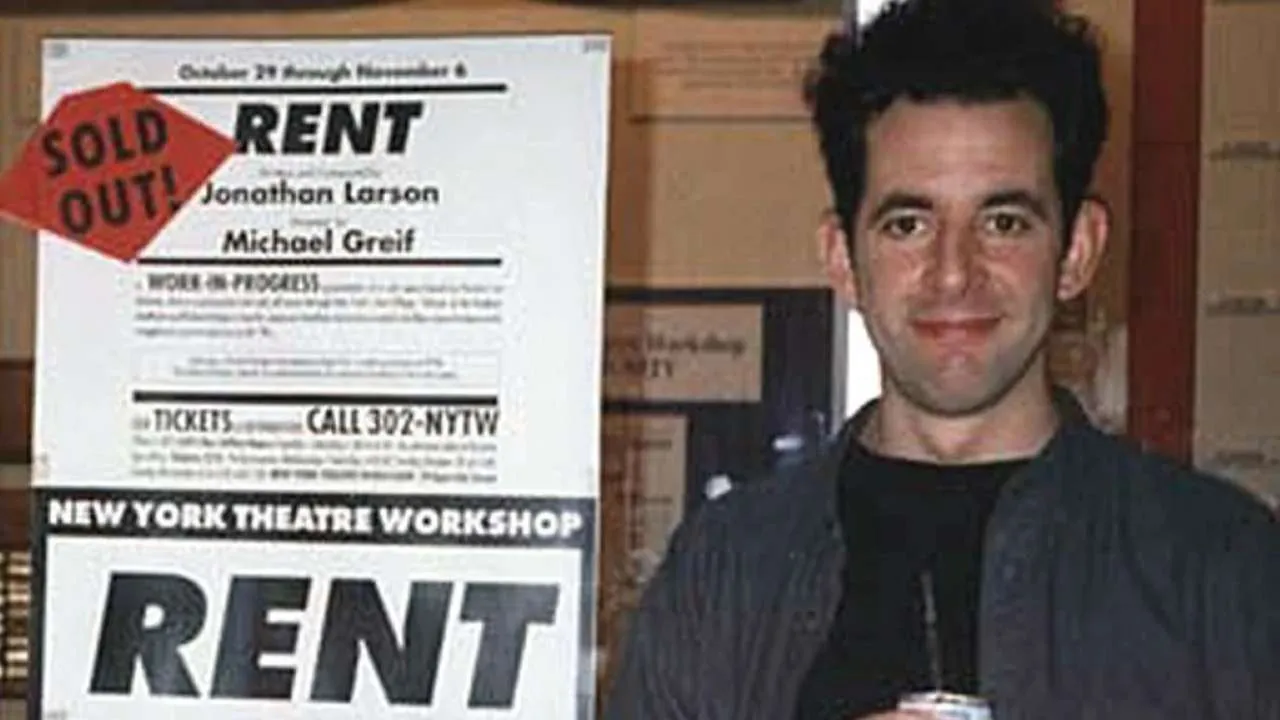

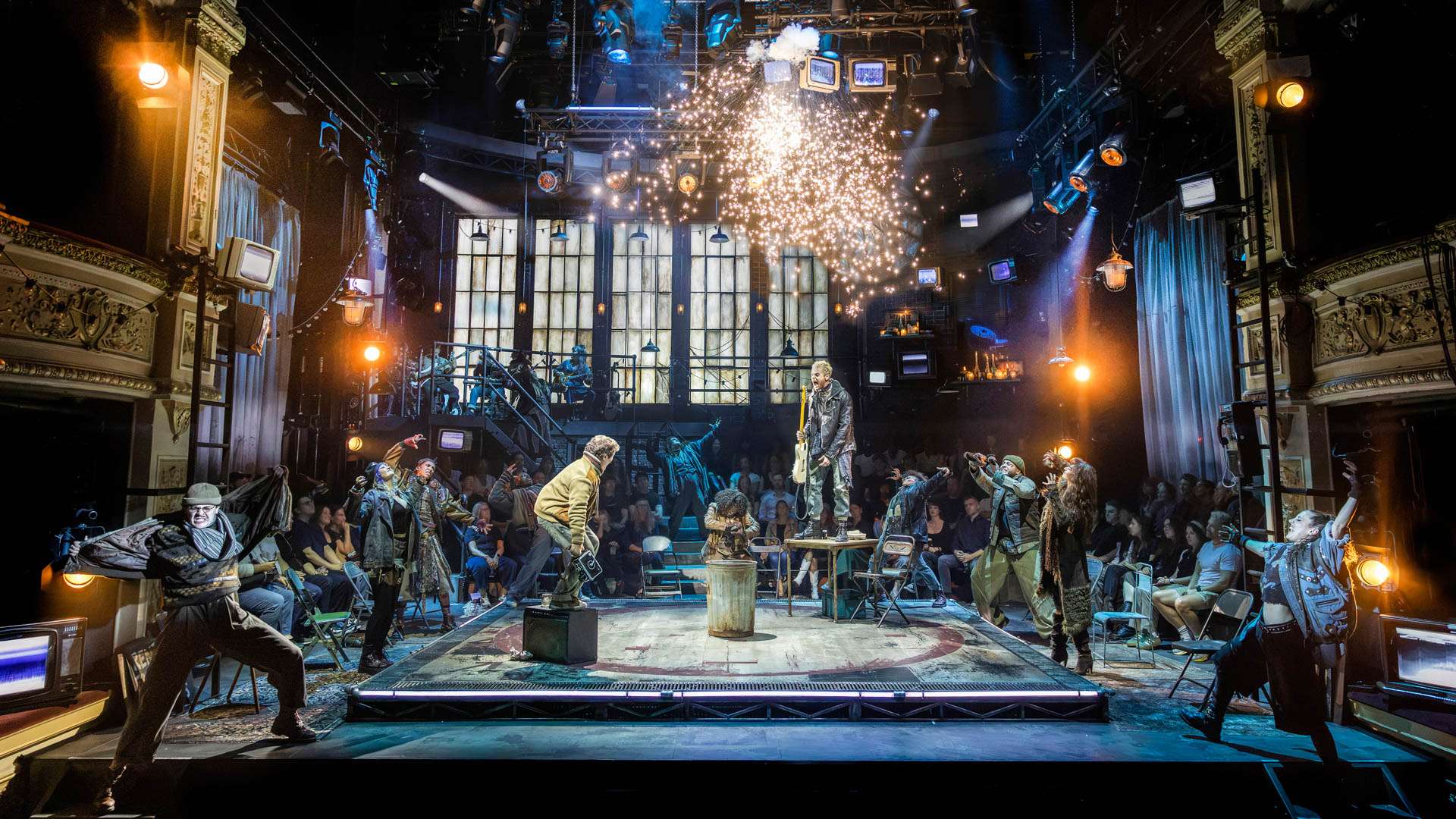
Jonathan Larson’s groundbreaking musical RENT has arrived in the West End, 30 years after it made its Broadway debut. From being name-dropped in Friends to being parodied on The Office and beyond, it became a cultural juggernaut almost overnight, but its creator never saw that success. As the show returns to the stage, we’re taking a closer look at the man behind the myth.
From the moment it arrived on Broadway in 1996, RENT made waves. It ran for 12 years, becoming one of the longest-running shows in Broadway history, and it changed the face of the industry. RENT helped make lottery and same-day tickets popular, and devoted fans, nicknamed Rentheads, would return again and again to see the show.
What added to the musical’s lore is the fact that composer Jonathan Larson never saw it succeed. In the early hours of 25 January 1996, the day the show was due to have its first preview at New York Theatre Workshop, Larson suffered an aortic dissection and died. He was only 35.
As the story goes, his friends and family gathered at the theatre later that day in order to pay their respects, alongside the cast, who decided the show would go on. They initially planned to just sing through the musical, but by the time they reached “La Vie Boheme,” they were performing it in earnest.
The off-Broadway run was such a success that by April of that year, the show was transferring to Broadway. Larson would go on to posthumously win a Pulitzer Prize as well as three Tony Awards, Drama Desk Award and a New York Drama Critics’ Circle Award for RENT.
Despite a relatively small oeuvre, Jonathan Larson has remained a global symbol even decades later.
Writing for the people on the margins
Before RENT took the world by storm, most mainstream musicals rarely featured people like Larson’s characters. By following impoverished young bohemians in Manhattan’s East Village dealing with poverty and the threat of HIV/AIDS, Larson put ordinary people front and centre. They’re funny and vibrant people who are dealing with very real problems, but they’re never the butt of the joke or a problem to be solved.
RENT also reflects much of Larson’s own story. He spent years working as a waiter while writing, so the cold apartments, the rent that never quite got paid, the friends who were creative and broke all came from something real. He chose to reflect the poverty, homelessness and the East Village’s gay and drag communities that made up his world, giving them a place on the stage.
At the time, the public conversation around HIV/AIDS was still dominated by stigma and silence. RENT put it front and centre, showing real people from marginalised communities dealing with a very real crisis. In his own life, Larson accompanied friends to support groups and lost people to the disease. In fact, some of the characters in the Life Support scene are named after some of those friends.
His smaller works reflect life in a similar way. tick, tick… BOOM!, his semi-autobiographical piece about turning 30, takes an intimate look at a young artist asking whether the thing he loves will ever love him back, while his satirical J.P. Morgan Saves the Nation, about a banker who rises to become one of the most powerful men in America, reflected the cost of money and power in the neighbourhoods he lived in.
Who was Jonathan Larson?
After graduating from Adelphi University, where he studied acting and began exploring music composition, Larson moved to New York City to pursue a theatre career. His earliest compositions came out of student theatre, and once he was in the city, he took what work he could, including writing music for Sesame Street, as well as songs for children’s book cassettes tied to An American Tail and The Land Before Time.
Larson is often perceived as a starving artist, and that is true to some extent. He famously worked as a waiter at the Moondance Diner while taking writing jobs and creating his own work. Funnily enough, future RENT star Jesse L. Martin, who originated the role of Tom Collins, was Larson’s trainee waiter at the diner.
Much of his life during this time can be seen in tick, tick… BOOM! He originally performed it himself as a solo rock monologue, but after his death, it was reworked after his death into a three-person musical. It has seen a resurgence of interest recently thanks to the 2021 film adaptation, directed by Lin-Manuel Miranda and starring Andrew Garfield as Larson.

Superbia and Stephen Sondheim
Larson’s first professional musical was originally meant to be an adaptation of Orwell’s 1984, but when he couldn’t get the rights, he invented his own dystopian future instead and called it Superbia. Larson would spend much of his twenties working on the musical, presenting it at the Village Gate in September 1989, as well as a reading at the Public Theater in December 1991 and some performances at Playwrights Horizons. Superbia was never fully produced, but some of its songs resurfaced in tick, tick… BOOM!
Around this time, Larson met Stephen Sondheim, who would go on to become his mentor. He had previously written a letter to Sondheim while at university, which began a correspondence that would last the rest of his life. The esteemed composer, who Larson looked up to, helped Larson get his first agent and even chaired the committee that offered Larson two grants to develop Superbia.
Larson also shadowed Sondheim as he worked on Into the Woods, and regularly sent him work for his opinion.
A writer, not just a legend
The tragic end to Larson’s life often threatens to overshadow who he was as a working writer: someone who spent years revising scripts, chasing funding and not giving up on his dream.
Larson was a compulsive documenter, and that habit has become one of the most valuable parts of his legacy. After his death, and following the success of RENT, his family donated his extensive archive to the US Library of Congress.
The Larson Collection consists of approximately 15,000 items, including manuscripts, letters and other materials, like a handwritten maths worksheet in which Larson worked out the numbers behind ‘Seasons of Love.’ There are also more than 600 recordings, many of them of Larson performing his own songs.
The Library of Congress actually consulted with Stephen Sondheim before reaching out to his family, and Sondheim’s own archive has since been acquired by the library.
What’s next?
Asking what’s next is an odd question when the composer is no longer with us, but his work continues to be celebrated. and the archive at the Library of Congress has allowed more of it to come to the fore.
The Jonathan Larson Project opened off-Broadway in March 2025, before playing off-West End in 2026. The new musical features about twenty songs from Larson’s archive, including numbers cut from RENT and tick, tick… BOOM! as well as songs from unproduced shows such as 1984 and Superbia.
For the 2021 film adaptation of tick, tick… BOOM!, director Lin-Manuel Miranda and screenwriter Steven Levenson visited the Library of Congress in order to review the different drafts of Larson’s original one-man rock monologue. They then combined elements from each drafts and pulled music from Larson’s broader catalog of over 200 unreleased and written songs for the final film.
The archive is perhaps the most complete look at the composer: drafts, cut songs and ideas left unfinished serve as an important reminder that he was constantly creating, even if the world wasn’t yet paying attention.
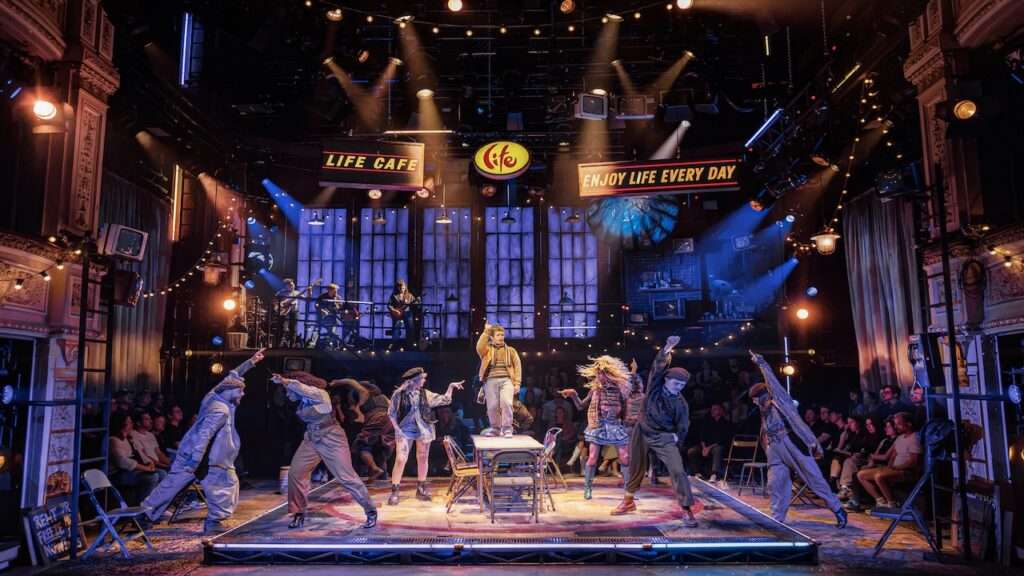
Thirty years on, the most lasting monument to Larson is Luke Sheppard’s revival of RENT, with Stranger Things star Gaten Matarazzo making his West End debut as Mark Cohen. For audiences who know Larson mainly through the legend, it’s a chance to see what he built. For those who know the rest of his work, it’s a reminder of how much more there is to find.
RENT is playing at the Tom Stoppard Theatre until 29 May 2027.
The Tom Stoppard Theatre (formerly the Duke of York's Theatre), London

Related News
Planning a theatre trip over the holidays? Here are 11 shows to see during your time off

Andrew Lloyd Webber’s Starlight Express: Live on Stage races into cinemas across the UK and Ireland on 26 November

Paddington The Musical extends to June 2028 as a new company joins the West End cast

Paddington The Musical is heading Down Under: Olivier Award-winning musical will open in Sydney in 2027
Latest News

A jaunt through the history of panto: how a flexible theatre form transformed Britain’s Christmas theatre scene

Everything you need to know about West Side Story at the National Theatre
10 reasons we can’t wait for West Side Story