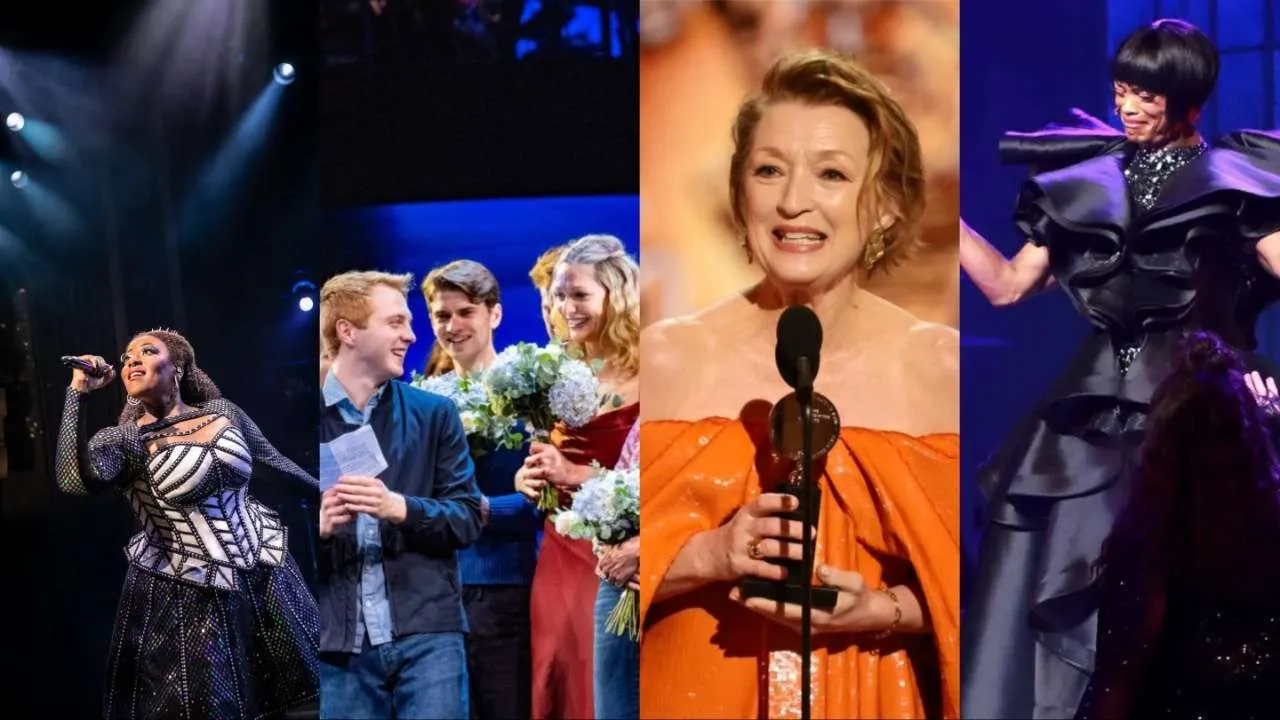

Lesley Manville unwittingly started a heated debate in the theatre world earlier this year: whether audiences should be allowed to film performances during curtain calls.
Manville, who starred in Les Liaisons Dangereuses at the National Theatre this summer, said in an interview with BBC Radio 4: “We are all in this room, we are telling you a story, you’re listening – clap or don’t clap, but don’t just stick your phone in our face. I find it insulting.”
Her interview raised an important question: why can’t audiences “let it live in their souls for five minutes?” She also voiced concern about a practice, which she outlined is already ubiquitous on Broadway, where “virtually the whole audience will take their phones out at the end of the evening,” and warned that the habit is creeping into London theatres.
Perhaps the most sensible position lies somewhere in-between – no filming during the performance itself, but curtain call photography and video are perfectly acceptable, but Manville’s comments struck a nerve with some theatre fans, and rapidly fractured the industry into two camps. Hannah Waddingham – best known for her role in Ted Lasso and a celebrated stage performer – voiced her agreement with Manville, while others, including former Strictly Come Dancing star Oti Mabuse, highlighted that taking curtain call photos is respectful and a way of celebrating performers.
Theatre journalists, critics, influencers and fans have been weighing in ever since, raising questions about what we as audience members owe performers, and what we’re allowed to do seeing a show. So can you take photos or film during the performance of a West End show?
Consent, fairness and different generations
There are the issues of consent and fairness lurking in this debate. You buy a ticket to a show, and that ticket gives you the right to be in the room. And while it doesn’t give performers the right to dictate how you experience that room in its final moments, there is the question of whether it’s fair to your fellow theatregoers and the performers you’re photographing to take those photos or videos.
Plus, there’s a separate question of if the curtain call is part of the show or not. If it is – and the rules of the theatre are that you don’t photograph or film the performance – then the bows can’t be captured. But if it’s your feeling that the curtain call concludes the show but isn’t an element of the show itself, then it can be filmed. It
There’s a generational shift at play too. For audiences under 30, documenting experiences such as concerts, travels, performances is simply what you tend to do. It’s not a rejection of presence, but rather an extension of it. so asking younger attendees not to film the bows feels like asking them to experience the world differently than they naturally do.
Staying present and following theatre etiquette
Filming the curtain call could also be perceived as the difference between being seen and being captured, as one is reciprocal, while the other is extractive.
The Broadway context matters too. When Manville shared that “virtually the whole audience” films the bows during shows on Broadway, she’s describing not just individual choice but a cultural norm. There’s a real concern that if the West End follows the same road, a small part of the live aspect of going to the theatre is ebbed away.
Waddingham’s support for Manville also suggests that performers could be feeling this shift. Theatre etiquette is built on the agreement that for the time you’re watching the show, you’re present and not on your phone (or any other smart device). And to some, the curtain call is the final moment of that agreement.
The case against filming
Manville’s argument sits on a foundation of respect. It comes across that she believes the curtain call is still part of the show, and is a moment of direct connection between performers and audience members; a live exchange that exists only in the room in that moment.
When you film it, you’re not experiencing it, in Manville’s view, meaning you’re mediating it through a screen. And more than that, you’re signalling that what matters more than the moment itself is the documentation of said moment.
There’s something about the word “insulting” that Manville used that may be worth taking seriously. It suggests a hurt beyond mere annoyance, and that being filmed feels like being treated as a photo opportunity rather than as a person who has just spent their time as a performer giving you everything on a stage.
Manville’s real concern, underneath the “insulting” comment, may well be that if everyone films the curtain call, it stops being about connection and starts being about content, which would mean the performers stop bowing to the audience in the room and start performing for the cameras that will put the moment online.
The case for filming

There is also a case, however, for the other side of the curtain call filming coin. When Oti Mabuse and others argue that curtain call photography is respectful, they appear to be making points about celebration and memory.
Taking a photo of a performance you loved isn’t necessarily extractive, it can instead be seen as a way of documenting the great time you had at the show, and helping you remember it. For some theatregoers, particularly those who’ve travelled to see a show, a curtain call photo is a keepsake of an important evening.
In my view, theatres and productions are asking audiences to be present and engaged during the show to experience the liveness that theatre offers. Performers are giving their all, and audiences owe them focus and presence in return, but once the performance is over and the final scene has ended, the live event has concluded. The curtain call isn’t a component of the dramatic narrative – rather a moment of celebration and acknowledgment. At that point, capturing a photo or short video isn’t extracting from the performance is documenting a memory of having been there.
There’s also an argument to be had for the potentially positive impact of filming the bows from a promotional perspective as well. It can be a genuinely valuable marketing tool for theatres and the shows in them. You’ll find that some West End shows actively encourage audiences to share content on social media and regularly reshare attendee posts on their own official accounts, which means a curtain call video or photo shared by an audience member is then amplified by the theatre’s own platform, which extends the reach of the show far beyond the people who were in the room that night.
Social media posts from theatregoers reshared on the show’s or theatre’s official platforms also become evidence that something genuinely special is happening on stage – and it costs the theatre and production nothing. From a business perspective, an audience member filming the curtain call and posting it is essentially free advertising through organic reach.
SIX’s middle ground

Six – the musical that sees the history of the six wives of Henry VIII reimagined through the lens of a pop concert – has taken a specific stance on the debate.
Attendees of the show at the Vaudeville Theatre are asked to put phones away throughout the performance, including the curtain call. The show’s campaign around this has the hashtag #KeepItLive, which serves as a reminder that the value proposition of theatre is that it’s live.
The production stated: “Filming other songs and moments from the performance disrespects other audience members and spoils it for audiences yet to experience Six. It is also distracting to our Queens and Band who are trying to deliver the best possible live performance for your enjoyment.”
Six also offers a compromise: a specific moment in the show called “MegaSix”. This is a dedicated sequence at the end of the production where audiences are actively encouraged to capture photos and video, and a clever solution that acknowledges both the performers’ desire to protect the live moment and audiences’ desire to document and celebrate.
By giving audiences a sanctioned moment to film, there’s an opportunity to capture a memory with boundaries around it. It’s not a total capitulation to the phone culture, but it’s not a complete ban either. And the production’s statement uses language that appeals to the audience’s better instincts: we aren’t being told they can’t film out of punishment, but because they’re asked to respect other audience members and the performers trying their best.
Whether Six’s approach will become the industry standard remains to be seen. But it suggests that the debate doesn’t have to be binary.
What are the theatre’s rules about filming the bows?

While the Vaudeville Theatre has explicit rules when it comes to filming or photographing curtain calls, other theatres are more permissive or may still be figuring out their stance.
Personally, my approach of just filming or photographing the bows – and keeping my phone and other smart devices off throughout the rest of the performance – respects both the performer’s need for presence during the show and the audience’s desire to mark and share the experience. It also sidesteps the awkward question of whether performers should have the right to police what audiences do with their tickets once the show has technically ended.
A reasonable approach when you go to a show approach is checking whether the theatre has a policy before you pull out your phone, and respecting the wishes of the performers and the theatre if they’ve made their position clear.
The theatre will still be there. The performance already happened. What matters now is whether you actually experienced it – live.
Related News

One of a kind: Everything you need to know about Six The Musical in the West End
12 of the best West End musicals for teenagers
10 top tours to see this autumn, from West End hits to reimagined classics

SIX The Musical releases first Korean-language studio album ahead of show’s return to Seoul
Latest News
A jaunt through the history of panto: how a flexible theatre form transformed Britain’s Christmas theatre scene
Everything you need to know about West Side Story at the National Theatre
10 reasons we can’t wait for West Side Story