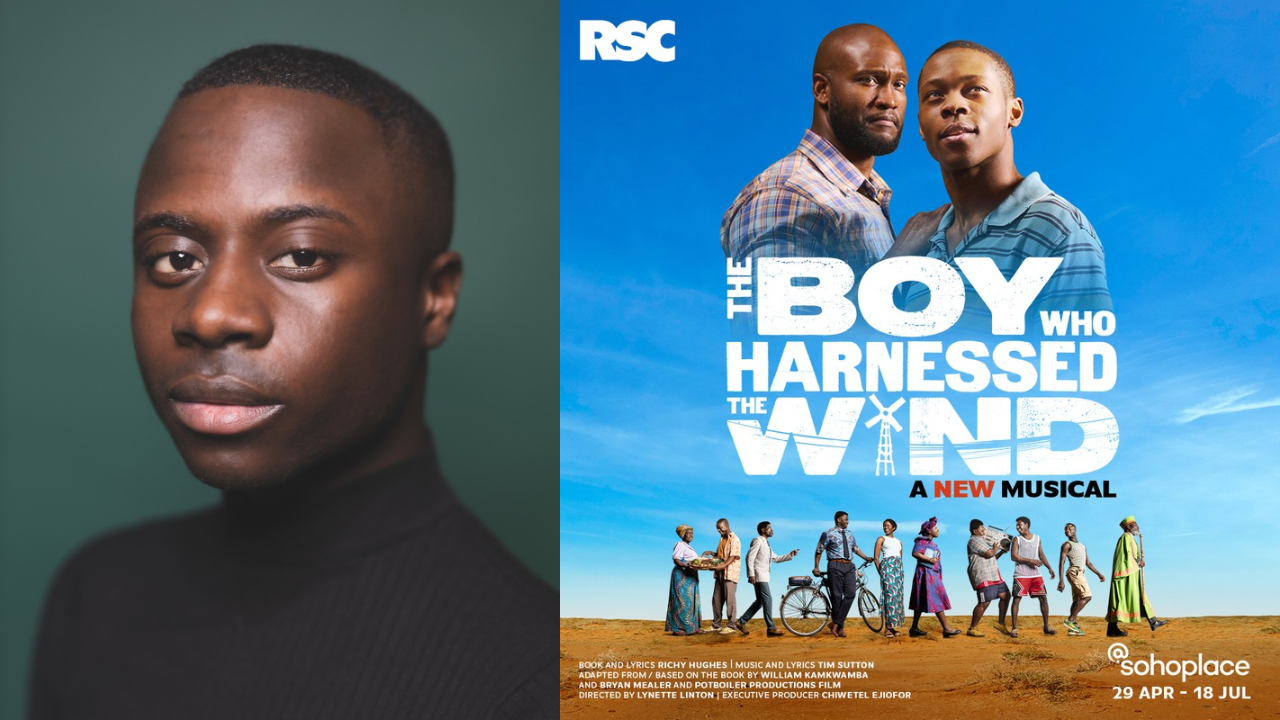

Based on a remarkable true story, The Boy Who Harnessed the Wind arrived at @sohoplace last month following a run at RSC’s The Other Place in Stratford. We spoke to actor Idriss Kargbo about why it’s such an important story to tell.
In a small village in Malawi, a 13-year-old boy had a bold idea to build a windmill in order to help his community. Despite his limited resources, he made the difficult choice to pursue his dream and ended up saving his whole village. This is the true story of William Kamkwamba, as told in The Boy Who Harnessed the Wind, first a book, then a film, and now a stage musical.
We spoke to actor Idriss Kargbo, who plays Gilbert, William’s best friend, in the show, about why it’s such an important story to tell, and what the journey means to him on a personal level.
View live availability for The Boy Who Harnessed the Wind here.
An Interview with Idriss Kargbo (Gilbert Mofat)
West End Theatre (WE): Can you tell us a little bit about the character that you play?
Idriss Kargbo (IK): I play Gilbert Moffat, who is famously known as the chief’s son of our Wimbe Village. And he essentially is William’s best friend. He is all funny, all energetic, best pal and companion that you could ever ask for. He basically helps William find the inspiration to build this windmill, and he is there every step of the way.
He also goes through his own trials and tribulations. I don’t want to spoil that, but he goes on a full-on journey from boyhood to becoming a man. And I love playing him every night.
WE: What’s your favourite thing about playing him?
IK: My favourite thing about playing Gilbert is the journey. He is essentially a boy in Act One and has to become a man in Act Two. Going on that journey every night is something I haven’t done in my career yet, but I’m loving it. It’s challenging, but it’s definitely something that is healing me as a person as well. It’s amazing. I love it.
WE: Has anything about playing Gilbert taught you something about yourself that you didn’t know before?
IK: Yes, I think so! There are a load of parallels of my real life with Gilbert’s life. Just the initial release of understanding what maturing and being mature very quickly is. I had to also do it in my real life. So having a real reflection on that and healing from that has been really lovely.
WE: Can you tell me a little bit about what drew you to this production?
IK: Essentially, I did the first workshop with Alistair, who plays William. We have been on this journey for nearly three years. The minute we sat down and read the script, I knew instantly that I had to be a part of this production.
First of all, it being a true story is something that always blows my mind and blows so many other people’s minds that come to see the show. But essentially a story about Africa, rooted in culture and generational trauma, et cetera, was something I thought was so important to bring to the West End. So that is the reason why I signed on to this project and have been on this project for so long.
WE: And given that it is based on a true story, do you feel like maybe it is really important to find different ways to try to tell this true story, to connect to people? It was a book, then a film, and now it’s a musical. What do you think is so important about this story?
IK: This show is really important because of the message. No matter what format you tell it in, whether it’s film, whether it’s TV, whether it’s stage, the message is important.
Having a 13-year-old believe in his vision so strongly that it saved lives and his whole village is such an important message, especially when he had nothing. Those trials and tribulations.
For kids, for adults, for anyone really, it’s such an important message.
WE: You were in Stratford for a bit and now you’ve come to the West End. What was that process like, transferring the show? They’re quite different audiences, coming from Stratford to the West End. Were there a lot of changes that had to be made?
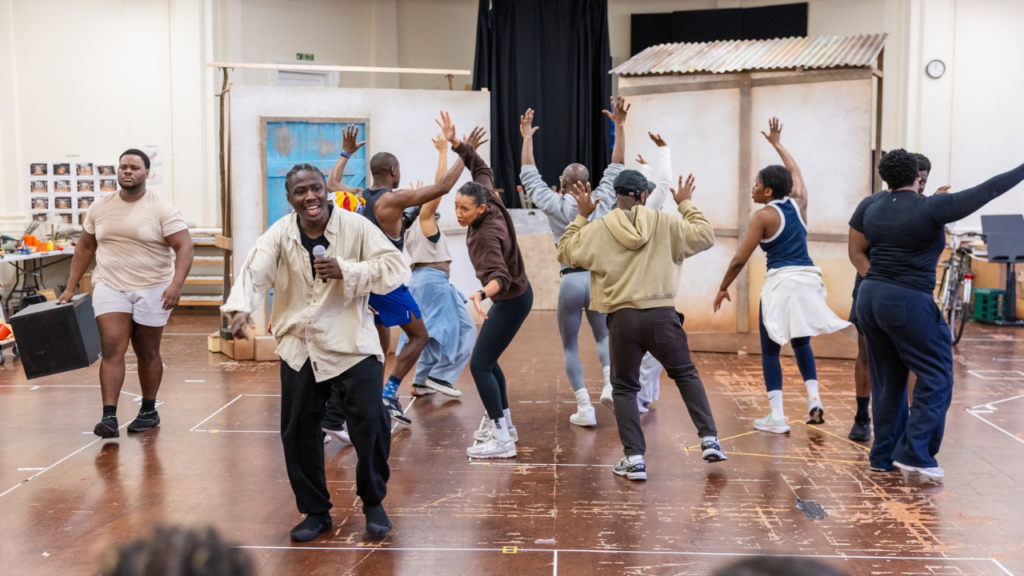
IK: I would say Stratford essentially was our first draft of the show. We’ve done a lot of workshops and taken a long time to get here, but Stratford essentially was the first on stage version. So, of course there were going to be changes. There’ll be things that we found worked in Stratford and some that didn’t.
The audiences are very different. There’s a very multicultural audience that come and see the show here in London. Stratford wasn’t so much, but they still got it and they still understood it. They still laughed and they still cried.
I think we had a really good foundation for the show, but there were definitely different things to explore. And I feel like we’ve done that here in London. It’s been a successful transfer.
WE: Do you feel like the London audience is responding to different things than the Stratford audience? Are you discovering new things?
IK: I think a lot of just culture in terms of, you know, chatting back to adults or the argument scenes and stuff – you can hear audience gasping and laughing at the same time because they know that that actually happens in real African or Black families in general.
I love that. I love hearing them respond to things that are very nuanced and very real in those households that they have grown up in.
Book tickets to The Boy Who Harnessed the Wind here
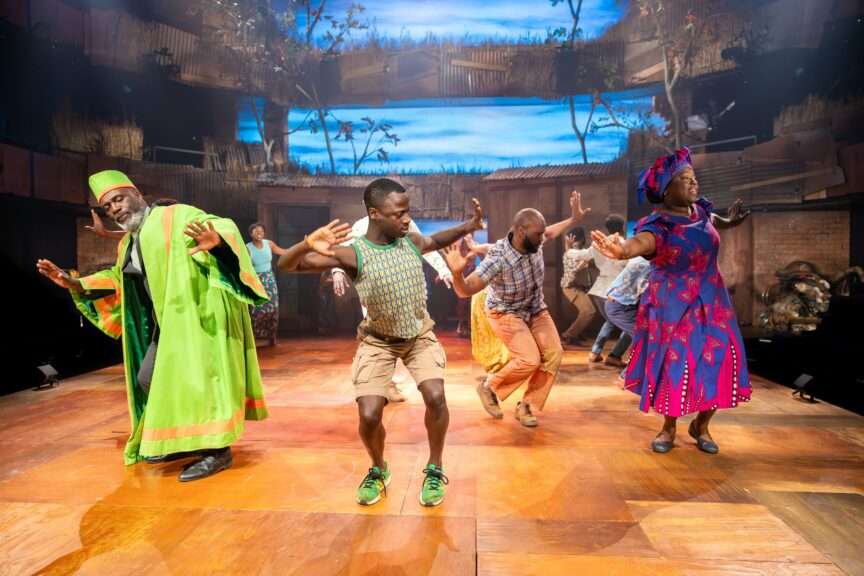
WE: What are your favourite moments in the show that you get to experience with the audience?
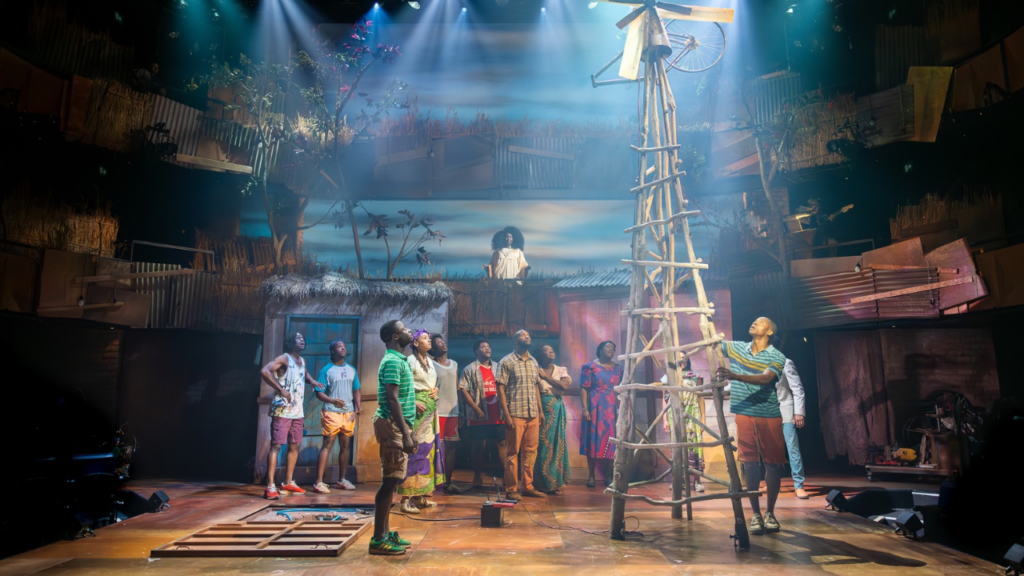
IK: I mean, I love the music. I sound like a broken record, but I especially love our end sequence when the windmill finally goes up and you can see people just like, ‘oh, oh my God, it worked!’
You can tell that the two and a half hours journey, they’ve really been on the whole train ride. So, it’s great to get to the end and get that windmill up and see their reactions, see their big breath and go ‘okay, this actually worked.’
It means that we’ve done our jobs. Seeing that every night is what I’m excited about.
WE: Since you’ve been part of this process for so long, first doing the workshops and then going on to Stratford and now London, what would you say your favourite moment has been so far?
IK: My favourite moment is when William and Gilbert came to see the show for the first time. It was so special because we’ve met William quite a few times, but Gilbert for me was someone who I was so desperate to meet because he’s been in my head for so long.
I’ve sort of made him up with a little bit of context, but not too much. So that’s quite hard when you have someone who’s living and they’re not so famous that you have a lot to pull from. You kind of have to make up your own version. But seeing him and hearing his stamp of approval and just knowing that he was like that was great.
It made me just so happy that I’m doing his story justice because it’s so important. So that for me was a highlight, having them walk out on stage for the first time together and seeing the resemblance of me and Alistair to William and Gilbert.
It was so much fun.
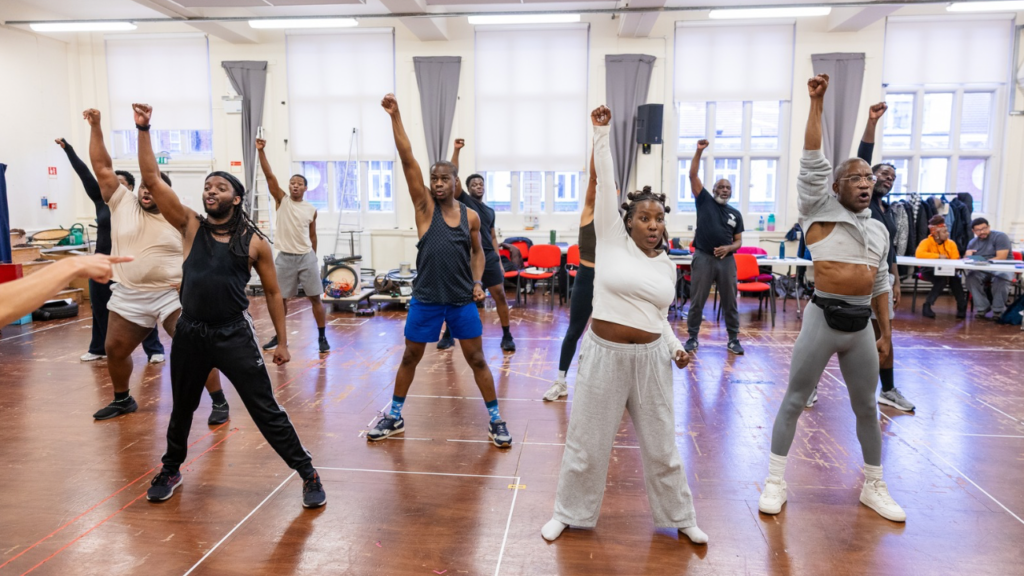
WE: That must have been so special. Did he share any like stories or anything with you that you sort of pulled into your performance?
IK: He was quite quiet, surprisingly. He isn’t in the show, but he’s an older man now. So, he’s more mature than the section of his life that we’re portraying on stage. But he was just thankful and said he was very happy. He said he loved the similarities in both his story and the stage show. So having that was just magical. I loved it.
WE: Was William quite involved in the show? Because it’s based on a book he wrote that was then a film. Once you’ve written the book, you almost feel like your job’s done. But he came to the show, didn’t he?
IK: He came to one of our second or third workshops. We had a workshop run through where a lot of people came to watch and William was one of them. He sat in that workshop and he was smiling from ear to ear. He just loved it. He was just so moved by it as well.
That was just the workshop. Then when we were in Stratford, I think just before press night, he came again.
He was here pretty much the entire week before the press night in London. So, he’s been around. He really has. He has given little notes here and there as well, which has been amazing.
The creative team actually went to Malawi on a research trip and they got to meet William and his family. They got to see the real windmill. They got to meet Gilbert and his family.
So, there’s been a lot of Malawian involvement in culture put into the show. I feel like they wanted to make sure that the resemblance to the village and William’s story was as real as possible. I hope we have achieved that.
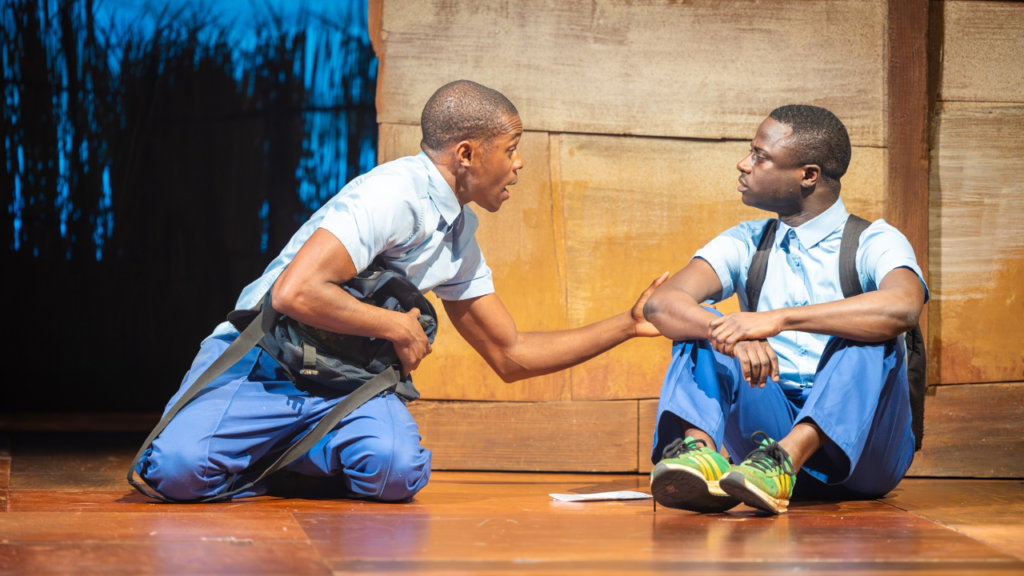
WE: As it is a musical, I feel my final question should be about the music. Can you touch on maybe some of the influences that pull into the songs that go into this musical?
IK: Yeah. I mean, I’m not a writer or a composer, but there is a lot of African music in the show and African cultures. You can hear it the minute you walk in.
A lot of the songs are like village songs that the women made up themselves in Malawi, like our welcome song in the prologue. I think Tim, our composer, has done a wonderful job of bringing in these sounds and making them very nostalgic in many ways, but very contemporary as well.
WE: One final question. If you could pick three words to describe the show, what would they be?
IK: The three words I would use to describe this musical are moving, captivating and definitely inspirational!
Related News
Nina Raine’s sweeping new adaptation of Middlemarch arrives at the RSC: See brand-new images from the production
Who’s Afraid of Virginia Woolf? reviews: critics hail Gillian Anderson and Billy Crudup as “electric,” but some feel it is too long
First look production photos released of Gillian Anderson and Billy Crudup in Who’s Afraid of Virginia Woolf?

Rachel Zegler announces return to London for first concert residency at @sohoplace in January 2027
Latest News
Everything you need to know about The Traitors: Acts of Betrayal in London
Nina Raine’s sweeping new adaptation of Middlemarch arrives at the RSC: See brand-new images from the production
What to expect from Pride the Musical ahead of highly anticipated transfer to the Bridge Theatre