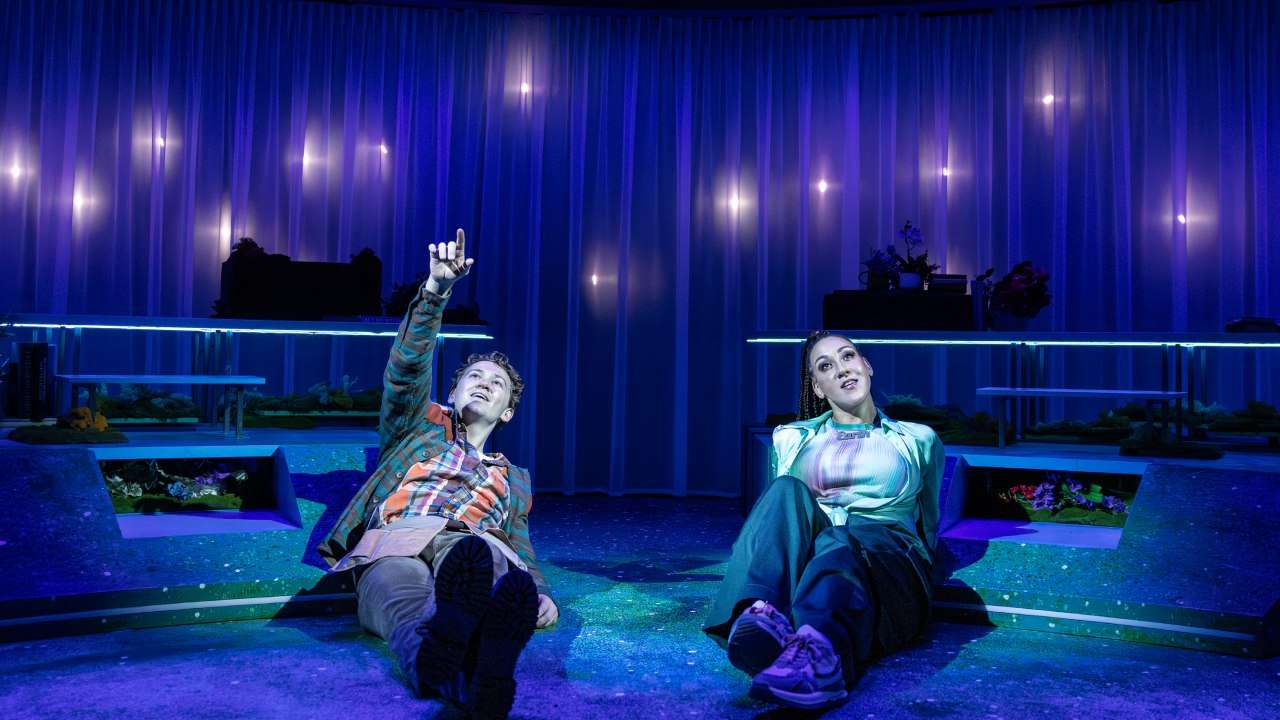
Today, 6 March 2024, in the Spring budget, the UK Government has announced that the Theatre Tax Relief rate that was introduced during Covid to boost the theatre sector will continue as a permanent rate.
The Theatre Tax Relief will be 40%, with a 45% relief for UK touring productions.
This new relief replaces a planned decrease of the relief, to 30% (35% touring) from April 2025, and then a a return to the pre-pandemic rate of 20% (25% touring) from 2026.
The 40% (45% touring) is a slight decrease on the 45% (50% touring) rate that the relief had grown to over time, but is still a significant win for theatre producers, offering longer-term relief.
The Society of London Theatre and UK Theatre industry trade bodies have lobbied the government hard to maintain or increase the relief, and provide some longer term stability for London and UK theatre producers.
When they surveyed their members, in the last financial year the relief had saved them a total value of £85,686,881.
In his budget speech in Parliament, the Chancellor Jeremy Hunt also extended tax relief for visual effects in film and high-end TV. His creative industries speech in full, said:
I now turn to our creative industries.
We have become Europe’s largest film and TV production centre with Idris Elba, Keira Knightley and Orlando Bloom all filming their latest productions here.
Studio space in the UK has doubled in the last three years. At the current rate of expansion, we will be second only to Hollywood globally by the end of 2025.
In the Autumn Statement, I committed to providing more tax relief for visual effects in film and high-end TV. I can today confirm we will increase the rate of tax credit by 5% and remove the 80% cap for visual effects costs in the Audio-Visual Expenditure Credit.
Having worked closely with the Culture Secretary and listened carefully to representations from companies like Pinewood, Warner Brothers and Sky Studios, we will provide eligible film studios in England with 40% relief on their gross business rates until 2034.
And having heard representations from the British Film Institute, PACT and indeed the Prime Minister, we will introduce a new tax credit for UK independent films with a budget of less than £15m.
For our creative industries more broadly, we will provide £26m of funding to our pre-eminent theatre, the National Theatre, to upgrade its stages.
And today I particularly want to recognise the contribution to our creative industries and tourism made by orchestras, museums, galleries and theatres.
In the pandemic we introduced higher 45% and 50% levels of tax relief which were due to end in March 2025. It has been a lifeline for performing arts across the country.
Today in recognition of their vital importance to our national life, I can announce I am making those tax reliefs permanent at 45% for touring and orchestral productions and 40% for non-touring productions.
Lord Lloyd Webber says this will be a once in a generation transformational change that will ensure Britain remains the global capital of creativity.
Leading figures in the London and UK theatre industry have issued statements praising the move, including:
Eleanor Lloyd, President of Society of London Theatre, who championed the tax relief, said in a statement: “Our members have the ambition and creativity to maintain and grow our dynamic, world-leading sector. We can only do this with the right policy and fiscal environment that will enable us to unlock wider potential. Today’s announcement will enable us to unlock further private investment, and result in more and bigger productions. This bolder programming will in turn create more jobs and reach more audiences. Making the relief permanent prevents the cliff-edge of the TTR taper, which our members predict would have shrunk the theatre sector by almost a third. TTR is an investment in our world-class theatre sector, which is integral to the UK’s place on the global stage.”
SOLT’s companion trade body, UK Theatre, also made a statement, with Stephanie Sirr, Joint President of UK Theatre, saying: “This new permanent rate of Theatre Tax Relief will be transformative for regional producing theatres. It provides the financial stability we desperately need in the context of squeezed public investment and rising costs. It will also keep touring theatre on the road, meaning communities across the country have access to world-class productions. This results in investment in local communities up and down the country, as for every £1 spent on a theatre ticket, we know that £1.40 is spent in local economies, generating local employment and economic growth.”
A number of high-profile London theatre producers and owners also released statements.
Composer, producer and London theatre owners Lord Andrew Lloyd Webber said: “This is a once-in-a-generation transformational change that will ensure Britain remains the global capital of creativity.”
West End theatre owner and producer Nica Burns of Nimax Theatres said: “Theatre tax relief has made the most significant contribution to the success of the UK theatre sector since the formation of the Arts Council in 1946. It enables private investment into the theatre sector which not only creates outstanding productions and additional jobs but also repays money back into the Treasury.”
The National Theatre’s Executive Director Kate Varah said in a statement: “We are thrilled that the Government has committed to a new permanent higher rate of Theatre Tax Relief. All in the sector have united to work hard to highlight the transformative benefits this will bring to subsidised, independent, and commercial theatres. This is extremely welcome news which will reinforce the UK as a global cultural leader, support jobs and growth, and delight and inspire millions of people every year.”
The West End’s largest theatre owner, Ambassador Theatre Group, who also own theatres across the UK, put out a statement from it’s new CEO Ted Stimpson, saying: “Today’s announcement demonstrates the UK Government’s leadership in acknowledging the immense economic, social, and cultural significance of theatre to communities nationwide. The new permanent rate of Theatre Tax Relief will serve as a catalyst for innovation, creativity, and the continued growth of our world-leading theatre sector. This investment will preserve our cultural heritage and foster an environment where the arts can thrive, creating thousands of highly-skilled jobs and ensuring that audiences across the nation continue to enjoy compelling theatre.”
West End and UK producer Michael Harrison said: “Despite the many and varied financial challenges the Government currently faces, it’s heartening they’ve not only listened to our industry but also responded with a firm commitment that will have a direct impact on jobs and growth in our sector.”
West End impresario and theatre owner Cameron Mackintosh said: “The new permanent rate of TTR is a tremendous endorsement of the vital contribution that the theatre makes to the British economy as well as the huge arts industry in this country. The current vibrancy of the West End proves this is money well spent and now theatre producers can confidently risk producing exciting new work and hopefully find the next global hits that make British Theatre the envy of the world.”
Prolific Broadway and West End producer Sonia Friedman said: “SFP is delighted that the Government has recognised the seismic importance of fixing Theatre Tax Relief at a higher level than planned. This provides a vital and game-changing contribution to the financing and production of UK theatre, encouraging investment in this world-class industry with all the benefits to the wider economy of increased hospitality and tourism as well as the myriad of benefits to society in general. Without this, it is no exaggeration to say that our whole industry would be under threat. With it, we can continue to grow and improve on our contribution to the arts, society and to the economy.”
Theatre, film and TV producers Neal Street Productions, run by director Sam Mendes and Caro Newling, said: “The higher rate of theatre tax relief is fundamental to our ability to make productions. It has enabled us to commission new work, often partnering with producing houses and colleagues in the commercial sector. They are all productions of scale. The Hills of California, The Motive and the Cue and The Lehman Trilogy, Hamnet and a nationwide, eighteen-month, tour of Charlie and the Chocolate Factory. Most have enjoyed seasons in both not-for-profit and commercial sectors, with Broadway and international tours thereafter. TTR is the singular factor in promoting both the confidence to be properly innovative and investors to join in the endeavour. We welcome the Government’s plans to make the higher rate permanent, as it will bolster the industry’s ability to thrive.”
Royal Shakespeare Company’s co-artistic directors, Tamara Harvey and Daniel Evans, said: “The important news of a new permanent rate of Theatre Tax Relief is a critical lifeline for the UK’s theatre industry. It shows that our Government recognises all that theatre delivers for communities nationally and for the UK economy and will provide stability at a time of rising costs alongside a challenging funding landscape. With this support we can create the most exciting theatre for our audiences, incentivising private investment, and increasing the UK’s global attractiveness for foreign investment. In turn, this creates highly skilled jobs and generates wider economic benefits. So much of the RSC’s work is made possible by the higher rate of Theatre Tax Relief including our multi-award winning My Neighbour Totoro. This production attracted significant international investment and employed high numbers of freelancers, theatre staff and other industry organisations. Over 286,000 tickets have been sold so far, a quarter coming from international sales, with the box office income alone generating a substantial amount of VAT for the Treasury. We thank the Government for investing in our world-leading sector.”
Leicester Curve chief executive Chris Stafford said: “At Curve we produce and co-produce a diverse programme of work which is seen by almost 950,000 people a year across the country and beyond; this simply wouldn’t be possible without TTR. As we look to the future and grapple with the challenges of rising costs and reduced public funding for the arts, this enhanced rate is going to be critical in ensuring our industry can continue to produce and present world-class work for audiences across the UK.”
In other related news today, the National Theatre is receiving a £26.4m flagship capital investment from the UK government, and will launch a new transformational fundraising campaign called Stories Start Here.
Related News

Broadway legend Patti LuPone returns to the London Coliseum for Valentine’s Day 2027
Helen of Troy never got to tell her side. Watch the trailer for the play that does
KayCee Stroh

11 kid-friendly shows to book during London Theatre Week 2026
Latest News
Broadway legend Patti LuPone returns to the London Coliseum for Valentine’s Day 2027
Helen of Troy never got to tell her side. Watch the trailer for the play that does
After a sell-out world tour, The Choir of Man returns to the West End this Christmas