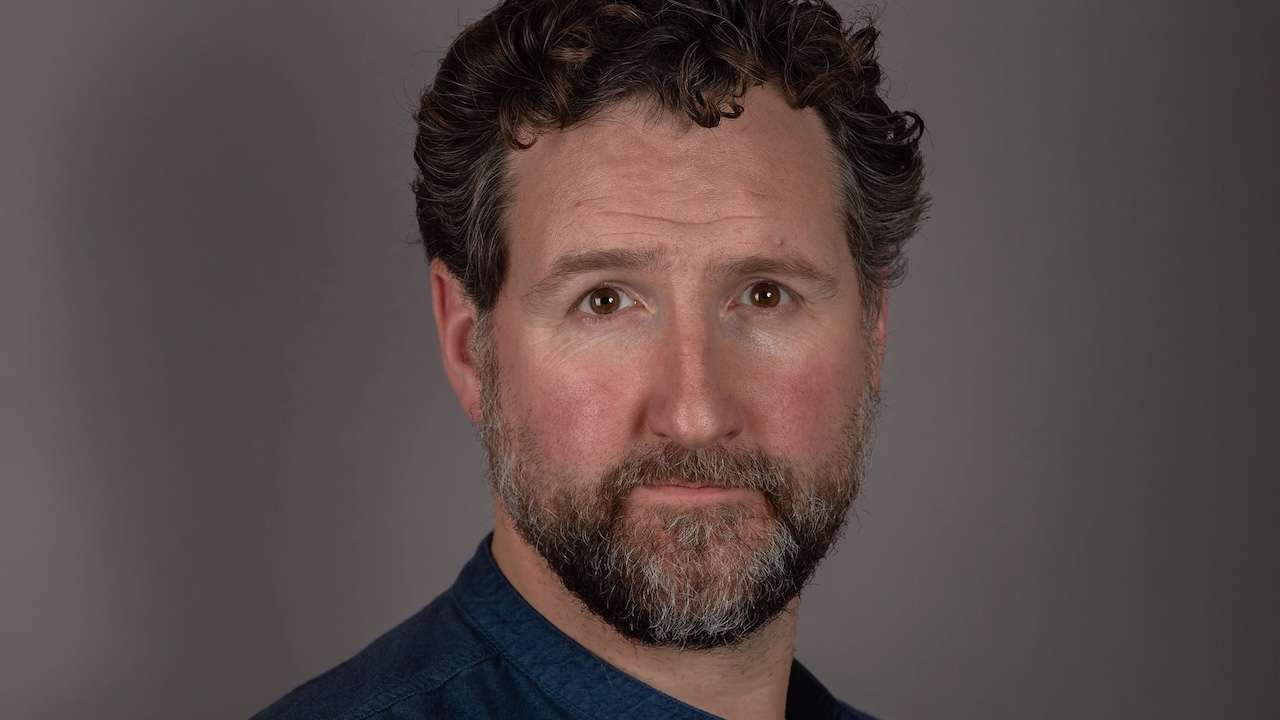
John Hollingworth is no stranger to commanding attention, whether on stage or screen. Best known for his roles in Poldark, Gentleman Jack, Doc Martin and most recently Generation Z, the Bradford-born actor is having an exceptional year. Currently starring in Richard Bean’s gripping new play Reykjavik at Hampstead Theatre, Hollingworth takes on the complex role of Donald Claxton, a trawler owner navigating the aftermath of tragedy and a night of life-changing revelations.
In this interview, John Hollingworth shares his insights into the intense world of Reykjavik, the thrill of bringing new work to life on stage, his Yorkshire roots, and the joys—and unexpected surprises—that have shaped his career.
Having worked extensively across film, television, and theatre, what drew you specifically to Richard Bean’s Reykjavik, and what challenges does it present as an actor?
I’ve always admired Richard’s work – right back to seeing his play The Mentalists at The National in 2002 – so the chance to work on a new play of his with the brilliant director Emily Burns was too good to pass up. Richard and Emily previously collaborated with Oliver Chris at the National on the hugely successful Jack Absolute Flies Again. The creative team was also stuffed full of titans – Olly Fenwick lighting it, Christopher Shutt as sound designer, Grant Olding composing and supervising our songs, and Anna Reid delivering the design of the decade. Also – of course – it’s a wonderful, complicated, challenging leading part and I’ll miss playing him hugely when the play closes.
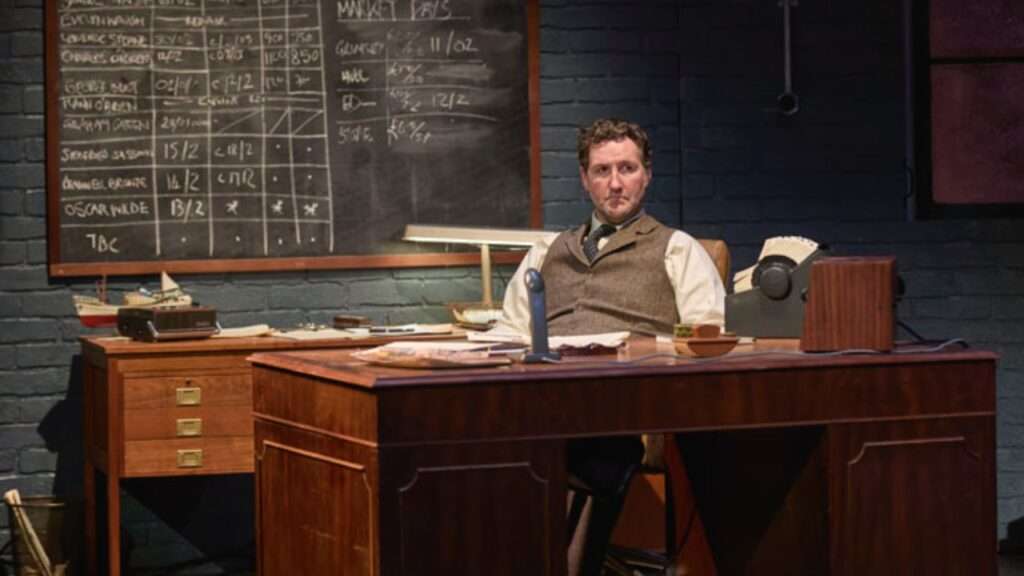
Reykjavik is set in the 1970s and explores themes of survival, loss, and human connection. What do you hope modern audiences take away from this story?
Richard has researched this world journalistically – he’s a local himself and has (I think) always been captivated by the swashbuckling stories of these brave men who risked their lives to make ends meet going on these three week trips from Hull to the Arctic to catch fish and gut them in the open on deck for eighteen hours a day then come home for three and set off all over again and do the same. It was a brutal industry with an appalling safety record. Over 6000 men died across the 100 years of Hull fishermen. Richard wrote an early radio play – Unsinkable – set in this world, then revisited it in his early Royal Court hit Under The Whaleback and now revisits it here. So – I think the audience learn a lot about the industry from our play. No national monument to these men exists and Richard has created one in these three plays. As much as our play is set in the past (1976) the gig economy that these men were trapped in is, of course, now larger than ever. The play asks questions of those who profit from that unfair system which are as relevant now as they were then.
What has been the most challenging or rewarding part of bringing Donald Claxton to life? Did researching the fishing industry or its history play a role in shaping your portrayal?
I have to admit that Sophie Cox – who plays our Icelandic character Einhildur went to Iceland one weekend to research the play and the accent – and I was all set to go to Hull and do the long walk that is mentioned at the end of the play – but with only four weeks rehearsal I couldn’t spare the time away from sitting and learning the lines! So she put me to shame there. Donald Claxton is a huge part and – as with any new play – the text was constantly changing as sections were cut or transposed. The most rewarding part of playing Claxton has been the audience reaction – they’re by turns horrified, fascinated, amused and – hopefully – moved. The two halves of the play are very different. Claxton is very much king of his castle in the first half – all puff and bluster, sport-bullying and opportunistically seductive and then in the second half he’s at the mercy of the men who work for him. It’s an enjoyably awkward switch. You get to know him in the first half – see who he really is and who he projects himself to be – and then see him under real pressure in the second half.
You’ve had a busy year in theatre, moving straight from Antony & Cleopatra into Reykjavik. How does working on long theatre projects compare to the “stop-start” nature of TV and film?
It has been both a deep privilege and an absolute pleasure. It’s the first time I’ve been offered leading roles in London theatre without having to audition for either part: that feels like a tangible career milestone. I made a conscious decision when I left Poldark after three series in 2017 to prioritise television and film work to try and grow the profile needed to get the kind of theatre work I wanted. You never know for sure – but that seems to be paying off. Theatre is the most fun you can have as an actor – and the hardest you ever have to work. It’s a joy to band together and put everything else in your life on hold to concentrate on making something new as a company. It’s only comparable to television when you have a regular part in something long-running. Bryony Jarvis-Taylor, our casting director has put together an exceptional company for Reykjavik. They’ve been a joy to work with and I’m proud of what we’ve made.
From Shakespeare to modern dramas, your stage work spans a wide range. What typically draws you to a theatre role, and how do you decide what to take on?
You get a thrill when you first read a new play with a part that’s right for you – something goes off inside you. Much of my career has been working on new plays – I’ve been lucky to be in premieres by Lucy Kirkwood, Mike Bartlett, Zinnie Harris, David Hare and now Richard Bean too. My favourite building in London is the National Theatre Studio – where the NT grows new work. I’ve been lucky to spend time there as a writer after my debut play Multitudes went on at the Tricycle in 2015. I’ve been back every year since as an actor for readings of new work – it’s how I met Emily who directed Reykjavik. In terms of how I decide what to take on it’s simple: finding the best work available with the best people doing it.
Is there a live performance moment in your career that stands out as especially memorable or impactful?
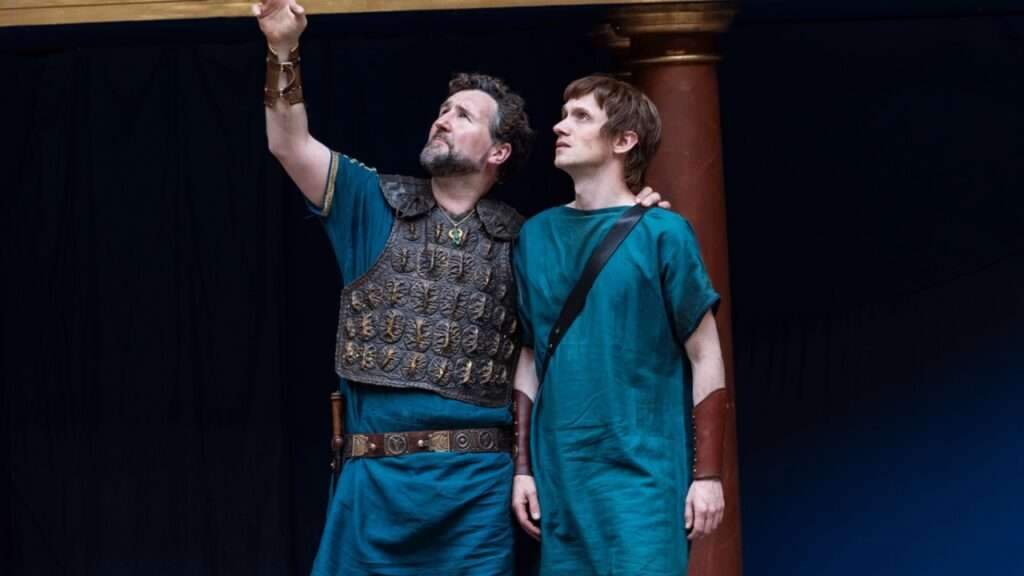
I’ll never forget playing Antony at The Globe for the peerless Blanche McIntyre this summer in our bilingual production – I had to learn BSL in order to both communicate with and act alongside the brilliant deaf actors in the company. Only a building like The Globe would take something like that on – they were wonderfully supportive and the cast were very patient with me. It’s a demanding role to play – the fifth biggest part in Shakespeare – but a joy to live through every night on stage. My dad died a couple of years ago and it was his favourite theatre to go to in London so I was conscious of his absence every night but comforted by how much he would have enjoyed the ambition of our production. It was glorious to finally work there.
Known for roles in Poldark, Gentleman Jack, Doc Martin and Napoleon, how does the experience of performing for the screen differ from working on live theatre?
Not as much as you might think – although you’re often working much more intimately with a camera and need to understand the shot to figure out how you can best serve that moment you still have an audience of thirty or forty crew watching you so although the work is finer and more nuanced there’s still a silent crowd to live in front of. I did an Apple TV show called Franklin in Paris last year and had to do all my scenes in both French and English. The French crew couldn’t help nodding along appreciatively like kids at a firework display when I did well in French and I was very glad of my time on stage and capacity to tune out that kind of distraction!
Many of your roles have cast you as “posh” characters. What has it been like to step into a role that allows you to embrace your native Yorkshire accent?
I’ve loved Reykjavik more than ever for that to be honest: so many people have congratulated me on my accent and assumed I was from the south! I grew up in the countryside outside Keighley in West Yorkshire and won a place at Bradford Grammar School. I grew up on benefits and the school helped with lunches and trainers I wouldn’t have otherwise been able to afford. I’m still in touch with them and go back to work with students there to help pay back the huge favour they did me. I play a northern soldier in the new Ben Wheatley series Geberation Z on Channel 4 that’s out at the moment as well. The industry is so concerned with authenticity at the moment so it’s helpful to remind folk I can do more than posh horse-riders in breeches.
With upcoming projects like Lockerbie for the BBC and Netflix, what can audiences expect from your role in the series?
I’m afraid there’s not much I can say about it other than it’s written by the brilliant Adam Morane-Griffiths and directed by Michael Keillor who is a genius. It follows the unfolding events of that catastrophe as they unfold chronologically – the audience is with the people in the air and the people on the ground – and the trauma of the families of both in the aftermath. All my scenes are with Peter Mullan who is the most authentic actor I think I’ve ever met and the nicest man imaginable.
In a competitive industry, maintaining a steady career is no small feat. What advice would you offer to emerging actors looking to build a sustained career in both stage and screen?
I think it’s important to try and do both if you can – it’s tough to make a living as an actor in any environment and I think most young actors just want work first and foremost and quite right too. The first lead I played was at the Nuffield Theatre in Southampton – I started the week after RADA playing Christy in Playboy of the Western World (having gone to university in Ireland because of Irish family). That theatre has gone along with so many others and it’s harder than ever for young actors to build up the experience they need to sustain them through a career. I mentor a young actor each year on the National Youth Theatre Rep Company and it’s tougher than ever at the moment after such a hard year for the industry to get folks along to see their next show Twelfth Night at the Workshop Theatre at NYT HQ on Holloway Road. I give the same message every year to my mentees: concentrate on putting good work out there and a career will come. It’s work and not networking that matters.
Looking back, what’s been the most surprising or unexpected opportunity in your career?
I was cast as a two- line part in Christopher Nolan’s Dark Knight Rises. He said on the first day we should improvise around the script and see what happened. I ended up going back the next day too and ended up with six scenes and a storyline in the film. It taught me to always be prepared, always know exactly who your character is and what they would say that’s not on the page – and also proved that truism that when you’re starting out there’s no such thing as a small part!
Reykjavik runs until 23 November 2024 at Hampstead Theatre, London
Related News

Full casting announced for bilingual production of Antony and Cleopatra at Shakespeare’s Globe including John Hollingworth

Hampstead Theatre reveals new season including 7 new plays and a revival of Tom Stoppard’s play The Invention of Love

Shakespeare’s Globe reveals its Summer 2024 Season

National Theatre to stream ‘Frankenstein’ & ‘Antony and Cleopatra’
Latest News
Everything you need to know about The Traitors: Acts of Betrayal in London
Nina Raine’s sweeping new adaptation of Middlemarch arrives at the RSC: See brand-new images from the production
What to expect from Pride the Musical ahead of highly anticipated transfer to the Bridge Theatre